

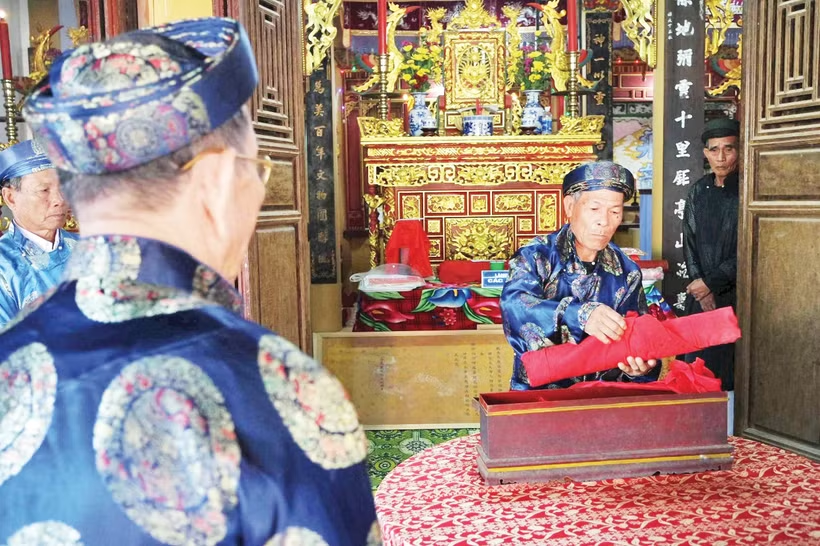
Preserving the soul of ancient village communal houses.
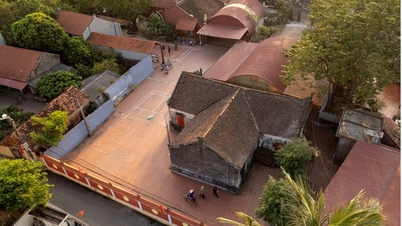
The Dạ Lê Thượng village communal house, located in Thanh Thủy ward, is hidden behind ancient trees, its tiled roof covered in moss, creating a tranquil atmosphere seemingly isolated from the bustling streets outside. Inside the main hall, Mr. Nguyễn Văn Diễu, the caretaker and guardian of the communal house, is carefully wiping down the time-worn horizontal plaques and couplets: “Maintaining the communal house means ensuring the village remembers who we are.”
During the time the village appointed him to look after the communal house, Mr. Diễu never left his post for too long. During the rainy season and floods, he was always the first to arrive to inspect the house and elevate the artifacts. “Sometimes the water rose so quickly that I had to stay awake all night. My own house might be damaged, but the communal house cannot be allowed to be ruined,” Mr. Diễu shared.
According to Mr. Nguyen Viet Tri, head of the Da Le Thuong village council, the role of the village custodian is not only that of a caretaker, but also of a "keeper of collective memory." "Mr. Dieu and the elders – members of the village clan council – are the storytellers who tell the younger generation about the ancestors and the formation of the community during village ceremonies. Memories of the village are preserved in royal decrees, in the family genealogies of each clan, and in the communal house. The clan's genealogy is not just for knowing names, but helps descendants understand where they came from and what they have experienced," Mr. Tri explained.
Leaving Dạ Lê, we visited Phù Bài village, renowned for its tradition of scholarship and long-standing family lineages, established around 1558 during the Trịnh-Nguyễn conflict. The village currently preserves seven royal decrees from various emperors, along with over 20,000 valuable digitized documents on land and household registration records from the Tây Sơn and Gia Long dynasties, as well as numerous customs, traditions, religious practices, and ancient festivals. The village communal house sits beside the tranquil Phù Bài river, its spacious and peaceful setting resembling a traditional ink painting.
Mr. Ngo Phuoc Toan, the village's chief administrator, led us through each section of the communal house. He stopped in front of the place where the royal decree is kept, preserved in a glass case. "We only open it on major holidays. Not to store it away, but so that everyone knows our village has a long history," Mr. Toan explained. According to him, preserving the communal house currently faces many challenges: harsh weather, the deterioration of materials, and the indifference of some young people. However, he also noted positive changes. Many restoration and support programs from the government have helped the communal house to be repaired and preserved better.
Modern life is changing the way people connect with their village communal house. Traditional community activities are gradually becoming less frequent. Many young people grow up, leave the village to study or work, and rarely have the opportunity to return. Mr. Toan confided: "The kids are very busy now. Sometimes you don't see them at the communal house even once a year. It's not that they don't know about the communal house, but the connection has weakened. But when they hear stories about history, about the times the king issued decrees, their eyes gradually change. Once they understand, they naturally see things differently. And for them to understand, someone has to tell the story."
According to Ms. Vo Thi Minh Thao, the cultural and social affairs officer of Phu Bai ward, in Phu Bai, conservation efforts do not come solely from individuals. The local government has implemented programs to renovate village communal houses, providing financial support for repairs and reinforcement of dilapidated structures. “We recognize that village communal houses are an important part of cultural life. But for effective preservation, the participation of the people is essential. The biggest challenge currently lies not in funding, but in a change in awareness,” Ms. Thao shared.
Preserving heritage in contemporary life.
The communal house of Hien Luong village (Phong Thai ward), home to a traditional blacksmithing craft spanning over 500 years, serves as a place of worship and the spiritual center of the entire craft village. The clanging of hammers outside the forges harmonizes with the ringing of the communal house bells during festivals. Mr. Hoang Dau, the caretaker of the communal house, said: “The people of Hien Luong always remember the communal house wherever they go. Because it is where the founders of the craft, our ancestors, reside.” He showed us the royal decrees recognizing the contributions of the ancestors who established the village and passed on the craft. In Hien Luong, the communal house is inseparable from life. It lives on with the sound of hammers, the sweat, and the rhythm of the people's lives. “The craft may change with the times, but the communal house cannot disappear,” Mr. Dau affirmed.
Pho Trach village (Phong Dinh ward) is one of the ancient villages along the O Lau River, where the village communal house still retains many of its original features. Meeting us in the courtyard of the communal house, Mr. Le Hua (Head of the Village Council), now over 80 years old, still regularly comes to the communal house every day. He doesn't keep the royal decree or family genealogy, but he keeps something else: living memories. He confided: “I'm not the caretaker, but I consider the communal house my home. When I was little, I heard my grandfather tell the story of the village's founding. Now I tell it to the children. It doesn't matter if there are no documents, as long as there are people who remember. Many children now prefer phones. But when I show them the royal decree, tell them the old stories, about the village's achievements, they start to get curious…”
According to Tran Dai Vinh, a researcher of Hue culture, the system of village communal houses in Hue is an important part of the traditional cultural structure, clearly reflecting the process of village formation, beliefs, and community organization. "Village communal houses are not just architectural structures, but comprehensive cultural spaces – places that preserve memories, rituals, and identity," Vinh stated.
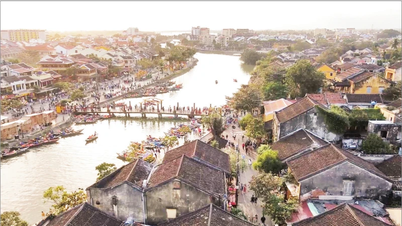
Hue is not only the ancient capital with its famous palace buildings, but also home to hundreds of ancient villages with communal houses, temples, family genealogies, etc., the "cells" that make up Vietnamese cultural identity.
Mr. Doan Quyet Thang, Head of the Culture and Social Affairs Department of Phong Dinh Ward, said that in recent years, many village communal houses have been inventoried, documented, and gradually restored, while also digitizing royal decrees and ancient documents. Community participation remains a decisive factor. Without the people, heritage will lose its living meaning. Therefore, honoring individuals such as temple keepers and genealogists is increasingly emphasized. They are considered "preservation subjects," those who keep the heritage from being broken.
Source: https://nhandan.vn/nhung-nguoi-luu-giu-van-hoa-lang-post951488.html



![[Photo] General Secretary and President To Lam receives Amazon's Senior Vice President David Zapolsky](https://vphoto.vietnam.vn/thumb/1200x675/vietnam/resource/IMAGE/2026/05/22/1779466547770_a1-bnd-3513-6601-jpg.webp)



























































Comment (0)