

Potassium is an essential mineral that helps the body function properly. It plays a crucial role in regulating heart rate, supporting muscle and nerve function, and balancing fluid levels in the body.
A diet rich in potassium can help reduce the impact of sodium (salt), thereby supporting blood pressure control and cardiovascular health. This nutrient is especially beneficial for young children during their growth phase.
Why does the body need potassium?
According to Health Direct, potassium is an electrolyte that helps transmit nerve signals and supports muscle contraction. If your body lacks potassium, you may experience symptoms such as fatigue, muscle weakness, cramps, constipation, and irregular heartbeat.
In young children, potassium is especially important because it helps support muscle development and maintain stable nerve function. Children who are very active, play sports , or sweat a lot in hot weather may need more potassium from natural foods.
Top foods rich in potassium
Many people think bananas are the richest source of potassium, but in reality, there are many other foods that contain even higher amounts of potassium.
White beans and other types of beans
These are a group of foods that are particularly rich in potassium. In addition to potassium, beans also provide fiber and plant-based protein that are good for your health.
Potatoes and sweet potatoes
Baked potatoes with the skin on contain very high amounts of potassium. Sweet potatoes are also a good choice for children because they are rich in fiber and beta-carotene.
Banana
Bananas remain a popular, easy-to-eat source of potassium, suitable for young children. A medium-sized banana can provide over 400 mg of potassium.
Leafy green vegetables
Spinach, kale, and many other leafy greens contain significant amounts of potassium, and are also rich in vitamins and antioxidants.
Butter
Avocados are not only rich in potassium but also contain healthy fats that are good for children's cardiovascular and brain development.
Salmon
Salmon provides potassium and omega-3 fatty acids, which support brain and cardiovascular development.
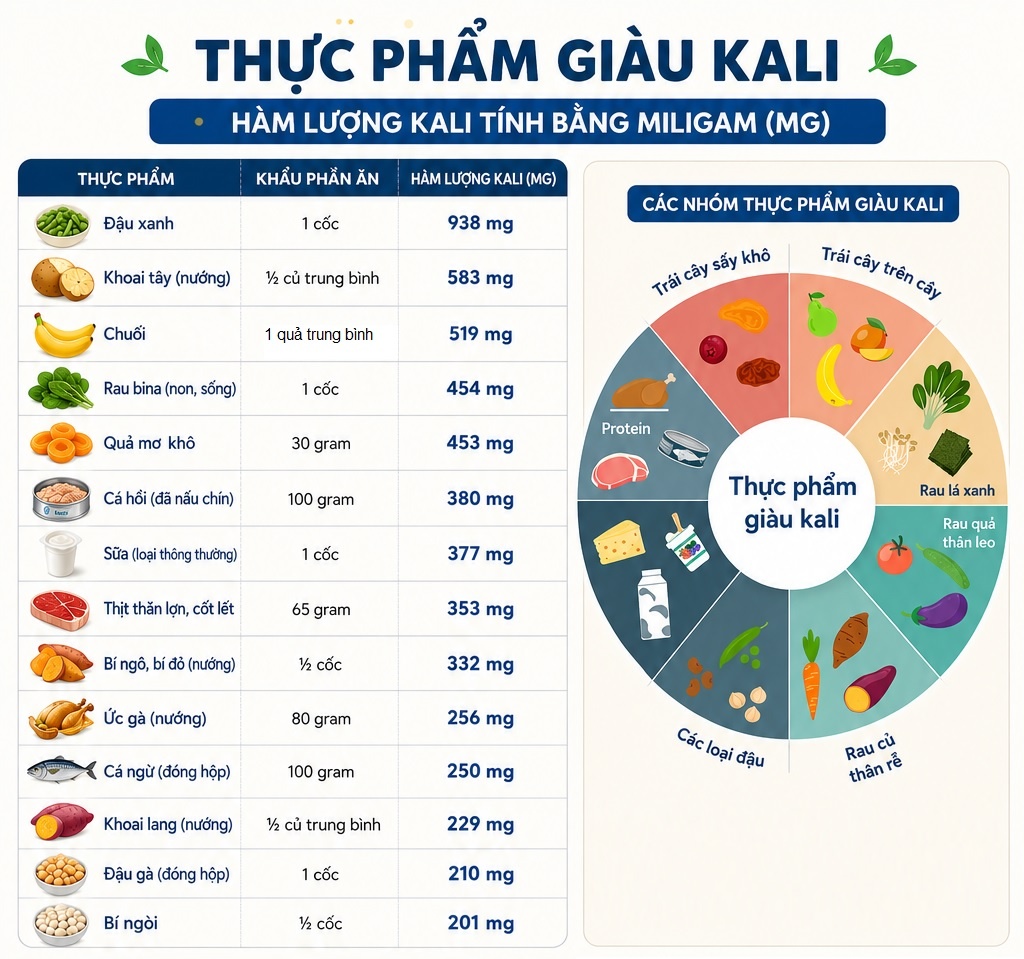 |
Common foods and their potassium content. Source: Australian Food Composition Database. |
How much potassium do young children need each day?
According to the American Academy of Pediatrics, potassium requirements vary by age:
- Children aged 1-3 years: approximately 2,000-2,500 mg/day
- Children aged 4-8 years: approximately 2,300-2,900 mg/day
- Teenagers: approximately 3,000 mg or more per day
Most children can get enough potassium through a varied diet including vegetables, fruits, dairy, and fresh foods. While potassium is essential for the body, excessive supplementation can be harmful, especially in children with kidney disease or metabolic disorders.
Parents should prioritize natural sources of potassium from food rather than using supplements without consulting a doctor. Additionally:
- Limit your intake of salty fast food because high sodium can disrupt potassium balance.
- Encourage children to eat fresh vegetables every day.
- Ensure adequate water intake during hot weather or when children are very active.
Nutrition experts recommend that instead of focusing on just one "superfood," it's more important to build a balanced diet with a variety of vegetables, fruits, and fresh foods for young children.
Source: https://znews.vn/nhung-thuc-pham-giau-kali-tot-cho-suc-khoe-post1654929.html




![[Photo] Standing Committee member of the Party Central Committee Tran Cam Tu working with the Central Inspection Committee](https://vphoto.vietnam.vn/thumb/1200x675/vietnam/resource/IMAGE/2026/05/28/1779969579668_ndo_br_bnd-2495-jpg.webp)































































































Comment (0)