

An unforgettable mark
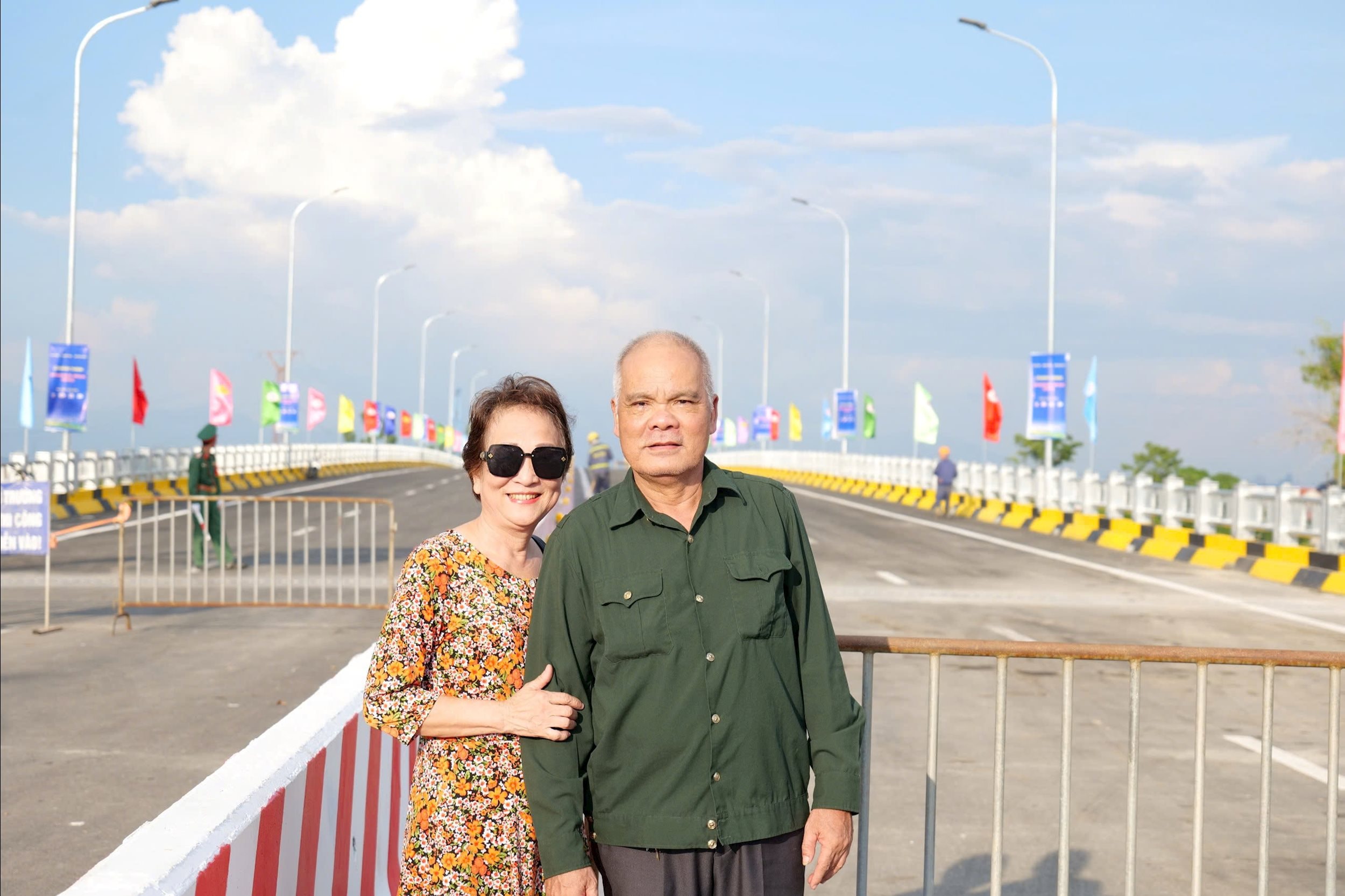
Mrs. Hong, 67 years old, a resident on the Tam Nong side, has been familiar with the old Phong Chau bridge for nearly 30 years. These days, every afternoon she goes out to admire the new, beautiful, and modern bridge that is about to be inaugurated, unable to hide her joy. She is happy because the bridge is not only a source of livelihood for her family, but also a "means" of connecting with her children and grandchildren, as her two children have started their own families and her grandchildren live on the other side of the bridge. Recalling the morning of September 9, 2024, she is still in shock.
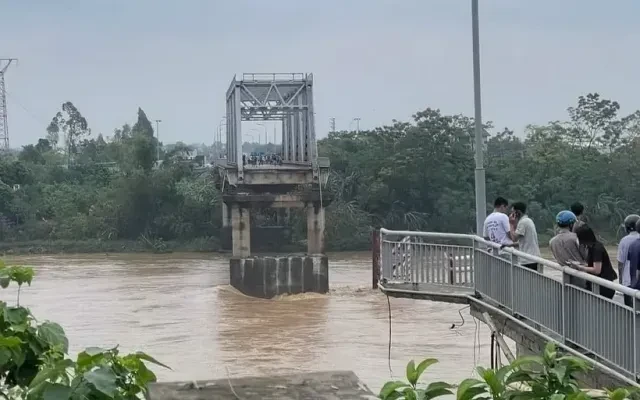
In the days following the incident, the lives of tens of thousands of people on both banks of the Red River, once bustling day and night, were disrupted because the bridge, which was a vital transportation artery serving commuting, work, school, and trade, was destroyed. Those in urgent need had to detour via the Van Lang bridge, the closest but still nearly 40km from the old Phong Chau bridge, resulting in longer travel times, increased costs, and higher prices.
Thank you for the help and support of the people.
That's what Lieutenant Colonel Dao Van Hung, Deputy Brigade Commander of Brigade 249, Engineering Command, the unit tasked with search and rescue, accident remediation, and building pontoon bridges across the river to serve the people after the Phong Chau bridge collapse more than a year ago, kept repeating throughout his talk about the role of pontoon bridges, rather than just recounting the achievements of the Brigade.
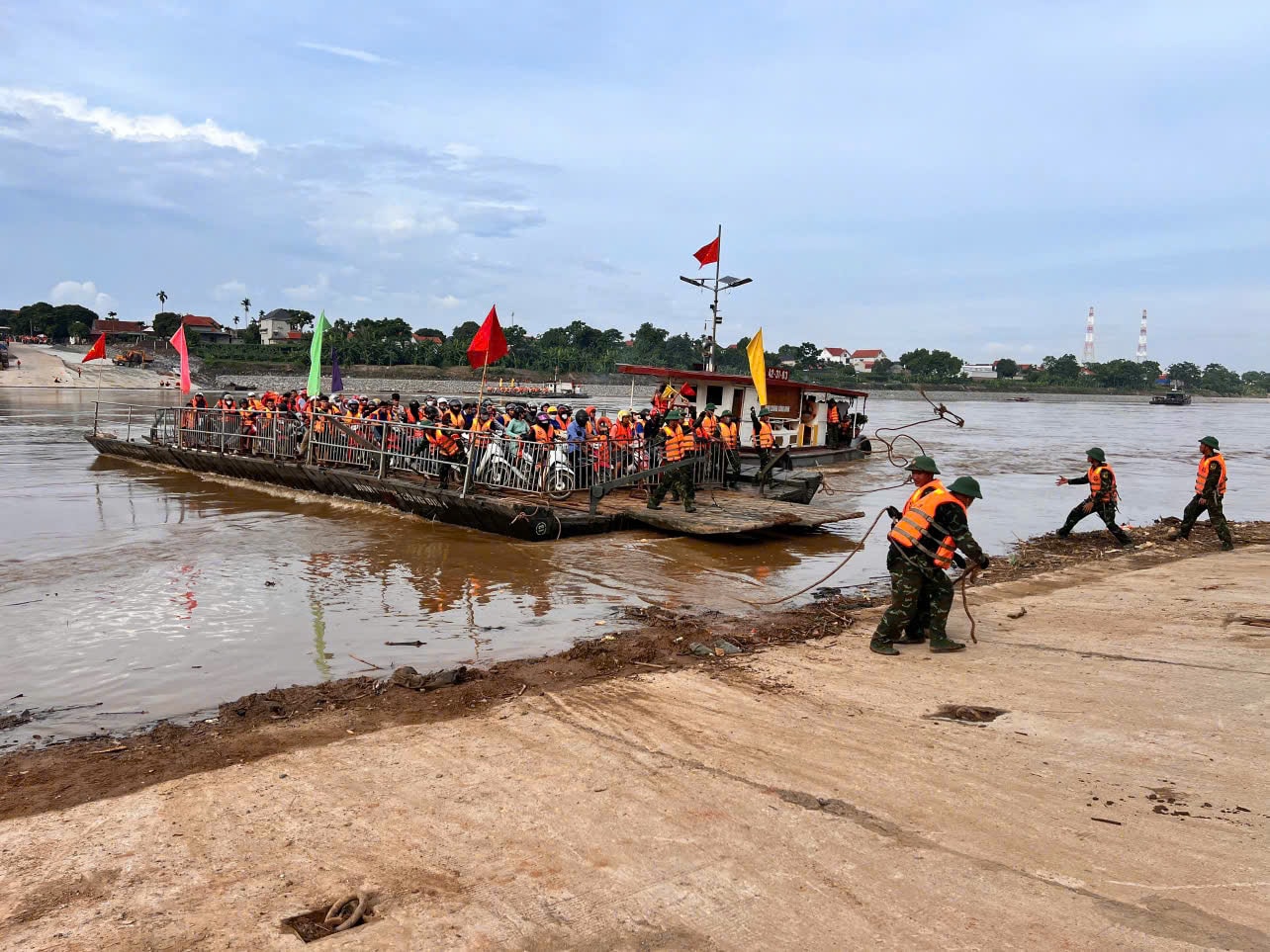
Lieutenant Colonel Hung recalled that on September 9, 2024, after the Phong Chau bridge collapse, the Corps Commander requested the Brigade to send a group of officers and soldiers to assist search and rescue and reconnaissance forces in order to develop timely response plans. By 11 PM that same day, the Corps of Engineers had officially ordered Brigade 249, with 160 officers and soldiers and 83 pieces of equipment and vehicles, to immediately mobilize to the site to survey and construct a pontoon bridge to serve the people.
Due to the impact of Typhoon No. 3, heavy rain, weak soil, and a high risk of landslides on both banks, the hydrology in this area is changing in a complex manner, with strong currents always at high levels, making the deployment of tasks even more difficult. Furthermore, the task of providing stable living conditions for the soldiers is also a challenging problem. Some soldiers spent the whole day immersed in water, exhausted, and upon returning to their temporary resting place – the village cultural center – they would lean against the wall and fall asleep. Their comrades and the surrounding villagers have always been there to support and care for them, ensuring they have the strength to continue their next shift. "The fresh vegetables, bundles of firewood, hot tea, roasted sweet potatoes... from the villagers; the encouragement and assistance from the Youth Union, the Women's Association, and the local government have given the officers and soldiers of Brigade 249 additional strength to successfully complete their assigned tasks."
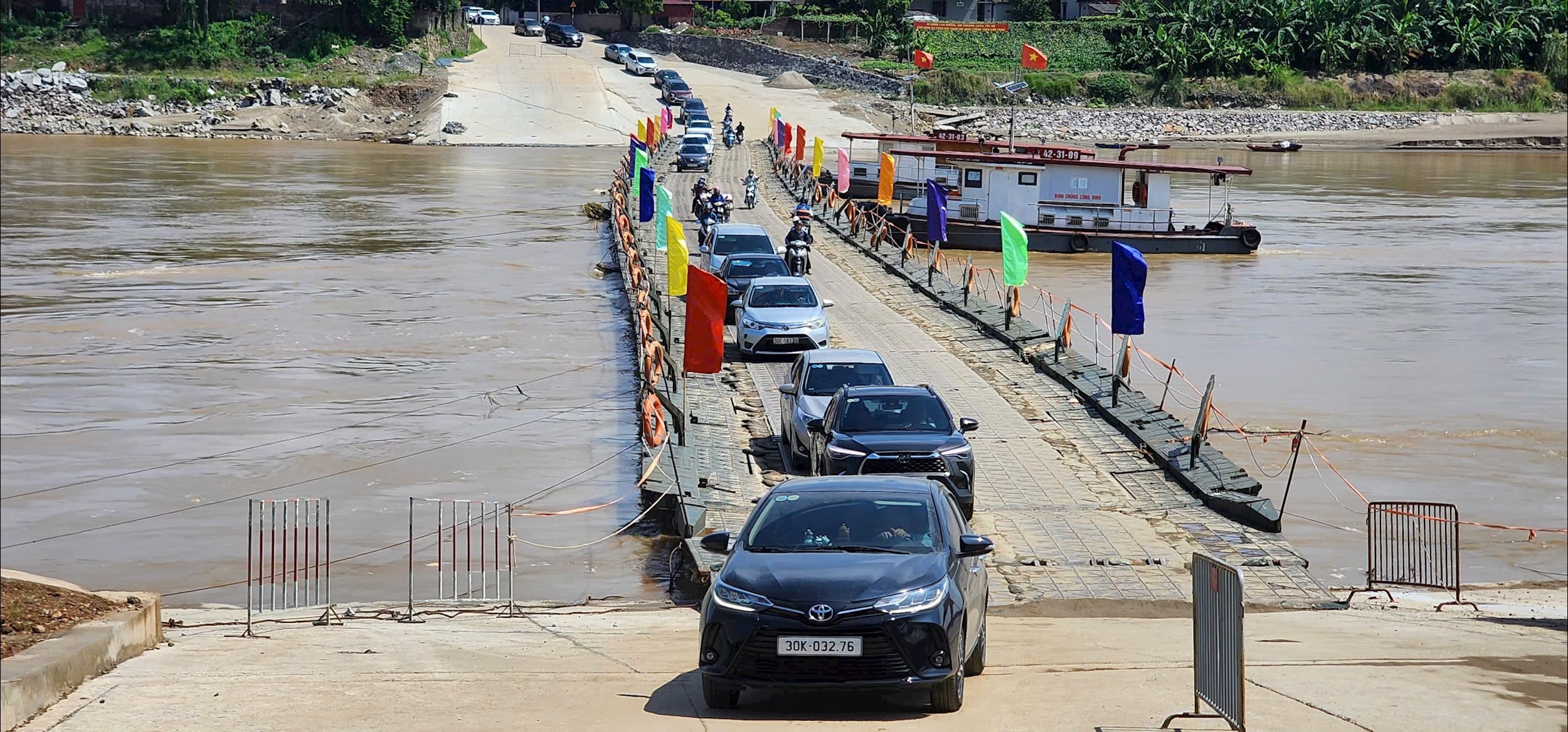
Major Le Phi Hung, Political Assistant of Brigade 249, shared that building the pontoon bridge to serve the people's transportation needs is a testament to determination and effort, but it's only the first step. Operating and ensuring the safety of the bridge on a river with complex hydrology and strong currents due to upstream flooding over the past year is no easy task. Every day, officers and soldiers have to wake up at 3:30 AM, regardless of the weather, to prepare for connecting the bridge at 5:00 AM, and then disconnect it at 9:00 PM to allow watercraft to pass.
From 5 AM to 9 PM daily, rain or shine, the unit must deploy personnel to be on standby at both entrances and exits to guide people and vehicles. The on-duty personnel will always coordinate to prioritize ambulances, fire trucks, and assist the public...
Besides maintaining the bridge to serve the public from 5 am to 9 pm daily when conditions are favorable and the current is below 2 meters per second, on days when the current is between 2-3 meters per second, the pontoon bridge must be closed, and people and vehicles must be transported by ferry. We also haven't been able to count how many times we've had to unexpectedly close the bridge when the current suddenly increased and use ferries instead, or even stop the ferries altogether because the current exceeded 4 meters per second.
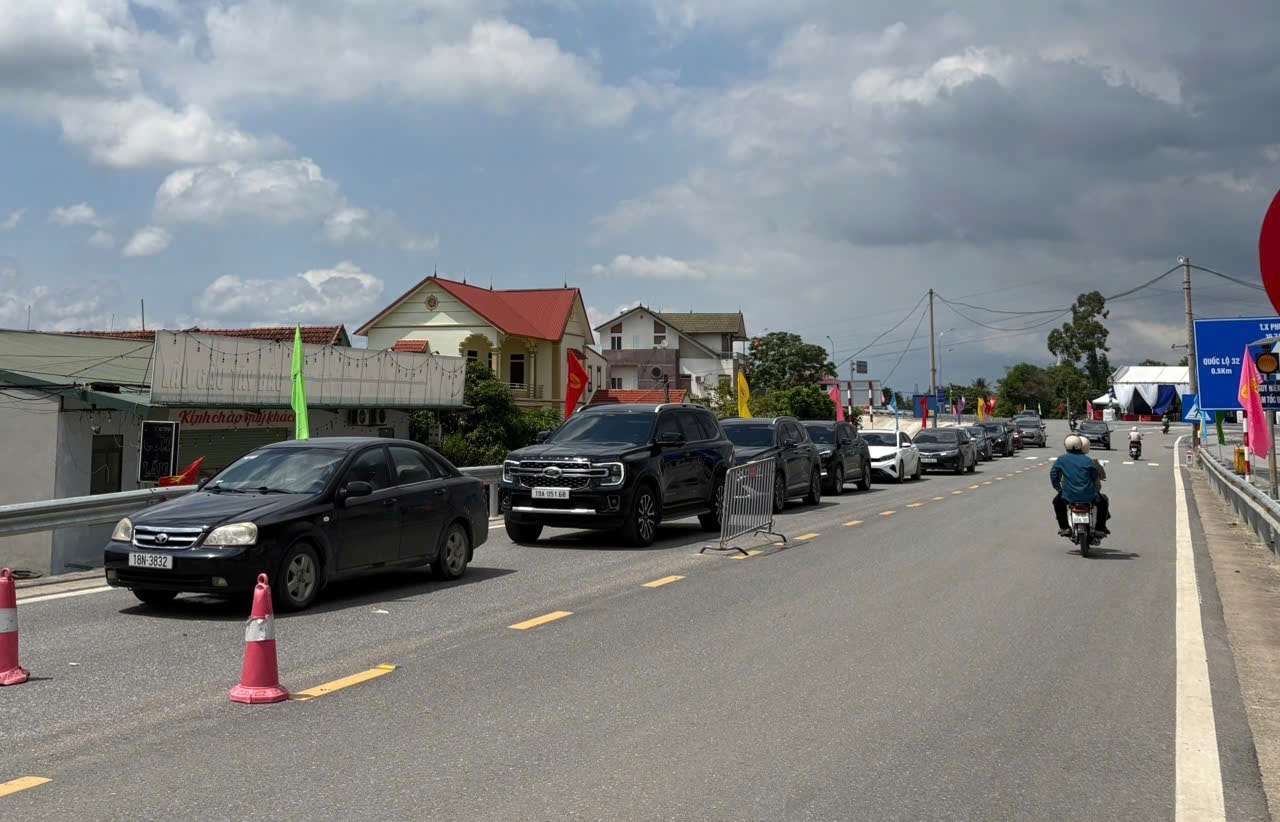
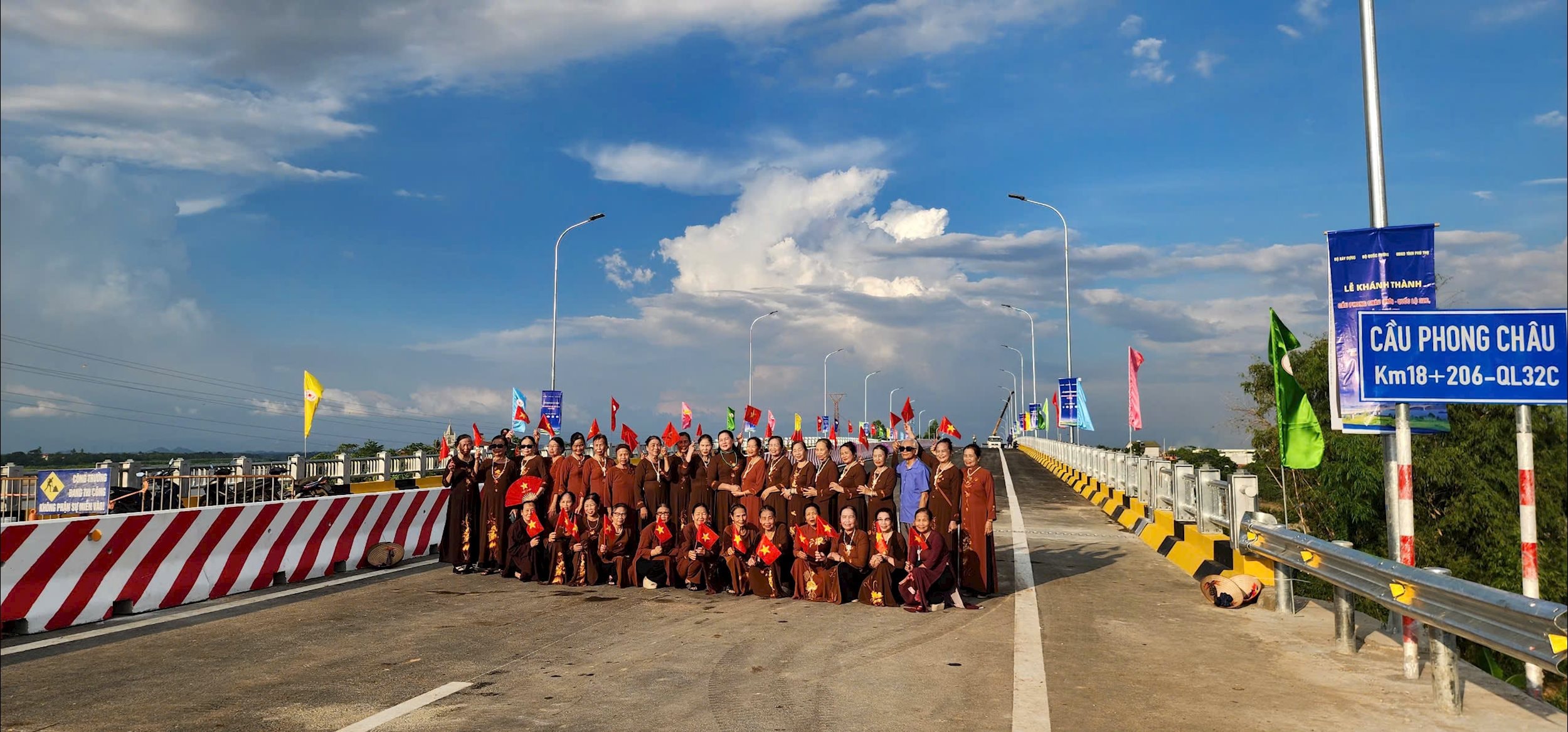
The people rejoiced.
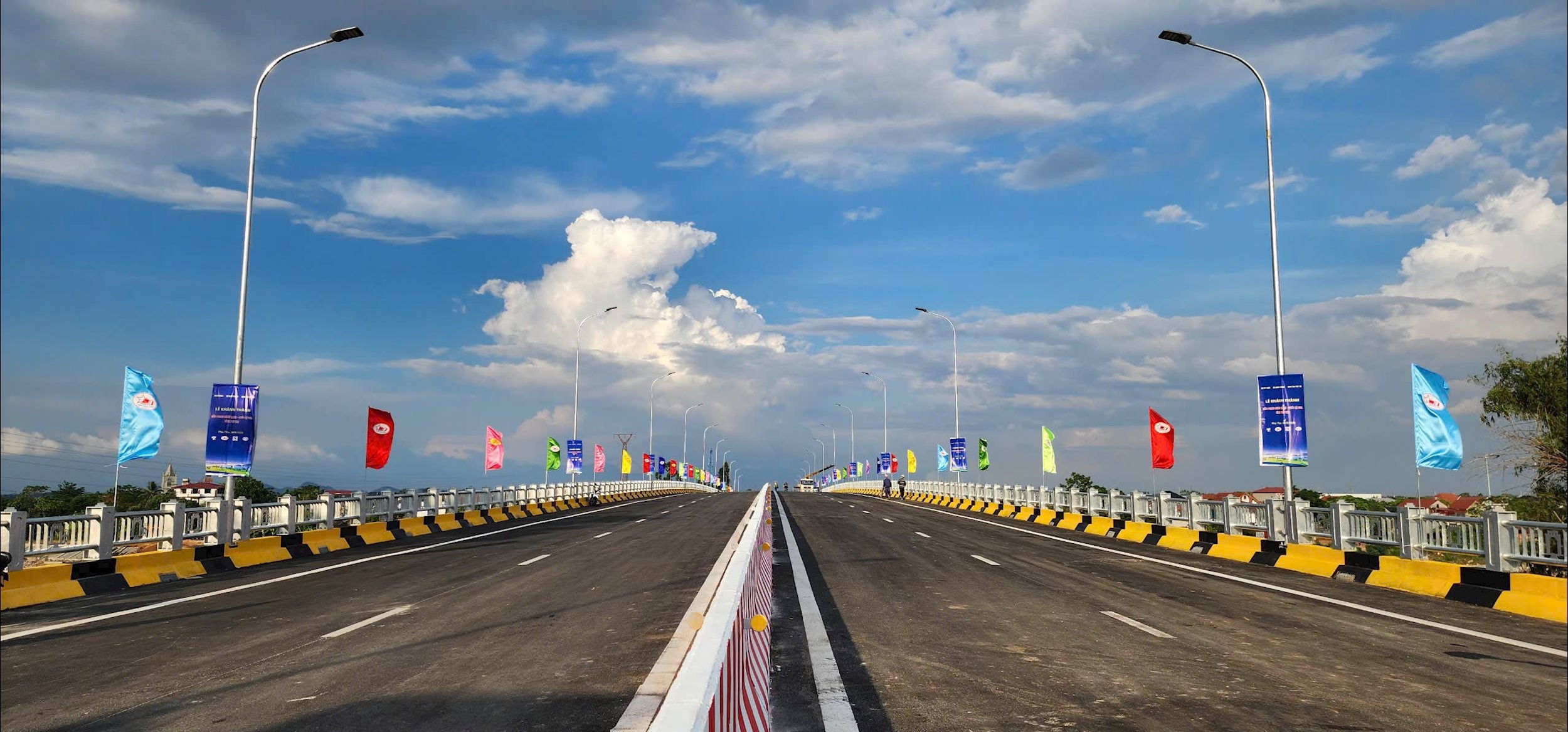
The Phong Chau pontoon bridge will close today after more than a year of operation, as the new Phong Chau bridge is inaugurated. The new Phong Chau bridge is nearly 653m long, 20.5m wide, and features a modern structure made of prestressed reinforced concrete, meeting the standards of a Class III road in the plains with a design speed of 80km/h. It has four lanes for motorized vehicles, and was invested in by the Thang Long Project Management Board and constructed by the 12th Brigade (Truong Son Construction Corporation), with a total investment of 635 billion VND.
After more than 9 months of intensive construction, with a spirit of overcoming sun and rain, the project has been completed nearly 3 months ahead of schedule, demonstrating the extraordinary efforts of the units at the construction site and the soldiers of the People's Army. The new project not only restores smooth traffic connectivity for people on both sides of the Red River, but also serves as a vital transportation artery between the Northwestern provinces. This project symbolizes the will to overcome difficulties, the unity from the central government to the local authorities, from the military to the people, and is even more significant as it is inaugurated during the First Congress of the Phu Tho Provincial Party Committee (2025-2030 term).
.jpg)
Source: https://daibieunhandan.vn/niem-vui-ben-cau-phong-chau-moi-10388233.html






















































































Comment (0)