

In the draft decree currently open for public comment, the Ministry of Finance proposes two tax debt thresholds in cases where temporary exit bans are applied: 10 million VND for individuals and household businesses, and 100 million VND for enterprises.
The period for determining the amount of overdue tax debt is over 120 days.
According to data from the General Department of Taxation, since the beginning of the year, more than 6,500 cases of temporary travel bans due to tax arrears have been recorded, three times more than last year. Authorities have collected 1,341 billion VND from 2,116 taxpayers whose travel bans were imposed.
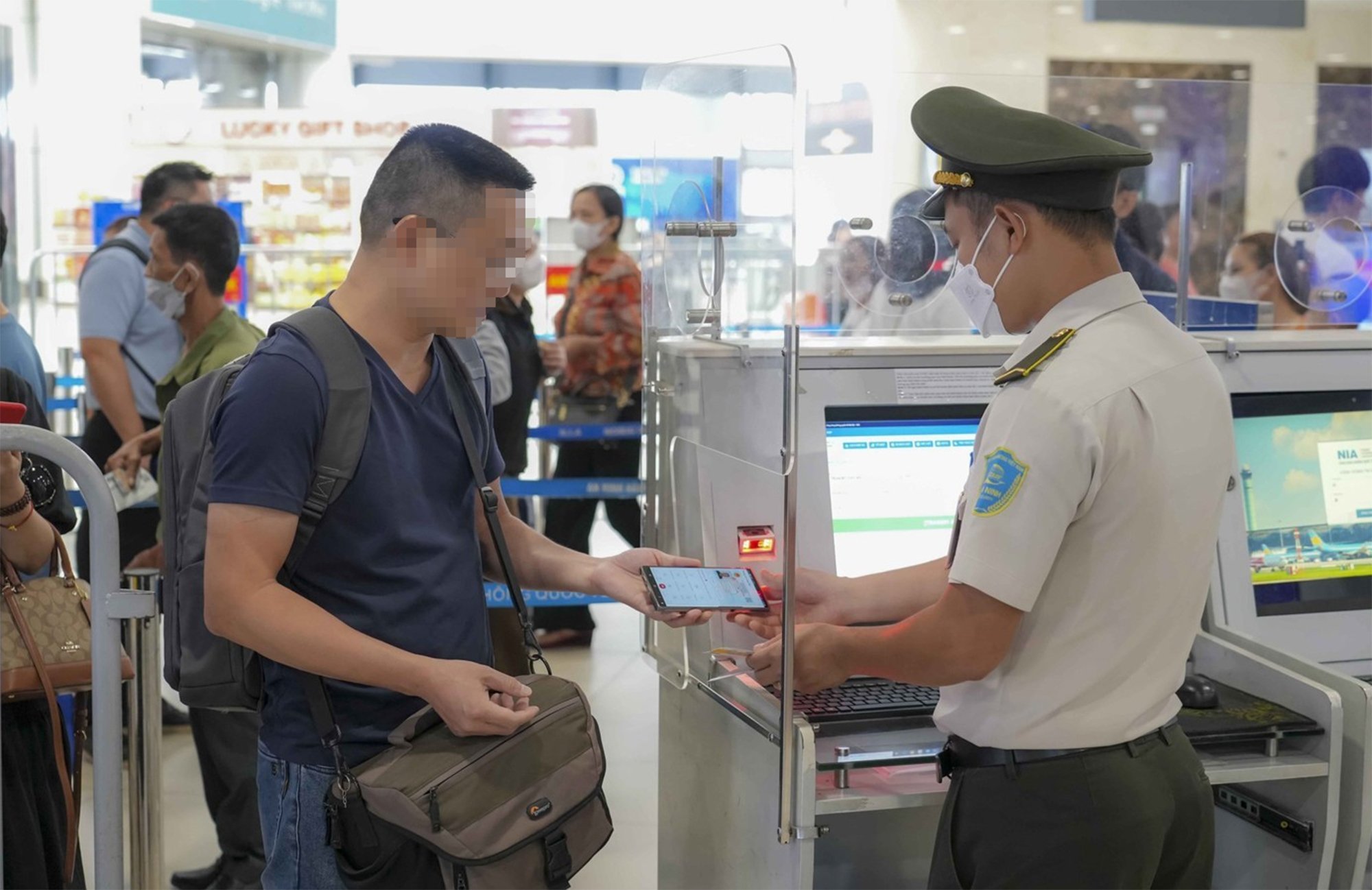
Imposing a travel ban on tax debtors should only be considered as a last resort when other measures have proven ineffective (illustrative image).
It seems the new proposal in the draft aims to "resolve" the issue of tax arrears of only a few million dong being subject to travel bans, as has happened in the past. However, I am still unclear on what basis this proposal is made.
Each figure presented needs to be logical and linked to other legal regulations to make it simple, easy to remember, and easy to implement. This will lead to better compliance from citizens and businesses. Otherwise, implementation will easily encounter obstacles, resulting in amendments to regulations that do not address the root of the problem.
Some argue that the starting point for personal income tax payment or the minimum wage should be used as the basis for determining the threshold for tax debt that would necessitate a temporary travel ban. This would avoid the need to adjust the figure later due to inflation or changes in circumstances.
In addition, many businesses have also commented that the proposed threshold is too low, suggesting that the tax debt threshold for applying the travel ban measure should be raised to 200 million VND for individuals and 1 billion VND for businesses.
It can be said that applying travel restrictions to individuals with large and long-standing tax debts is a positive measure to recover outstanding tax debts. However, this should only be applied to serious cases with large amounts of tax debt.
In fact, tax authorities currently have many measures to enforce tax debt collection, such as deducting money from bank accounts, declaring invoices invalid, seizing and auctioning assets, etc. Therefore, these measures should be prioritized, especially deducting money from bank accounts or third parties, before restricting people's freedom of movement.
The tax authorities already possess data on millions of taxpayers' bank accounts. Implementing coercive measures to deduct money from these accounts would not be complicated.
Furthermore, it is necessary to address the root cause of the recent controversies surrounding this regulation. This is the fact that many people have reported not receiving notification about their tax debts, and were therefore surprised when they received a temporary suspension order at the airport.
There are two remaining scenarios here. First, the tax authorities haven't established close ties with taxpayers. Second, taxpayers are unaware of the consequences and are deliberately delaying payment.
Meanwhile, in some countries, the procedure of temporarily suspending departure is almost a last resort, when other measures such as asset seizure and bank account freezing have failed to collect taxes.
Authorities need to make it clear to taxpayers that they owe taxes and are on the list of those banned from leaving the country. Notices should be sent to those who are late in paying taxes and posted publicly on tax debt websites.
At the same time, it is necessary to consider the taxpayer's compliance with the law; failing to pay small amounts of tax indicates procrastination and a low level of legal compliance.
Additionally, a mechanism could be studied to allow individuals whose departure is temporarily suspended to pay taxes or the equivalent amount of advance payments directly at the border crossing. This would both help the government collect the money quickly and enable tax debtors to immediately resume normal travel.
Source: https://www.baogiaothong.vn/no-thue-bao-nhieu-moi-cam-xuat-canh-192241212222735253.htm
![[Photo] Secretary of the National Assembly Party Committee, Chairman of the National Assembly presides over the meeting of the Standing Committee and Executive Committee of the National Assembly Party Committee.](https://vphoto.vietnam.vn/thumb/1200x675/vietnam/resource/IMAGE/2026/06/03/1780480353201_ndo_br_bnd-2585-jpg.webp)
![[Photo] General Secretary and President To Lam presides over a meeting with the Central Organizing Committee.](https://vphoto.vietnam.vn/thumb/1200x675/vietnam/resource/IMAGE/2026/06/03/1780482764658_a1-bnd-4741-3342-jpg.webp)
![[Photo] First session of the 14th Congress of the Vietnam Trade Union](https://vphoto.vietnam.vn/thumb/1200x675/vietnam/resource/IMAGE/2026/06/03/1780465947883_ndo_br_img-3852-jpg.webp)




















































![[Video] Sunset at Lap An Lagoon – Where the sun sets over the fishing nets](https://vphoto.vietnam.vn/thumb/1200x675/vietnam/resource/IMAGE/2026/05/31/1780192137701_beach-landscape-sea-water-nature-grass-745871-pxhere-com.jpeg)






























Comment (0)