

Proud historical milestones
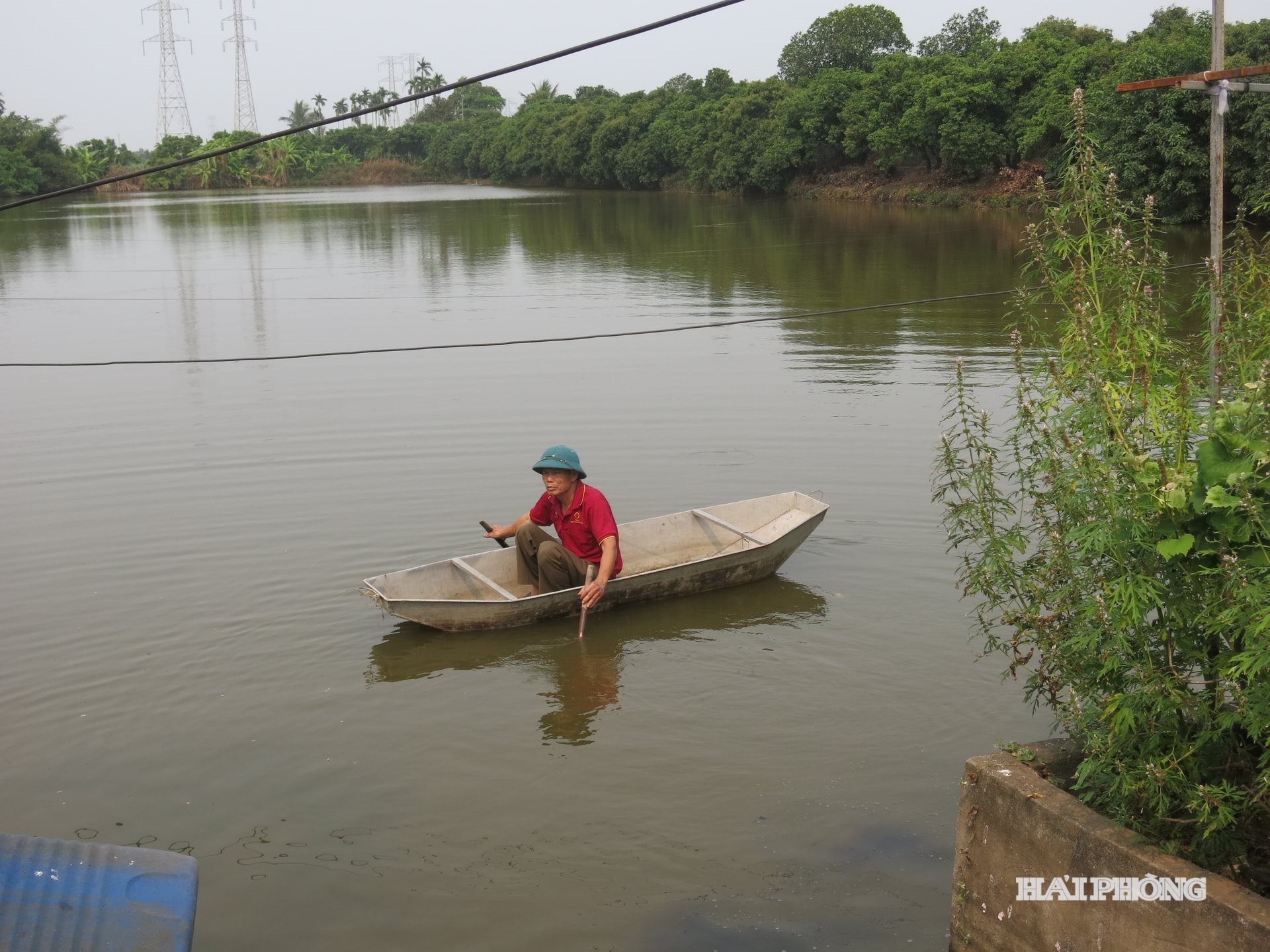
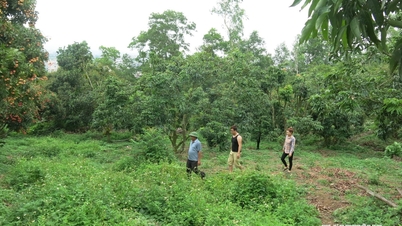
In April, the road to Quy Cao farm is fragrant with the scent of lychee and longan blossoms. Clusters of young fruit begin to form among the tender green leaves. The farm is peaceful. Here and there, in the fields and gardens of the farm, workers are still diligently and laboriously engaged in agricultural production.
The Quy Cao farm has a history dating back to 1957. During the period from 1957 to 1968, the farm was considered a Southern agricultural center, helping people from the South relocate to the North to stabilize their lives, engage in agricultural production, and integrate with the North during the resistance war against the US. During those years, farm workers focused on production to supply food for soldiers and civilian laborers, contributing to the construction of a socialist North and the liberation of the South.
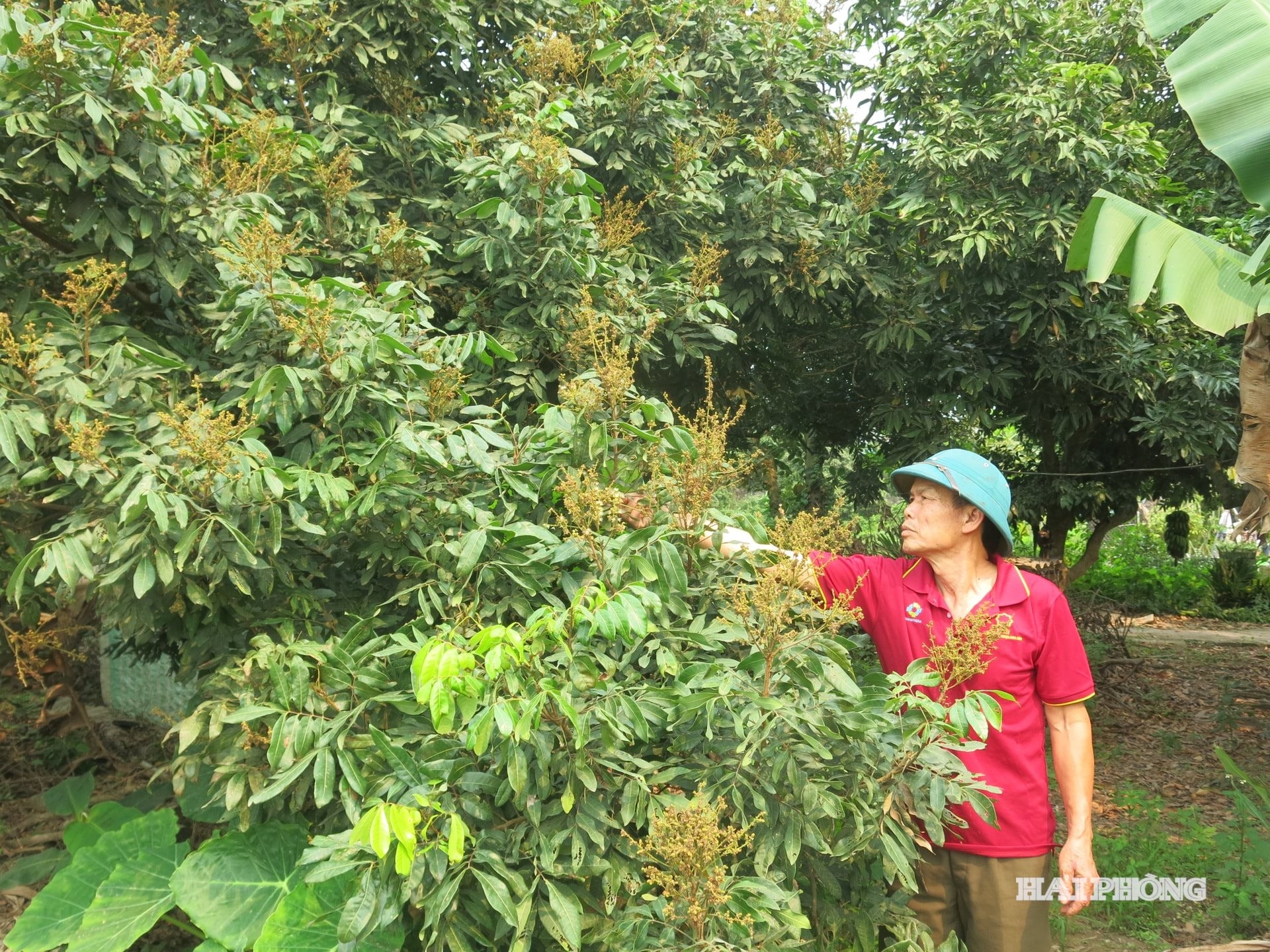
While pruning the newly replanted lychee orchards, Mr. Nguyen Van Chuyen, a farmer at the farm, focuses on caring for the "ancestor" lychee trees. Mr. Chuyen recounts that more than two-thirds of his orchard still contains delicious lychee trees planted during the time when cadres and people from the South gathered to work at the farm. After the liberation of the South and the reunification of the country, the cadres and people from the South returned to their hometowns, and the cadres and workers who took over the farm continued to care for the lychee trees to ensure high yields…
Every worker at Quy Cao farm cherishes the memories of the time when the farm was under the care of cadres and people from the South who developed production there. During the period from 1957 to 1968, President Ton Duc Thang frequently visited the farm. He was deeply moved by the land and people there, as the atmosphere resembled his homeland in the South. He often visited the farm's cultivation models in the fields, ponds, and gardens, observing the methods, plant varieties, and farming techniques of the people in the South. Each time he visited the farm, President Ton Duc Thang often stayed at the house in Dai Do village. Later, the Party Committee, government, and people of the former Tien Lang district built the Ton Duc Thang Memorial House in the former Tien Cuong commune, now Quyet Thang commune.
We hope to open up new avenues of development for the farm.
After the liberation of South Vietnam, the people of the South returned to their homeland. The Quy Cao Agricultural Farm still had over 122 hectares of cultivated land left by the people of the South, which the cadres and workers, mainly from the communes of Hai Phong city, continued to cultivate. In 1993, the farm was renamed Quy Cao Agricultural Company Limited…
According to Nguyen Manh Viet, Secretary of the Party Branch of Quy Cao Agricultural Farm Residential Area, continuing the tradition of the former Southern Vietnamese agricultural farms, Quy Cao Agricultural Farm still has more than 100 households working as employees of Quy Cao Agricultural Company Limited. They are diligent and hardworking individuals whose main tasks are caring for the orchards left behind by former Southern Vietnamese officials and people, developing aquaculture, and livestock farming.
However, on November 1, 2021, the People's Committee of Hai Phong City issued a decision to dissolve Quy Cao Agricultural Co., Ltd. While awaiting dissolution, several permanent structures, garden houses, and villas were built illegally on agricultural land at the farm. According to Mr. Nguyen Manh Viet, the incident stemmed from some farm workers who no longer needed to live on the farm and therefore transferred their land to various organizations and individuals. These organizations and individuals violated the Land Law. Furthermore, related to the dissolution of Quy Cao farm, several officials and leaders who committed violations were disciplined… Subsequently, the People's Committee of Tien Lang District (formerly) carried out enforcement and demolition of some structures built on agricultural land…
At the time of the farm's dissolution, nine farm workers had reached retirement age. In addition, more than 100 former farm workers from 2022 to the present have not yet received appropriate benefits. In reality, after the city addressed the violations at the Quy Cao farm, the farm workers continued production, but many were saddened because, after the dissolution decision, the farm no longer had a leadership and management structure. The people had to fend for themselves to develop production and stabilize their lives. Mr. Le Van Tu, a farmer at the farm, said that besides farming, some households also engage in aquaculture with ponds for raising freshwater shrimp and fish; some households utilize the riverside areas to raise mudworms, bringing in high income…
According to Mr. Nguyen Manh Viet, the households who were formerly workers at the Quy Cao farm still cherish every piece of farmland and are determined to develop stable production, but current production conditions are very difficult. The farm's residential area only has a Party branch secretary, with no village head or leadership structure. Infrastructure serving daily life and production is not very convenient. For example, the road leading to the farm's residential area has not been upgraded or improved for many years, making it very difficult for people to travel or transport agricultural products...
Leaving the Quy Cao farm residential area that day, we understood the difficulties and hardships of the people here, but this did not discourage the farm workers then and now. They only hope that in the future, the city and local authorities will pay attention and create conditions for a more stable life, while also increasing production efficiency and upholding the traditions of Southern Vietnamese farms in the old North.
HUONG ANSource: https://baohaiphong.vn/nong-trang-nam-bo-tren-dat-bac-540568.html

![[Photo] Secretary of the National Assembly Party Committee, Chairman of the National Assembly presides over the meeting of the Standing Committee and Executive Committee of the National Assembly Party Committee.](https://vphoto.vietnam.vn/thumb/1200x675/vietnam/resource/IMAGE/2026/06/03/1780480353201_ndo_br_bnd-2585-jpg.webp)
![[Photo] General Secretary and President To Lam presides over a meeting with the Central Organizing Committee.](https://vphoto.vietnam.vn/thumb/1200x675/vietnam/resource/IMAGE/2026/06/03/1780482764658_a1-bnd-4741-3342-jpg.webp)












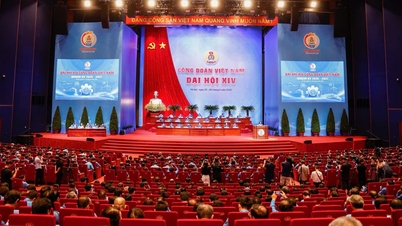
![[Photo] First session of the 14th Congress of the Vietnam Trade Union](https://vphoto.vietnam.vn/thumb/1200x675/vietnam/resource/IMAGE/2026/06/03/1780465947883_ndo_br_img-3852-jpg.webp)


















![[Video] Sunset at Lap An Lagoon – Where the sun sets over the fishing nets](https://vphoto.vietnam.vn/thumb/1200x675/vietnam/resource/IMAGE/2026/05/31/1780192137701_beach-landscape-sea-water-nature-grass-745871-pxhere-com.jpeg)



















Comment (0)