

Fighting the enemy to defend the village.
Ms. Le Thi Nga was born in 1948 in Dien Xuan (now Dien Ban Tay commune, Da Nang city) into a family with a rich revolutionary tradition. Her father, Mr. Le Anh, left home to join the main army, while her mother stayed at home to work as a secret operative. At the age of 16, Le Thi Nga realized that she "had to participate in the revolution, take up arms to fight to protect her village and land," so she joined the Dien Hong commune guerrilla unit. She was trained by the local guerrillas in using weapons to fight the enemy and participated in local battles. In 1966, the Dien Ban District Military Command recruited soldiers, and she volunteered, being assigned to unit Q82.
Her first battle was the attack on the Vinh Dien prison, freeing revolutionary fighters who had been captured and tortured there. In this battle, Ms. Nga was wounded. After a few days of treatment, she continued fighting, holding the positions of Deputy Squad Leader and Squad Leader in the District Military Command. In 1968, upon hearing that the Le Do Special Forces unit was recruiting women for combat operations in Da Nang, she requested permission from the commander of Unit Q82 to join. Participating in numerous battles, large and small, in Da Nang and neighboring districts, her resourcefulness, quick wit, and courage earned her admission to the Communist Party of Vietnam in May 1968 by the District 2 Party Branch of the Da Nang Party Committee.
Ms. Nga recounted: "Back then, the Le Do commando company led troops to attack the Gia Long Police Station. The unit divided its forces into several assault groups. The base was meticulously infiltrated, and I disguised myself legally with documents under the name Nguyen Thi Hoang, from Dien Tien, and went with my comrades to the base's house next to the police station to wait for weapons. Unfortunately, my group lost our weapons during transport, and the group commanded by Comrade Nguyen Dinh Tham, the company commander, was exposed and captured. Faced with this situation, we discussed retreating to avoid further casualties."
The men in the squad split into groups of two, disguising themselves legally and blending into the houses. I went to Con Market to catch a three-wheeled motorbike taxi to Vinh Dien. The taxi was carrying six people, traveling from Da Nang. As soon as we got off at Vinh Dien bus station, the police arrested me and another passenger and took us to Vinh Dien prison. Despite the enemy's many tactics, Mrs. Nga remained steadfast and refused to reveal anything. They then took her to Hoi An prison and subjected her to brutal torture. They released snakes on her, tied her hands, and pricked all ten of her fingertips with needles. Despite the pain, I gritted my teeth and endured the humiliation, determined not to confess.
The haunting image of the "tiger cage"
From Hoi An prison, they took Ms. Nga to Non Nuoc prison, where she was subjected to torture by the Second Bureau of Prisons, including beatings and electric shocks… but they could not break the will of the female commando Le Do. Afterwards, they transferred Ms. Nga to Phu Tai prison camp in Quy Nhon.
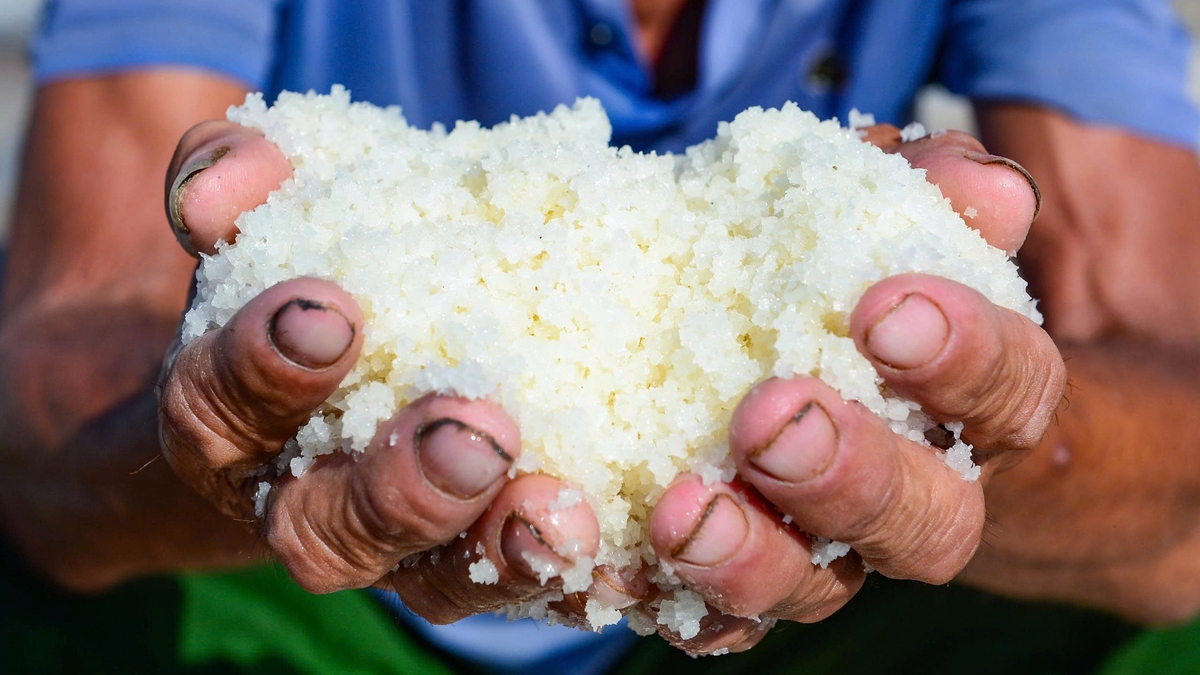
The prison camp was situated in a deep valley in the mountains, a basin-shaped area surrounded by the rocky mountains of the Truong Son mountain range in Quy Nhon, Binh Dinh. Before 1967, this was a 200,000 square meter cemetery. When the US imperialists and the Saigon government established a military base, they leveled the cemetery to create a military base and used part of the area to build the prison camp. Locals often called it the "Salt Valley," while the Saigon government initially called it the "Quy Nhon Communist Prison Camp," later renamed it the "Vietnamese Communist Female Prisoner Camp," and the revolutionary base abbreviated it as Phu Tai Prison Camp.
Ms. Le Thi Nga said: “To carry out their plot to destroy the physical and mental health and paralyze the fighting spirit of the female prisoners, the enemy used every cruel and cunning tactic. They successively used methods such as: starving prisoners for many consecutive days if they refused to surrender; forcing them to do push-ups under the sun until they fainted; exposing them to the sun, pouring chili water and soapy water into their noses and mouths, then stepping on their stomachs and chests; locking them in solitary confinement in tiger cages… I and my sisters went through it all. Overcoming my physical pain, I encouraged those who were stronger to help the weaker ones, bandaging wounds, asking for porridge and water to feed each person, instilling the belief that victory would surely come tomorrow, and giving them more mental strength to stand firm in the struggle.”
We will never retreat in the face of the enemy.
The enemy tried every means to destroy our Party organization, Party branches, and mass organizations in the prison camp, but failed. Ms. Nga managed to contact the Party branch of Camp 2, and was assigned by the organization to be the Head of the Sub-unit, Deputy Secretary of the Youth Union, and then the Commander of the political struggle assault platoon. In every position, she performed her duties excellently, earning the trust and affection of her comrades.
Ms. Nga recounted that in 1971, upon receiving intelligence that the revolutionary struggle movement outside was in full swing, she contacted the organization to feign illness in order to distribute leaflets to the Republic of Vietnam Military Hospital in Quy Nhon.
"Back then, I thought losing a wisdom tooth would be worth it if it led to something big," she told the prison warden, explaining that she needed to have her wisdom tooth extracted because only with a wisdom tooth could she go to the hospital. Leaflets were secretly smuggled in, and on the day she was allowed to go to the hospital, she divided several stacks of leaflets into smaller pieces, pinned them to the top of her straw hat, and covered them with a layer of black burlap to conceal them. She learned from the experience of the women who had gone before her that wearing a hat would result in a search, but wearing a straw hat wouldn't.
“That day, the prisoners were in a lot of pain, so a large number were taken to the hospital. While waiting for my turn to have a tooth extracted, I quickly and discreetly distributed all the leaflets I had brought with me. Then I had my tooth extracted without pain. I was sore for five days after returning to the camp. I heard from the informant that the enemy saw the leaflets scattered around the hospital and investigated thoroughly, but they didn't think they were distributed by prisoners because prisoners don't have leaflets,” Ms. Nga shared.
In 1972, they transferred nearly 1,000 prisoners from Phu Tai to Can Tho to be exiled to Phu Quoc. The female prisoners formed a unified political struggle. When the Paris Agreement was signed, they agreed to release the prisoners at Loc Ninh. Ms. Nga returned to Battalion 312, Front 4 - Quang Da, stationed in Thanh My (Nam Giang). Her body was emaciated, so the organization sent her to the North for recuperation in Dun village, Ninh Binh province.
After three months of recuperation, she returned to Unit 70B, then transferred to Company C3, Regiment 210, where she served as Deputy Political Commissar of the Company. Later, she became Deputy Commander of the Victory Regiment, fighting alongside her comrades on the Son Phuc battlefield. In 1974, she was sent to study military and political science at Company C73, Front 4, and then took charge of the Cadet School. In early 1975, Ms. Nga joined her unit in the advance to liberate Da Nang.
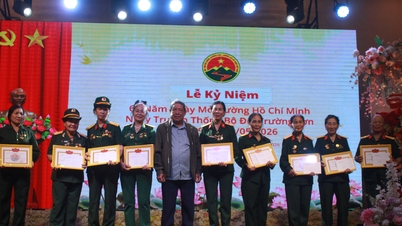
Ms. Nga got married in 1977. Her husband is also a former prisoner of Con Dao, who had one leg amputated by the enemy while in prison. In 2020, the group of female prisoners of war at Phu Tai prison camp were awarded the title of Hero of the People's Armed Forces by the President of Vietnam. "To this day, I am extremely proud that I have dedicated a part of my life to the revolution," Ms. Nga concluded her story with a joyful and enthusiastic spirit amidst the days when Da Nang city celebrated the 51st anniversary of the liberation of her homeland.
Source: https://baodanang.vn/nu-biet-dong-thanh-kien-trung-3329859.html
![[Photo] General Secretary and President To Lam presides over the meeting to approve the draft report on the results of the second inspection by the Politburo of the Standing Committee of the Hanoi City Party Committee.](https://vphoto.vietnam.vn/thumb/1200x675/vietnam/resource/IMAGE/2026/05/26/1779789811432_a2-bnd-4430-9620-jpg.webp)






























































Comment (0)