

Life-changing transformation through goat farming.
From abandoned fields and hillsides, and fragmented, spontaneous livestock farming, after a long period of research and a bold shift to goat farming, the goat farming industry in Yen The district has now formed and developed in a commercial direction, bringing high economic efficiency to many people.
With 11 years of experience raising goats, Mr. Nguyen Van Bay, from Dong Gian village, Xuan Luong commune, said: "Goat farming has brought high economic efficiency to my family. In 2011, during a visit to a friend's family in Cao Bang , I happened to learn about the goat fattening model. I boldly borrowed money and bought nearly 10 goats to raise. Initially, I experimented with learning about goats' habits, then gained experience, and gradually I became attached to the profession without even realizing it."
It is known that in the early years of his career, goats were mainly raised free-range on hillsides. Later, Mr. Bay realized that managing the herd was very difficult, as goats were often infected with internal and external parasites. Instead of the previous free-range method, Mr. Bay has now completely switched to raising them in sturdy, two-story barns that are dry, warm in winter, and cool in summer.
Mr. Bay shared: "While working, I also learned from experience and researched goat fattening techniques from those who came before me, from online sources, newspapers, and radio... As a result, subsequent batches of goats are less prone to disease, grow faster, and bring in a significant income for my family. Currently, I raise 3 batches of goats per year, each batch with 500-600 goats. After 3 months, each goat weighs 30-35 kg, and the selling price of goat meat is 120,000 VND/kg. After deducting expenses, my family earns a profit of over 200 million VND per batch."
Similarly to Mr. Bay, Mr. Nguyen Van Tu, a typical commercial goat farmer in Dong Gia village, said that fattening goats for commercial purposes is one of the ways to bring high income to people in Xuan Luong commune. From small-scale farming of a few dozen goats, there are now over 15 households in the commune raising goats on a concentrated scale, typical in the villages of Nghe, Dong Gian, Dong Gia, and Lang Duoi. Mr. Tu added: "In the future, we will establish a goat farming cooperative to facilitate product consumption as well as import breeding stock with guaranteed quality, attracting and creating conditions for more households to participate."
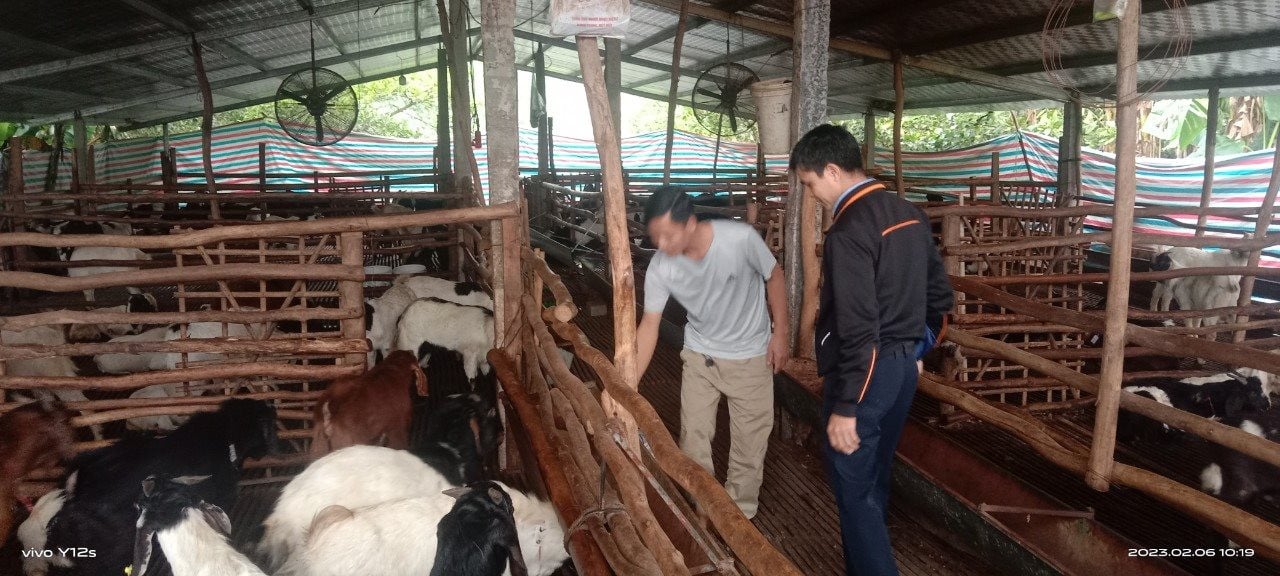
Unlike Mr. Bay and Mr. Tu, Mr. Nong Tran Hien, from Hong Ky commune, joined the Hong Ky Goat and Honey Bee Production and Consumption Cooperative. After joining the cooperative, he and other members collaborated in livestock farming, finding markets for their products, and generating a highly effective and stable income. His family's total annual income is estimated at over 200 million VND. In addition, many other households have stable incomes, gradually improving their living standards, and many have become well-off thanks to commercial goat farming.
Breeding goats adapted to the climate.
Currently, the two main types of goats raised in Yen The are the Bach Thao crossbreed and the Boer crossbreed (Boer crossbreeds include two lines: the dwarf Boer goat imported from Thailand and the tall Boer goat imported from Myanmar). These are two commercial goat breeds created by crossbreeding Bach Thao and Boer male goats with local female goats. These breeds are suitable for the local farming conditions and climate, are less susceptible to disease, and grow and develop well. This is also the assessment of specialized agencies under the Department of Agriculture and Rural Development of Bac Giang province.
According to Mr. Bay, the Boer goat breed has the outstanding advantage of growing very quickly, yielding more meat than ordinary goat breeds. In particular, Boer goats are hardy and adaptable, able to thrive in various climatic conditions, have good disease resistance, and are omnivorous, thus having low economic risk and giving breeders peace of mind. However, goat farmers still ensure that all four vaccines are administered to the herd: pox, hemorrhagic septicemia, foot-and-mouth disease, and necrotic enteritis. Complete vaccination helps increase the survival rate until sale, significantly improving the economic efficiency of goat farming.
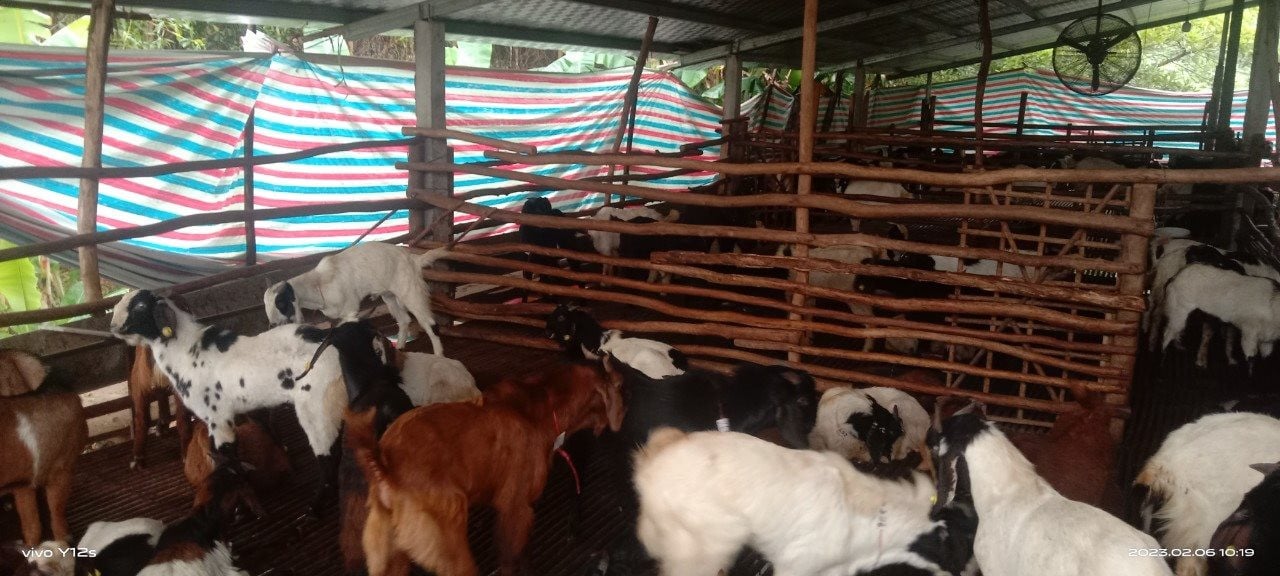
According to Mr. Duong Van Vy, Head of the Livestock and Veterinary Department of Yen The District, in order to encourage goat farming households in the district, the District People's Committee issued a project to develop commercial goat herds associated with building a certified Yen The goat brand. As a result, the goat herd in the district has increased rapidly, currently reaching approximately 10,000 head, concentrated in the communes of Hong Ky, Xuan Luong, Canh Nau, Tan Soi, etc. In Hong Ky commune, the government has supported and encouraged the establishment of a new goat farming cooperative. Many communes have also established cooperative groups to share experiences and strengthen production and product consumption linkages.
Source





















































































Comment (0)