

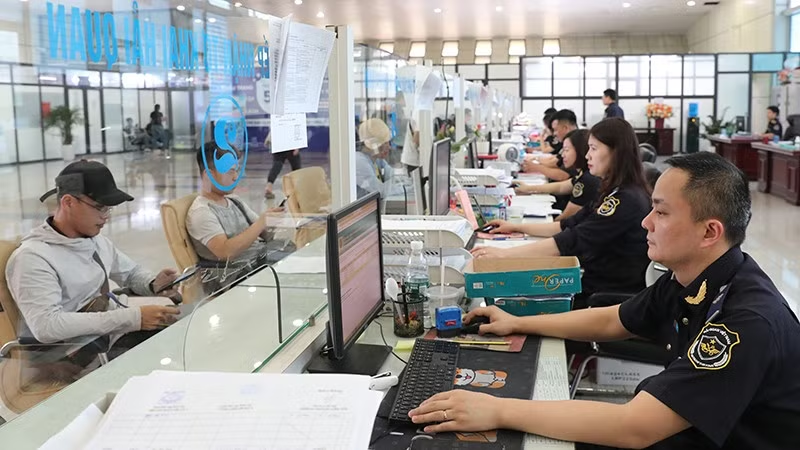
The enthusiasm of the business community
There was virtually no wavering during the three-hour non-stop working session of the North Central Region Cluster Dialogue of the Vietnam Private Economic Forum 2025, held in Thanh Hoa in early August 2025. 200 businesses from the provinces of Thanh Hoa, Nghe An, Ha Tinh , Quang Tri, and the city of Hue patiently waited their turn to speak.
In two similar dialogue sessions recently held in the Southwest and Northeast mountainous regions, hundreds of businesses registered to participate with numerous suggestions and requests... However, the enthusiasm of businesses in making suggestions to local authorities at this time is not solely due to specific difficulties and obstacles in production and business activities, as is often the case.
In a list of recommendations submitted to local authorities, Mr. Nguyen Hong Phong, Vice President of the Vietnam Young Entrepreneurs Association and General Director of Tien Nong Agricultural and Industrial Joint Stock Company (Thanh Hoa), mentioned the North Central region as a particularly strategic area on the national development map. This region serves as both a north-south connecting corridor and a transit point between the east and west. With its system of seaports, airports, coastal economic zones, industrial parks, and a young, highly potential workforce...
"This region possesses a set of favorable conditions for the formation of new growth poles. However, businesses in the region have not yet achieved development commensurate with these advantages, which many other regions lack," Mr. Phong lamented.
There are many reasons, partly due to the predominantly small and micro-sized enterprises, the absence of leading companies capable of driving the value chain, and the lack of dynamism in the business ecosystem. However, many businesses believe that regional linkage policies, especially in promoting the development of value chains in agricultural processing, logistics, supporting industries, and tourism, have not made the region attractive enough to strategic investors... "Many entrepreneurs share that they have ideas and aspirations to rise, but lack the necessary support to turn their desires into reality. I believe the answer lies not only in the policies at the central level, but also in the determination to reform and the concrete action capacity of each locality," Mr. Phong explained the reasons behind a series of open questions.
Government support efforts
During these meetings, local leaders didn't have a moment's rest. Except for the times he spoke or answered questions from businesses, Mr. Nguyen Van Thi, Vice Chairman of the Thanh Hoa Provincial People's Committee, continuously took notes and exchanged views with representatives from the departments and agencies present. At times, Mr. Thi became pensive when receiving difficult questions from businesses.
His 24 years in business have given him valuable experience in dialogue and understanding the difficulties and challenges faced by local businesses, which are mostly small and medium-sized enterprises (SMEs), such as lack of capital and market access. However, during the exchange, he also shared the businesses' concerns about their desire to grow and expand further. Mr. Thi stated that, along with implementing central government policies, Thanh Hoa province has recently issued mechanisms to support businesses, from establishing new businesses to supporting businesses in the transportation and logistics sectors, and assisting household businesses. The provincial People's Committee is currently considering solutions to support SMEs in accessing land, focusing on building specialized industrial zones for SMEs using a model of renting factory space and sharing infrastructure. With this approach, instead of investing tens of billions of dong to build a factory, businesses only need to spend about 1/10 of that amount to rent, which is included in production costs. Infrastructure such as electricity, water, wastewater treatment, and fire safety are shared. Businesses can start operating immediately after importing the machinery.
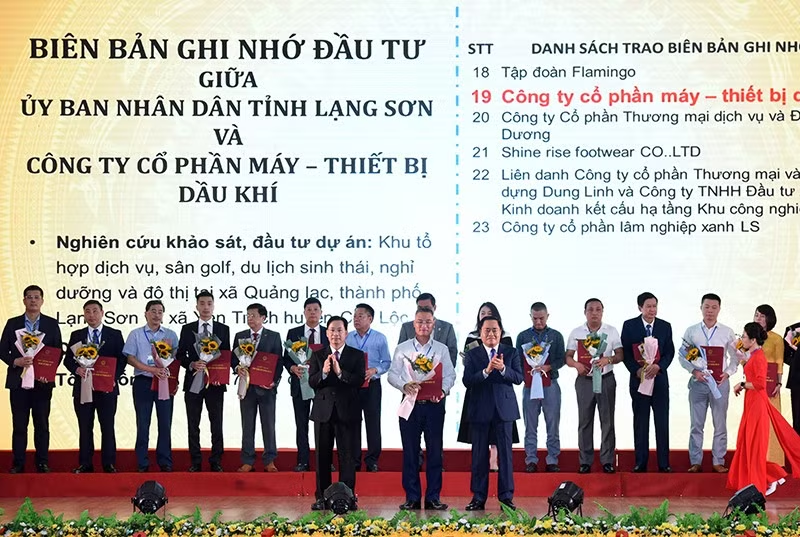
Mr. Thi even personally took responsibility for negotiating with the bank to find a way to reduce the interest rate on a loan for an agricultural processing business. “A manufacturing business borrowing at 12.5% will find it difficult to compete! I will work with the bank to find ways to support them, possibly through a debt refinancing loan,” Mr. Thi pledged.
Partnering to solve the growth challenge
The business landscape across the 34 provinces and cities is probably something that local leaders are all well aware of.
Besides Ho Chi Minh City and Hanoi, which maintain their leading positions with nearly half of Vietnam's largest enterprises (in the VNR 500 ranking), many new business hubs have emerged. These include Dong Nai, Hai Phong, Hung Yen, and Tay Ninh. Large enterprises have also appeared in the southwestern provinces such as Dong Thap, Vinh Long, and Can Tho, as well as in the Central Highlands region like Gia Lai.
It is evident that the wave of industrial concentration is expanding beyond central urban areas, forming new production corridors from north to south. This is driven by the processing agriculture, fisheries, and renewable energy sectors in the Southwest and Central Highlands regions, as well as the emergence of medium-sized localities with impressive profitability, thanks to effective cost control, market positioning, and the ability to attract financially strong processing industry enterprises.
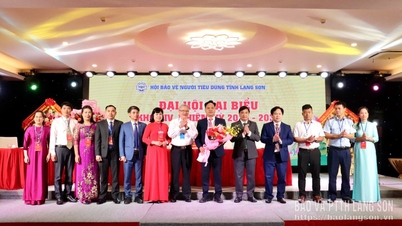
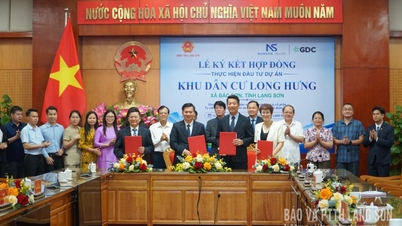
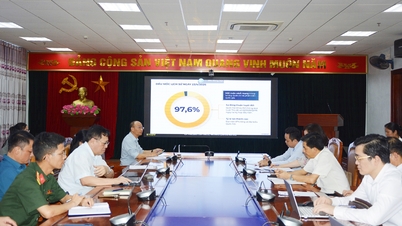
In particular, many provinces and cities are attracting young businesses that are rapidly expanding in scale, such as Phu Tho, Bac Ninh, Gia Lai, Khanh Hoa, and Can Tho. The group of provinces including Dong Thap, Quang Ngai, Dak Lak, An Giang, and Lam Dong also have many businesses with strong growth rates, demonstrating their ability to transform from traditional production areas to areas of innovative growth... During a discussion with businesses from Lang Son, Ha Giang (formerly), Cao Bang, and Dien Bien in the mountainous Northeast region, Mr. Doan Thanh Son, Vice Chairman of the People's Committee of Lang Son province, shared a lot about Lang Son's future journey and development opportunities linked to the Nanning (China) - Hanoi - Hai Phong - Quang Ninh economic corridor and the Chongqing - Singapore international trade transport route. He especially emphasized the goal of having over 18,000 businesses by 2030, with 20 operating businesses per 1000 people . The average growth rate of the private sector is approximately 10-11% per year, contributing more than 70% to the province's GRDP. "Without businesses, the locality cannot accomplish this task," Mr. Son frankly shared, expressing his desire to listen to businesses, even the most difficult ones, in order to create a truly business environment that fosters their development.
In practical terms, if localities can answer the questions raised by many businesses, both businesses and the government will benefit. These questions could include: How to attract high-quality investment projects in emerging economic sectors? How to ensure that policies supporting small and medium-sized enterprises are truly implemented? How can local vocational education institutions train a workforce that meets market demands? How can young people start businesses in their hometowns without having to leave?
Even the challenge of increasing total factor productivity (TFP), which many localities are struggling with, is something Tay Ninh hopes to achieve its ambitious goal of having TFP contribute 55-60% to the local GRDP by 2030, thanks to the participation of the business community.
Before the merger, Tay Ninh's performance indicator was 45%. After the merger, Tay Ninh also emerged among medium-sized localities with impressive profitability, thanks to its good cost control, effective market positioning, and attraction of financially strong processing industry enterprises. Vice Chairman of the Tay Ninh Provincial People's Committee, Doan Trung Kien, enthusiastically stated that many ambitious development goals were set in thematic meetings following the merger. “There were many differing opinions, but we gained a solid foundation from the participation of businesses. This is why the locality is implementing many programs to invite and attract new businesses, linked with efforts to improve the business environment and develop high-quality human resources…,” Mr. Kien said.
Each local growth point is being implemented with the contribution of businesses. Significantly, when businesses and the government work together through concrete actions, the potential of these regions is unleashed, creating opportunities for breakthroughs for the business community. New growth poles will emerge, providing new energy for an economy aiming for high and long-term growth.
Source: https://nhandan.vn/dong-long-thuc-day-cac-cuc-tang-truong-moi-post904221.html

![[Image] Close-up view of the interchange connecting the two expressways and Long Thanh Airport.](https://vphoto.vietnam.vn/thumb/1200x675/vietnam/resource/IMAGE/2026/05/25/1779703378210_ndo_br_z7863716673926-224453a31600126cce10622af6290afd-4549-jpg.webp)
![[Image] Hanoi's urban life under the challenge of a "scorching hot" environment](https://vphoto.vietnam.vn/thumb/1200x675/vietnam/resource/IMAGE/2026/05/25/1779706979265_nang-nong-t5-2026-minh-duy-7-4636-jpg.webp)

















![[Image] Hanoi's urban life under the challenge of a "scorching hot" environment](https://vphoto.vietnam.vn/thumb/402x226/vietnam/resource/IMAGE/2026/05/25/1779706979265_nang-nong-t5-2026-minh-duy-7-4636-jpg.webp)






























































Comment (0)