

An event that the tech world is eagerly anticipating, possibly happening as early as this year, is the launch of GPT-5.
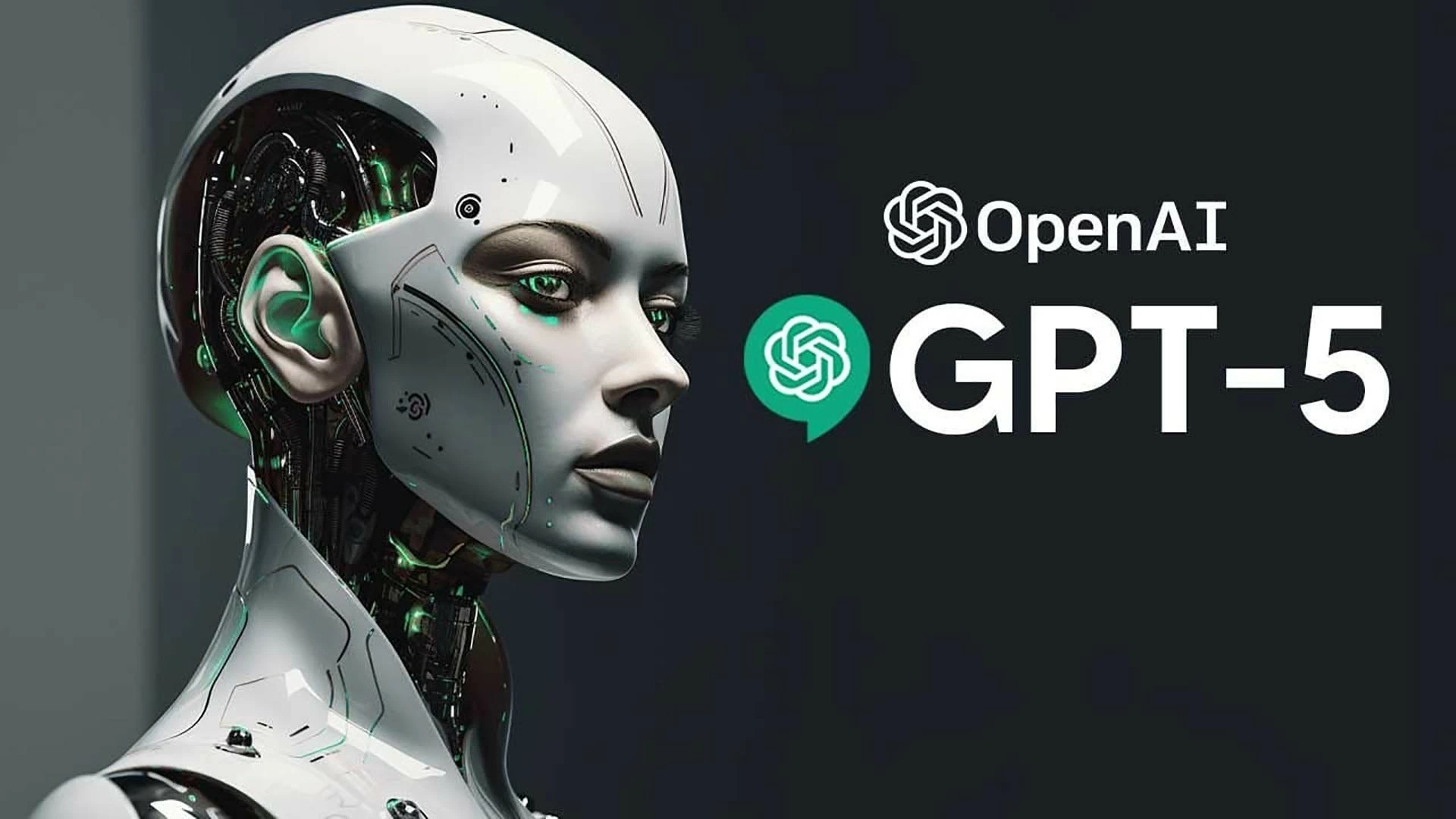 |
| An event that the tech world is eagerly anticipating, possibly happening as early as this year, is the launch of GPT-5. |
Many users of previous versions are awaiting GPT-5, but the arrival of one of the world's most advanced artificial intelligence (AI) systems is viewed with ambiguity by experts. What is GPT-5? What are the potential and capabilities of this new artificial neural network? What could its deployment lead to?
The journey into human life
The emergence of GPT and other language models represents a significant step towards integrating AI into modern human life. The capabilities of new, generalized AI systems are far from their development limits. In the coming years, AI technology could have a profound impact on transforming the labor market, replacing many high-demand professions in commerce, marketing, customer service, and other sectors.
In 2018, the developers released the first full version of this neural network, called GPT-1. Following the successful release of the first version, OpenAI experts developed GPT-2, GPT-3, and ChatGPT. The latter is a chatbot with conversational AI, based on an improved version of the GPT-3.5 language model.
The latest version is GPT-4, released last March. A key advantage of this fourth version is its improved ability to pass exams and tests in a wide range of subjects. It shows excellent results in several areas, significantly outperforming the performance of its predecessor, GPT-3.5.
Next up is GPT-5, a new level of AI.
GPT-5, OpenAI's next model after GPT-4, promises to take AI to a new level. The next-generation model is expected to be significantly more powerful than its predecessor. The main goal of this model is to bring humanity closer to creating general artificial intelligence (AGI) – an intelligent machine capable of performing many tasks, much like the human brain, from writing text to controlling a smart home.
GPT-5 will be able to generate better and more creative texts, translate languages, write various types of creative texts, answer questions on a wide range of topics, and perform many other tasks related to natural language processing.
Looking at the trajectory of improvement, the GPT-3 system is probably at the intelligence level of a child. The GPT-4 system is more like the intelligence of a high school student. And GPT-5 is expected to possess the intelligence of a PhD.
As Mira Murati, former Chief Technology Officer of OpenAI and one of the people behind the creation of ChatGPT, put it, "things are changing and improving very quickly."
The arrival of GPT-5 has been anticipated since the beginning of the year, but the release date remains unclear. Analysts at Autogpt.net suggest that ChatGPT 3 was released in June 2020, followed by ChatGPT 3.5 in November 2022. If OpenAI maintains a similar pace, we can expect ChatGPT 5 to be launched around the end of 2024 or the beginning of 2025, as ChatGPT 4 was released in early 2023. However, according to Mira Murati, the new model will not be available any sooner than the end of 2025 or even the beginning of 2026.
Revolutionary features and improvements
If successful, the things AI creates could be indistinguishable from products created by humans. Higher-level AI is capable of learning and understanding any task or concept accessible to humans, and is not limited to specific tasks or functions. It is reported that after its release, GPT-5 will be added to the YesAibot service, which already includes Stable Diffusion, SDXL, and ChatGPT, as well as the recently released GPT-4 Omni via the convenient Telegram interface.
ChatGPT-5 will undoubtedly have some revolutionary features and improvements. Sam Altman, head of OpenAI, once stated: “The most significant improvements may relate to analytical capabilities,” referring to the ability of AI models to interpret information, draw conclusions, and solve problems using available data and logical reasoning.
First, GPT-5 will be able to generate texts that are nearly indistinguishable from human-written text. Second, this version will be able to better understand the nuances of human language, including sarcasm. Third, GPT-5 will be able to handle more complex tasks requiring deep understanding of the subject matter, such as writing scientific papers or programming code. This model will be able to train on smaller amounts of data, which will accelerate the development of new applications. Notably, GPT-5 can integrate with other AI systems, enabling the creation of more complex and intelligent applications.
Risks and benefits go hand in hand.
The development of GPT-5, an AGI achievement, may be closer than many anticipate. This raises concerns that chatbot-like AI could gain so much power that it spirals out of control.
According to the International Monetary Fund (IMF), nearly 40% of the world's employed population faces risks related to AI. One aspect that makes AI unique is its potential to impact highly skilled jobs. As a result, developed economies face greater risks associated with artificial neural networks.
The development of AI in the fifth generation, GPT-5, could lead to the spread of misinformation and fake news. The misuse of this technology could lead to the manipulation of public opinion. Artificial neural networks, due to their technical characteristics, pose numerous challenges regarding privacy and the secure storage of digital data. Finally, the automation of work due to the advancement of GPT-5 could lead to unemployment and a worsening socio-economic situation.
Of course, the positive impact of GPT-5 deployment is undeniable: it promotes scientific and technological progress, creates new jobs in the field of AI, and improves people's quality of life through the automation of everyday tasks. Ramiz Shirinov, an IT engineer at Integrated Services, highlights the usefulness of AI “in solving many complex problems, such as combating climate change, creating new drugs, and technological innovation.”
According to Professor Alexander Afanasyev at the BRICS Baikal Institute, it is too early to talk about powerful AI capable of attacking humanity. Currently, there is no conflict of interest between humans and AI because in the future, AI development will be directed towards space. Furthermore, AI is concerned with preserving humanity in case something unexpected happens during its development.
***
GPT-5 is not just a new model, but a true revolution in the AI ecosystem. Experts believe that GPT-5 has the potential to revolutionize industries, bringing capabilities once considered science fiction, and opening new horizons for the use of AI in many fields.
GPT-5 is expected to significantly improve logical thinking and problem-solving skills, potentially even analyzing previously unseen puzzles and questions, leading to more intelligent inferences, and more accurate predictions and answers.
The evolution of AI from GPT-1 to GPT-5 clearly demonstrates the rapid pace of this technology's development. The future of neural networks, despite its advances and challenges, remains a fascinating topic as it will undoubtedly contribute to shaping the world of tomorrow.
Source


![[Photo] General Secretary and President To Lam presides over a meeting on assessing national development resources.](https://vphoto.vietnam.vn/thumb/1200x675/vietnam/resource/IMAGE/2026/05/20/1779253785852_a1-bnd-2943-8519-jpg.webp)































































































Comment (0)