

Exhausted from waiting for every drop of water.
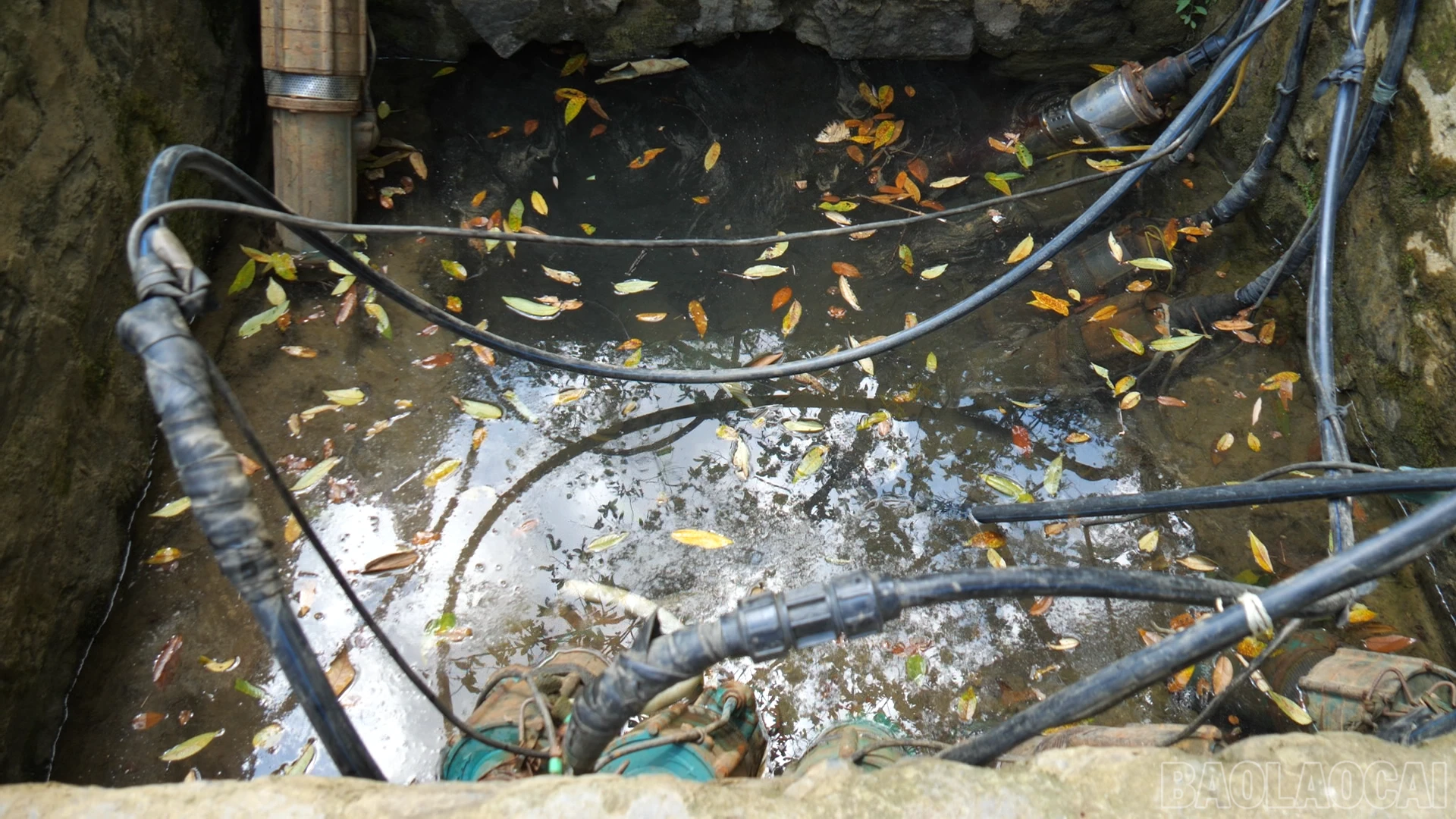
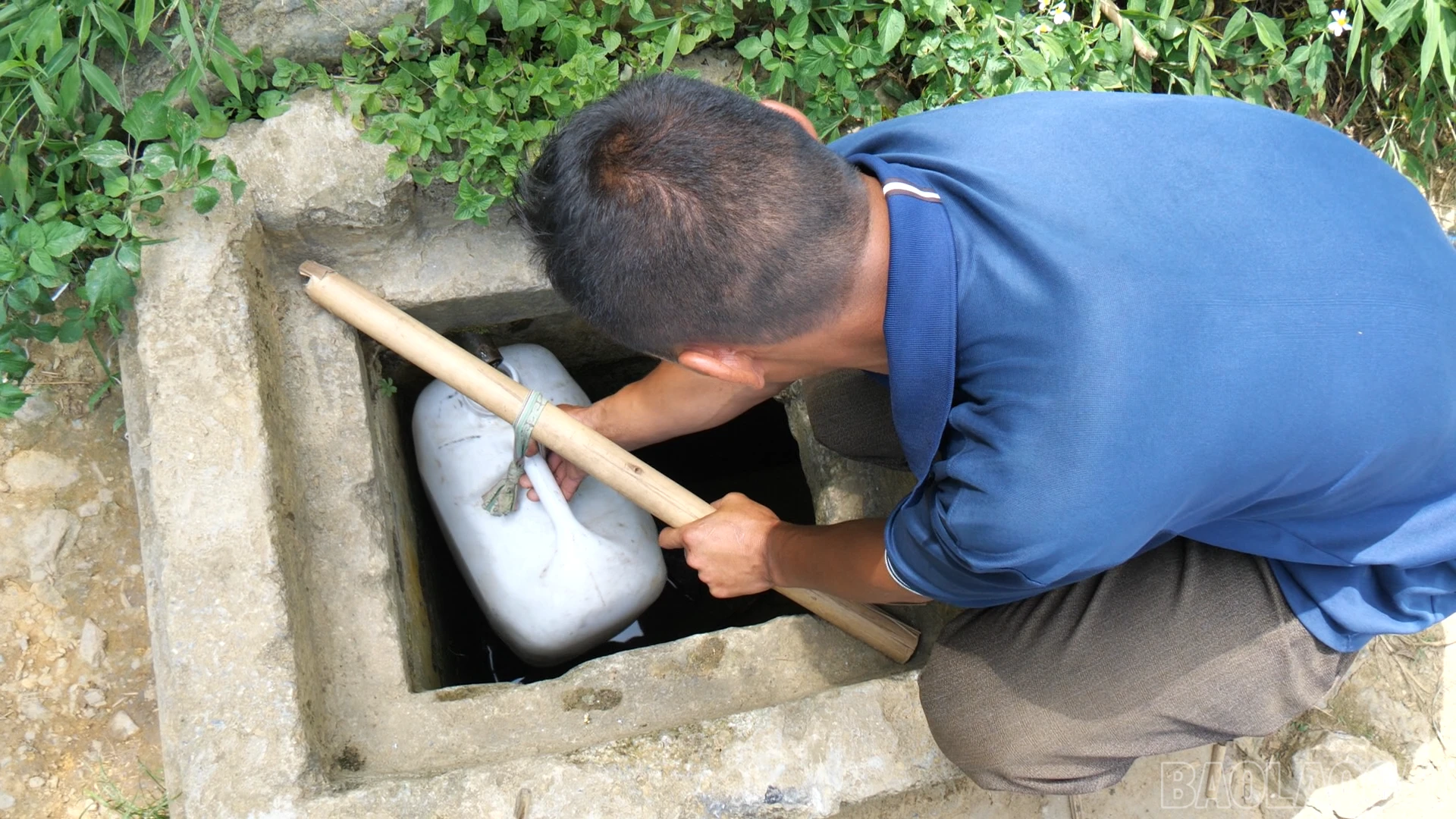
The road leading to Ngai Thau village winds around the mountain slopes, covered in white dust. Midway up the mountain, a small water reservoir sits nestled among makeshift shelters constructed from old wood and tarpaulin. This is the only source of water for over 40 households in the village. According to local residents, during the dry season, the water source at the headwaters significantly decreases. It takes 10 to 12 hours for only about 1 cubic meter of water to flow. Therefore, the villagers take turns waiting by the reservoir to collect water.
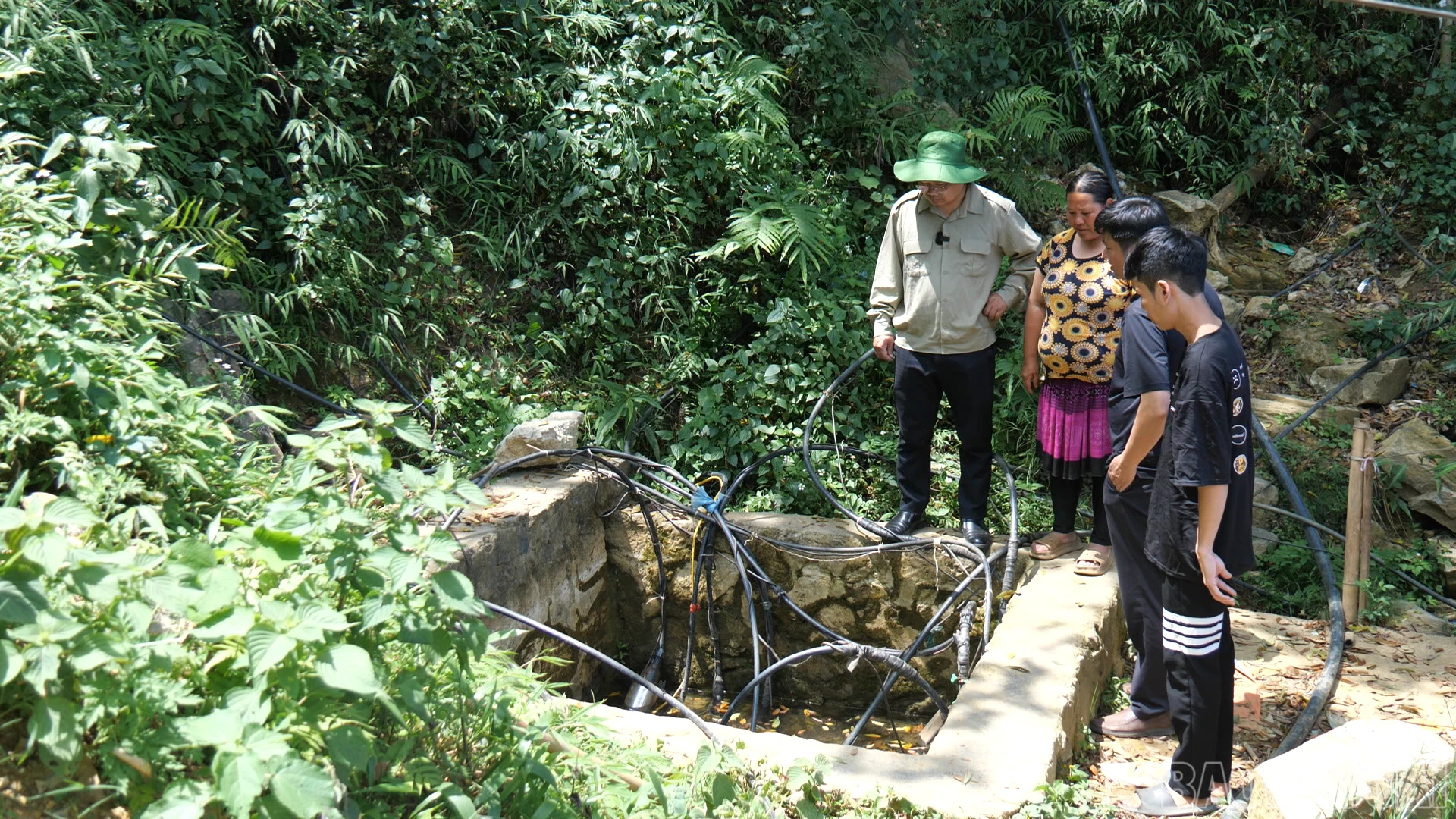
Beside the makeshift shelter, Mr. Lu Seo Ho patiently sits and watches the water level since early morning. He said that if he doesn't wait in person, it's very easy to miss his turn.
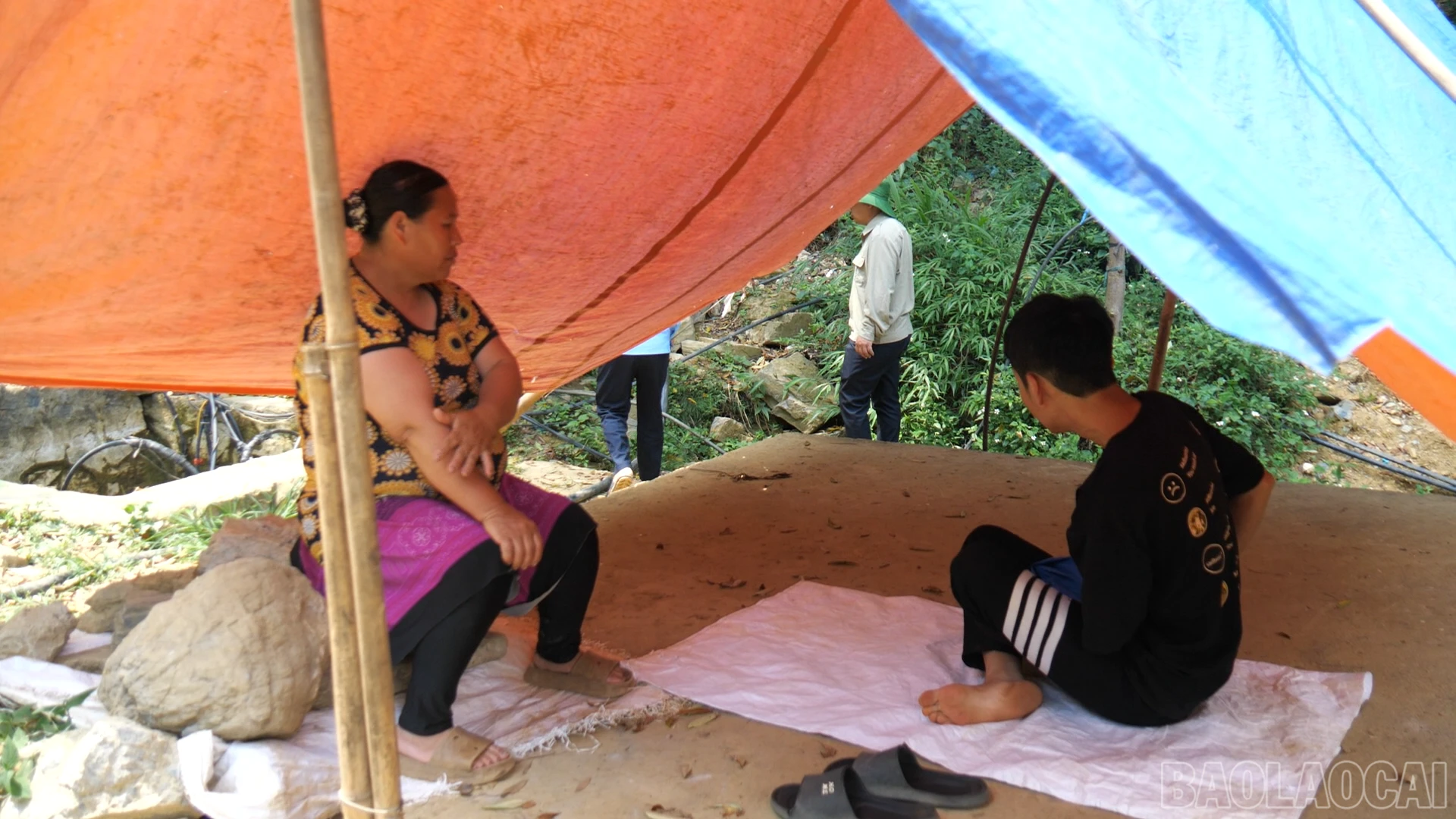
In a place where every can of water is precious, the sight of people queuing and taking turns guarding the water supply has become familiar over the years. Plastic cans are used to their fullest extent to store water for daily use.
After waiting for half a day, the meager flow of water finally reached the reservoir. Although the water is murky and not hygienic, for many households here, it remains their only lifeline during the drought.
Mr. Giàng Seo Sính, a resident of Ngải Thầu village, said:
Not only in Ngai Thau village, but also in Din Chin village, the water shortage is severe. People have to carry dozens of plastic containers to collect every drop of water that flows from the mountain stream.
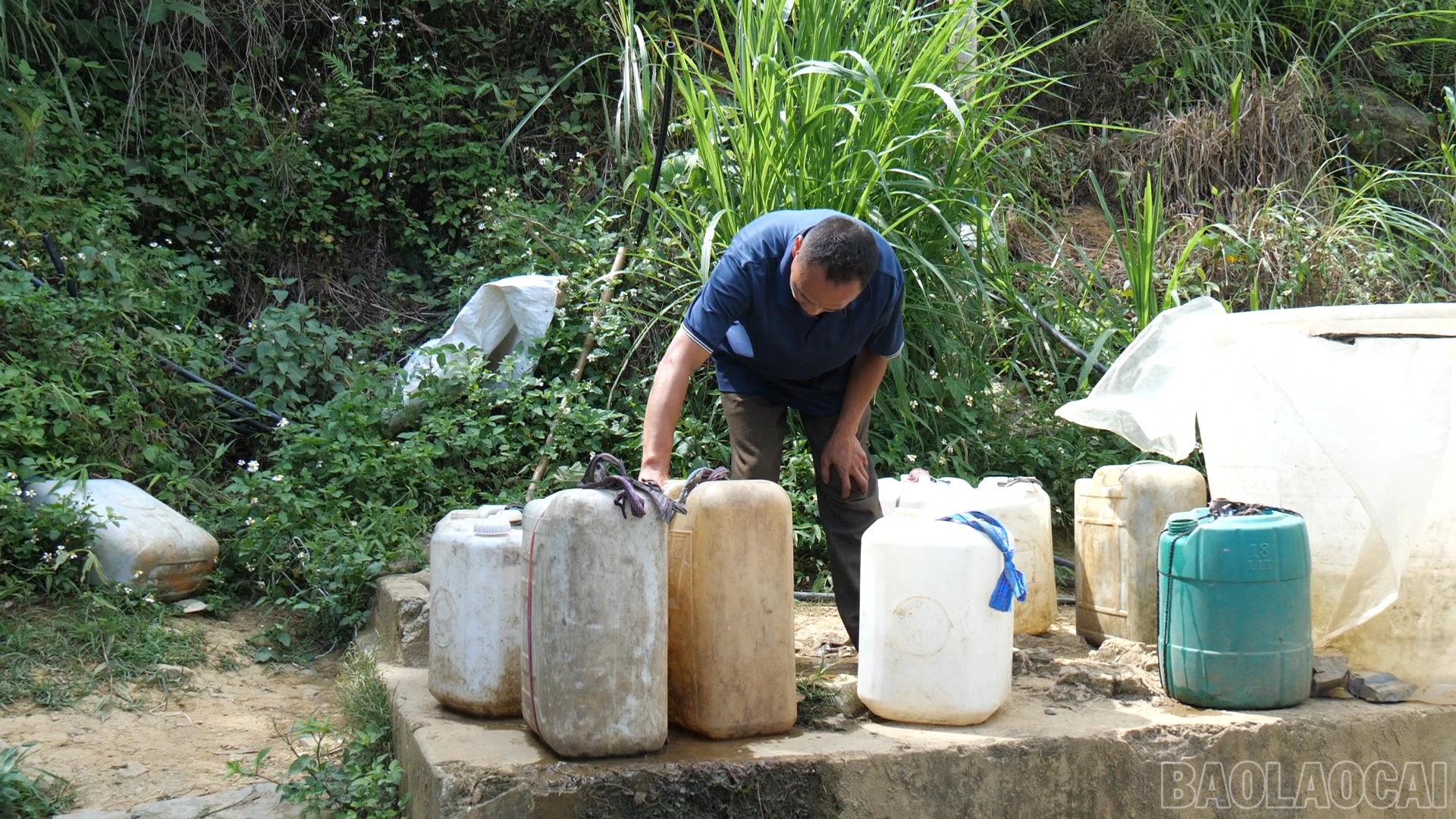
Mr. Giàng Seo Vư said that because the water source is scarce, households have to remind each other to take only enough so that there is still some left for others.
Water has become a burden on the budget.
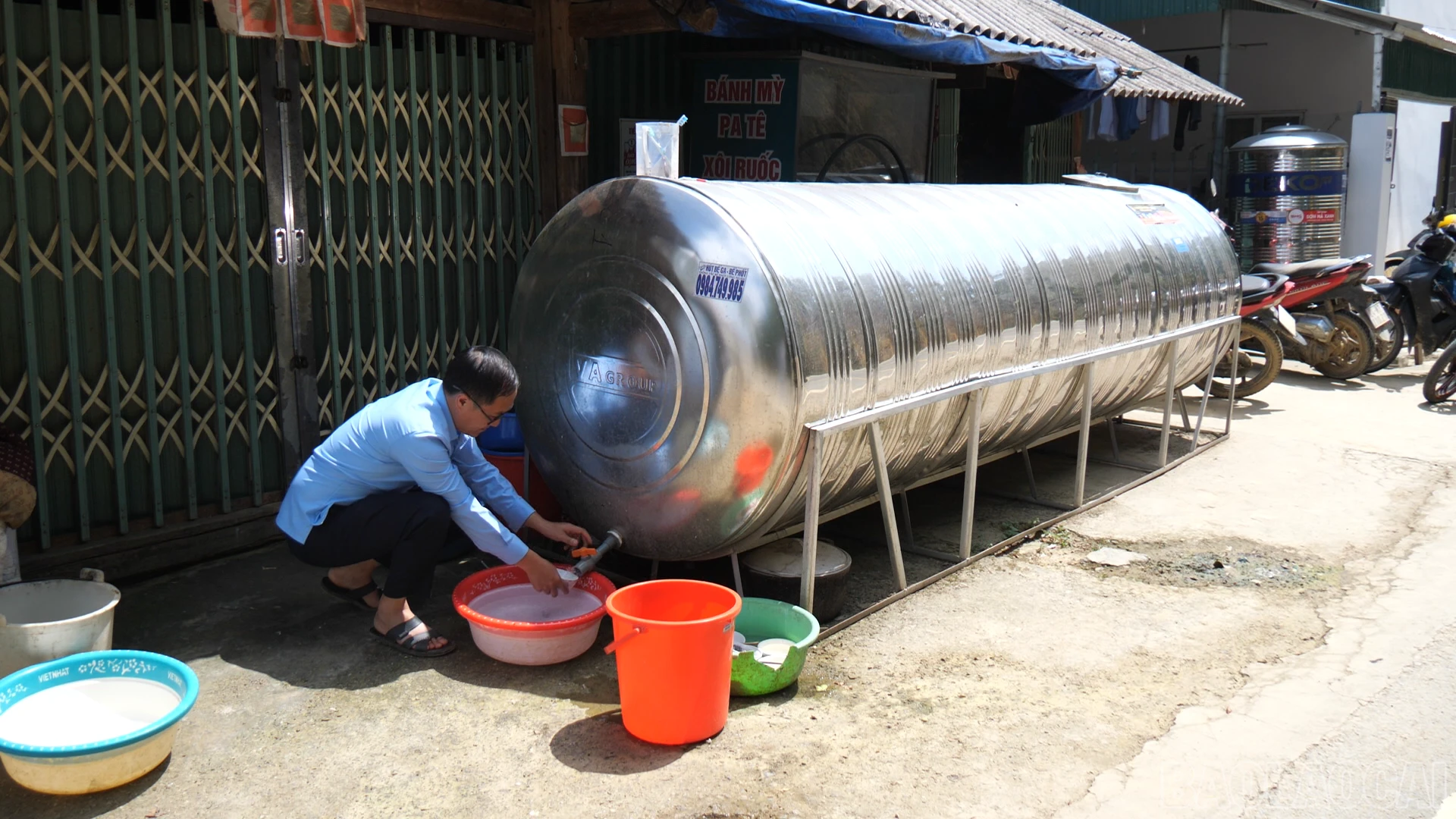
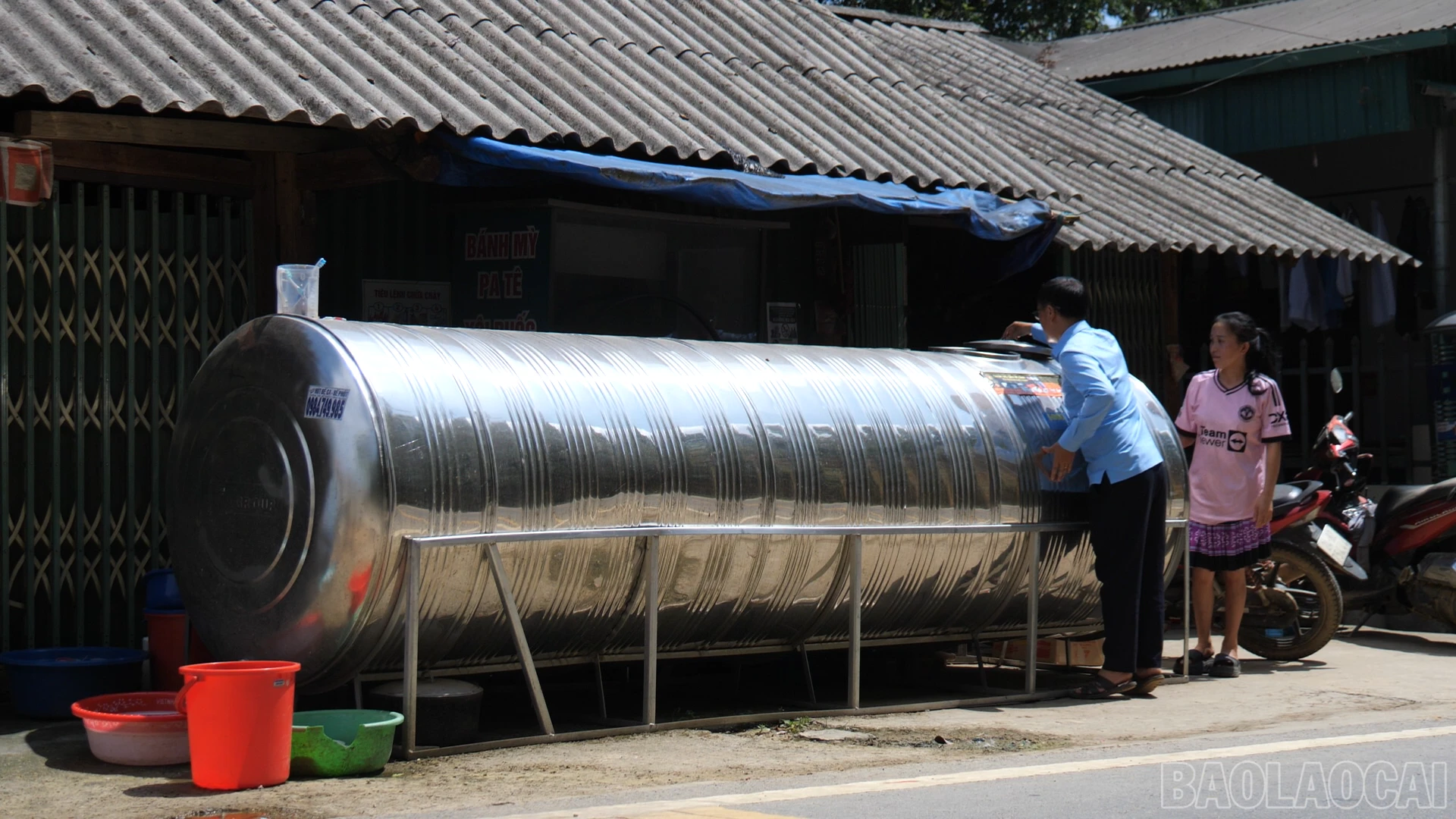
Besides water shortages, many households also face financial pressure as they are forced to buy water to maintain basic living needs. In some more affluent families, large water tanks are placed in front of their houses. Every time they run out of water, they have to hire trucks to transport water from elsewhere, at considerable expense.
For people in mountainous areas, this expense is a significant burden. While their income mainly depends on agricultural production and life is still difficult, having to spend millions of dong each month on water for daily use makes life even harder for many families.
Water scarcity also leads to a host of other consequences. Large areas of crops are affected due to lack of irrigation water. Livestock farming faces numerous difficulties. Daily life is disrupted. People have to meticulously calculate every scoop of water for cooking, bathing, and washing.
During peak periods, the whole family only dared to use water for cooking rice, while bathing and washing clothes had to be minimized. Young children had to go to school in deprived living conditions. The lives of people in the border region, already difficult, became even more arduous and challenging.
The people in border areas need to quench their thirst as soon as possible.
According to local government statistics, nearly 700 households in Pha Long commune are currently facing a severe shortage of clean water. If the drought continues, this number will increase further.
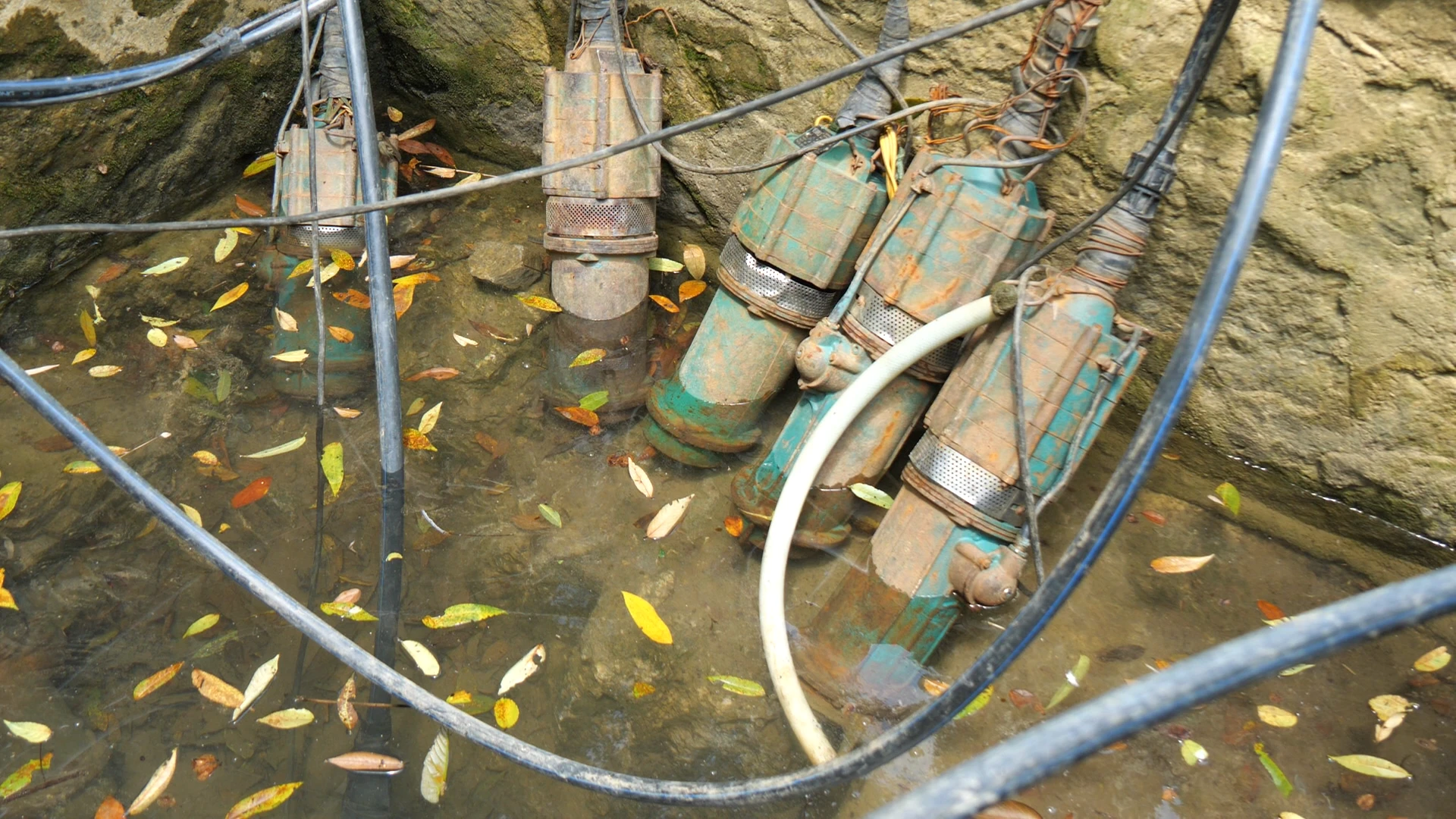
It is worth noting that the commune once received investment for 25 clean water projects. However, only 5 are currently operational. The majority of the remaining projects have deteriorated, are damaged, or are operating inefficiently due to the depletion of water sources. Many water distribution systems, which received billions of dong in investment, now only have damaged pipelines and abandoned reservoirs left in the mountains.
According to local leaders, the main cause of the water shortage is climate change, which has severely depleted upstream water sources. In addition, the rugged mountainous terrain makes investing in and maintaining clean water infrastructure very difficult.
Many infrastructure projects have deteriorated after a period of use, but there is no funding for repairs. Meanwhile, natural water sources are increasingly depleted, leaving many water supply systems almost paralyzed.
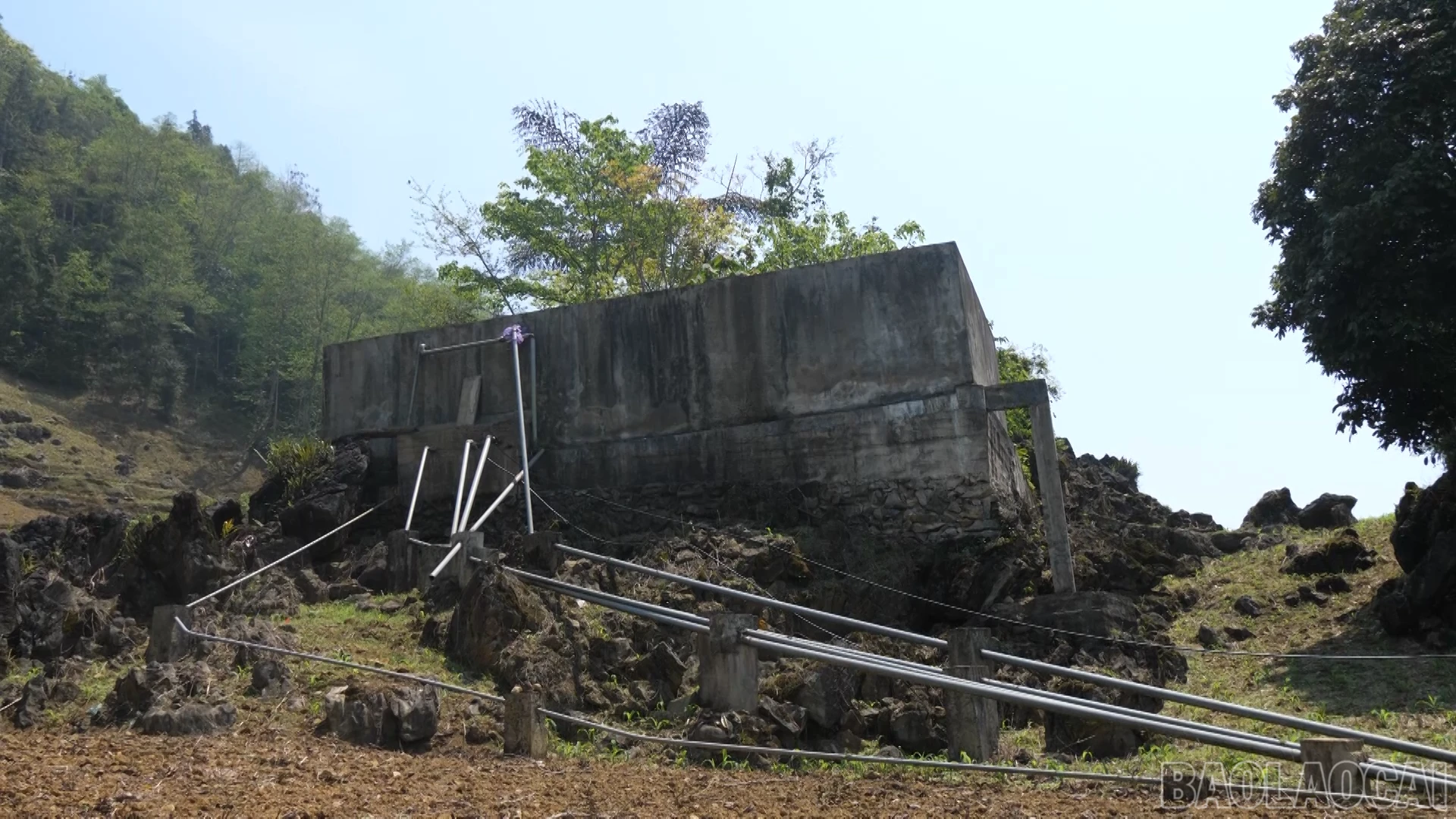
To address the shortage of clean water, the local authorities have proposed several solutions. Therefore, a clean water project with a total investment of nearly 120 billion VND is expected to be implemented in Pha Long commune in the future. However, to date, the project is only in the survey and water source search phase. Residents still don't know when construction will begin. While waiting for a fundamental solution, hundreds of households in this border region continue to live with daily water shortages.
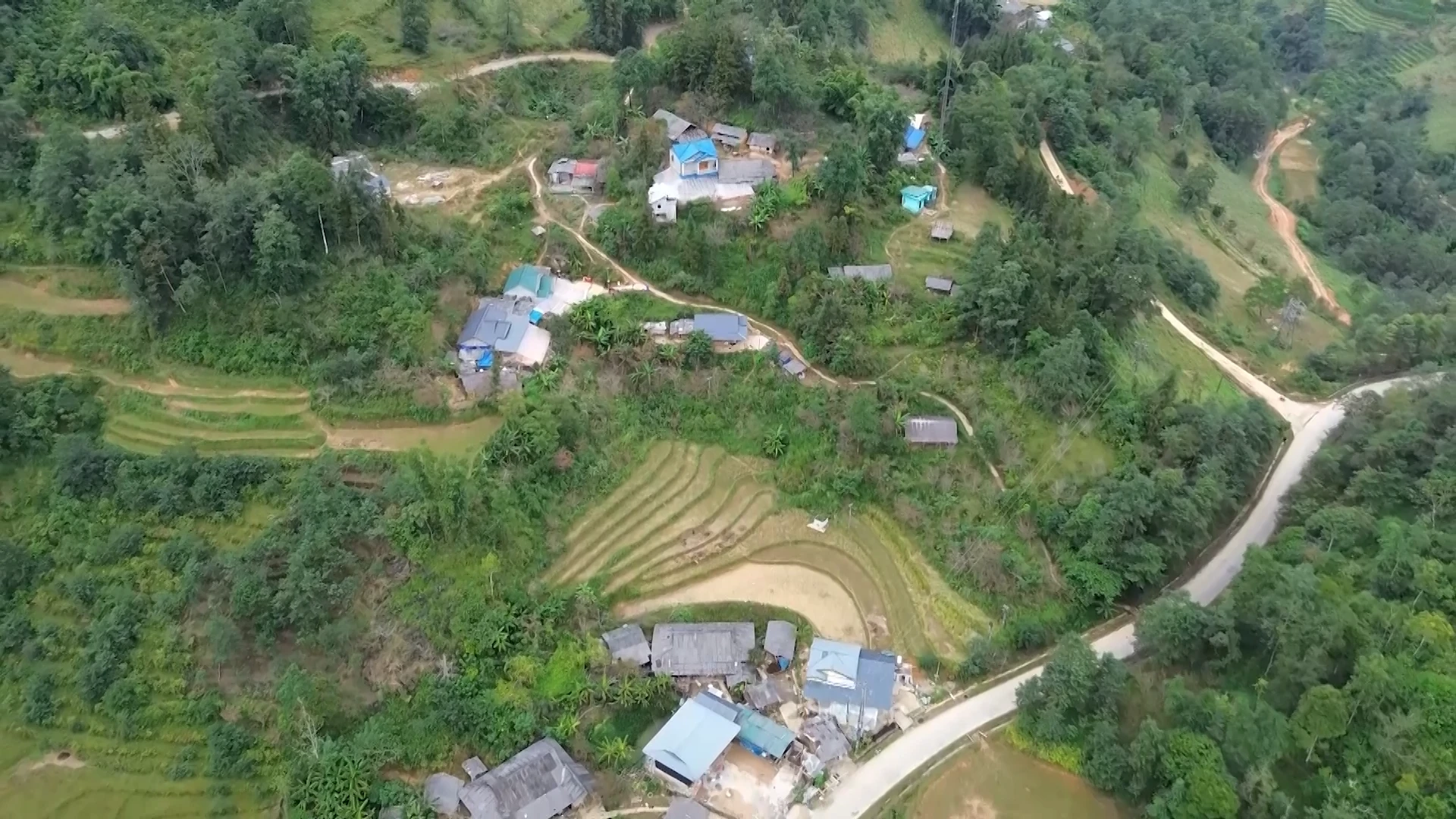
As the sun gradually sets behind the mountains in Pha Long, by the small water reservoir in the middle of Ngai Thau village, the villagers still sit quietly waiting. Plastic containers are lined up along the water's edge.
In this remote border region of the country, the people's aspirations right now are not grand. They simply hope that one day soon, clean water will reach every home, so that life will be less fraught with the hardship of carefully scavenging for every drop of water during the harsh dry season in the highlands.
Source: https://baolaocai.vn/pha-long-khat-nuoc-sinh-hoat-post900519.html



![[Photo] Standing Committee member of the Party Central Committee Tran Cam Tu working with the Central Inspection Committee](https://vphoto.vietnam.vn/thumb/1200x675/vietnam/resource/IMAGE/2026/05/28/1779969579668_ndo_br_bnd-2495-jpg.webp)





































































Comment (0)