

In recent years, along with economic and social development, the lives of people nationwide, and particularly in the province, have changed significantly. However, this development has also led to an increasing amount of waste, especially household solid waste. This is one of the pressing environmental issues in Vietnam. According to data from the General Department of Environment ( Ministry of Natural Resources and Environment ), it is estimated that over 60,000 tons of waste are generated nationwide every day. However, only about 15% of collected waste is recycled or reused, with the majority being disposed of through landfilling. A very small portion of household solid waste in rural areas is disposed of by burning at home. Improper waste disposal poses a risk of pollution and causes concern for residents living nearby.
People haven't really paid attention yet.
The 2020 Environmental Protection Law stipulates that from January 1, 2025, nationwide waste sorting at source will be mandatory. This is considered one of the important solutions to reduce pressure on waste collection and treatment, saving processing costs, reducing landfill space, and limiting groundwater and air pollution, thereby mitigating the impact of climate change. However, waste sorting at source remains a challenging issue. Not only are people still unfamiliar with it, but some waste collection and transportation units are also facing difficulties in preparing for it.
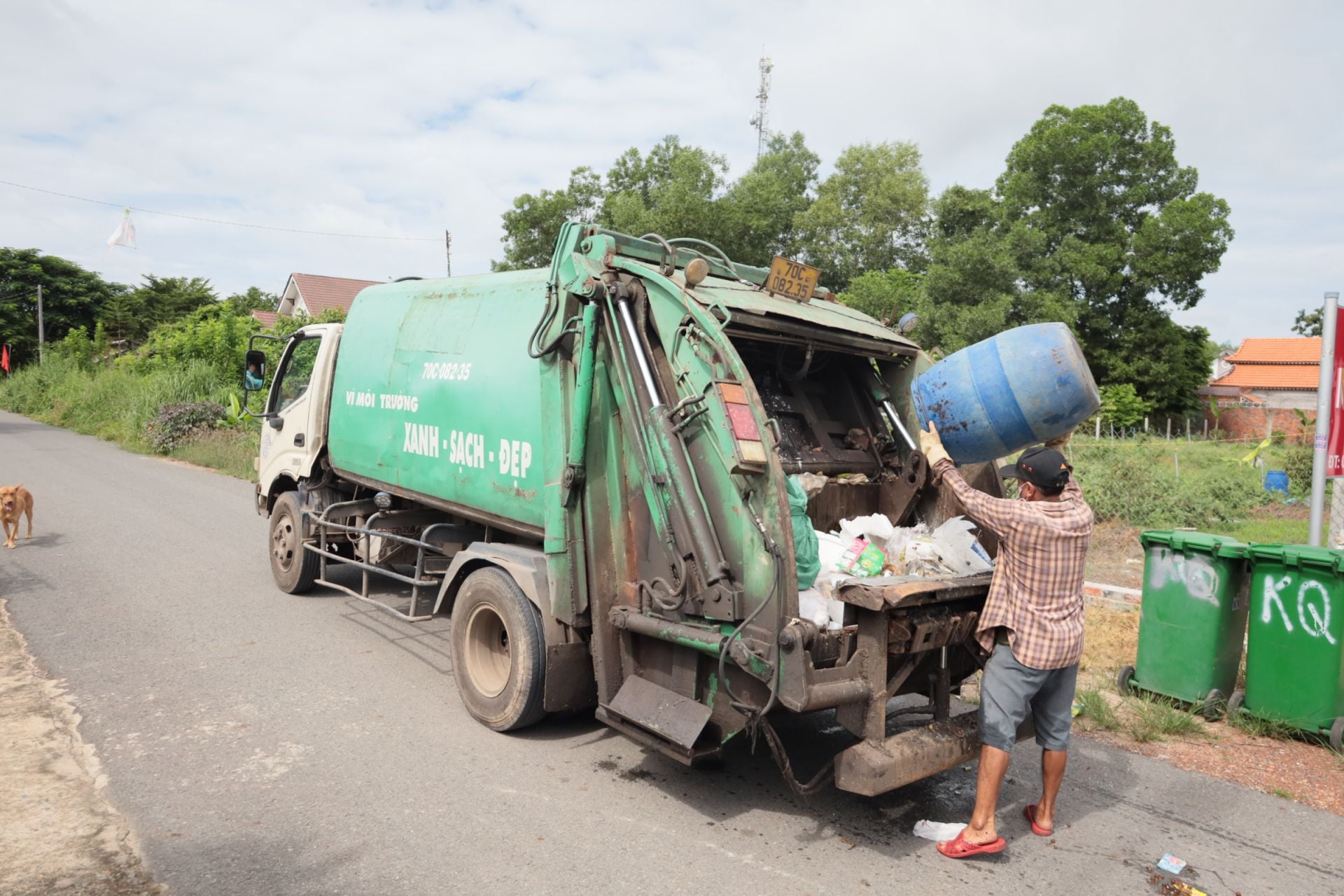
Household waste collection vehicle (illustrative image)
When asked about the regulations on waste sorting at source under the 2020 Environmental Protection Law, which will be applied from the beginning of 2025, many people in the province expressed surprise because they were unaware of it, or if they were aware, they were vague and unsure how to implement it correctly.
Ms. VTNA, residing in Thanh Dien commune, Chau Thanh district, said that previously, when the commune was selected as a model for building a new rural area, she had heard about waste sorting but did not know how to sort or collect it.
According to Ms. VTNA, even without considering waste sorting, the current issue is how to raise public awareness so that people don't litter indiscriminately. This is already a long and arduous process requiring efforts from both local authorities and the community. Furthermore, if waste sorting is implemented, the first step would be to have specialized vehicles to collect each type of waste. She stated that currently, people put all their household waste into a single bag or bin, containing everything from plastic bags, leftover food, glass bottles, to piles of leaves, banana stalks, and dry branches… leaving them in front of their houses waiting for garbage trucks to collect and transport them to the disposal site.
Ms. NTO, residing in Trang Sa hamlet, Don Thuan commune, Trang Bang town, said that her family's household waste is placed in a bin in front of their house every day, and a specialized vehicle comes to collect it every two to three days. Regarding waste sorting, she said she had never heard of it and therefore didn't know how it was done.
According to Ms. NTO, her family's waste is currently divided into two categories: paper and scrap metal are kept separately for sale to recycling centers, while plastic bags, fruit peels, and vegetable scraps are placed in bins for collection by a professional waste disposal unit, thus preventing environmental pollution.
There are still many difficulties.
According to a household waste collection unit in the province, the current household waste collection work is facing many problems. These include the lack of infrastructure planning and land allocation for temporary waste collection points. In many places, people have to utilize sidewalks in areas without houses for waste collection while waiting for specialized vehicles, leading to complaints from residents and the media. The unit price applied according to Decision No. 16/2020/QD-UBND dated May 14, 2020, on the regulation of maximum prices for household solid waste collection and transportation services in the province, is still low and does not ensure income for workers. Furthermore, there are fluctuations in fuel prices and depreciation periods.
Another problem is that funding for environmental activities has been cut, and there is currently no preferential policy for businesses operating in the environmental sector to promote the development of science and technology and technological innovation in waste collection and transformation.
Regarding waste sorting at source, businesses are currently only following the pilot program announced by the Department of Natural Resources and Environment. Investing in vehicles to collect each type of waste is also very difficult due to a lack of funding.

There was a significant amount of trash accumulated at one of the drain openings.
According to the Department of Natural Resources and Environment, the total volume of municipal solid waste (MSW) collected, transported, and processed in the province in 2023 was 202,143.22 tons, of which: urban MSW collected, transported, and processed: 88,157.31 tons/year; rural MSW collected, transported, and processed: 113,985.91 tons/year. MSW has been managed relatively well in recent years. However, some people still do not voluntarily register for collection and instead dispose of waste by burning or burying it in their yards, especially in rural areas, or secretly dumping it indiscriminately in public places, deserted areas, and vacant land. In addition, some people still have the habit of using alternative materials to plastic bags and packaging.
Currently, the collection, transportation, and treatment of municipal solid waste (MSW) are assigned to local authorities who contract with functional units to collect and transport it to treatment facilities within the province. Solid waste collection and transportation services have been expanded to rural areas, with all 9 district-level units having signed contracts with MSW collection and treatment units in their respective areas. These MSW collection and transportation units are equipped with appropriate vehicles and equipment to collect MSW from registered households and transport it to treatment plants as per regulations.
Solid waste in the province is collected and transported to treatment facilities in accordance with the provincial planning as per Decision No. 3069/QD-UBND, including: the Tan Hung treatment facility of Tay Ninh Technology Joint Stock Company with a capacity of: phase 1: 150 tons/day; phase 2: 300 tons/day; composting: 100-120 tons/day; scrap recovery: 4 tons/day; the integrated solid waste treatment complex of Hue Phuong Vietnam Green Environment Co., Ltd., with a capacity of collecting, treating, recycling and disposing of all types of waste: 300 tons/day; fertilizer production: 180,000 tons/year.
It takes time to change people's perceptions.
Regarding the classification of household solid waste according to the regulations of the 2020 Environmental Protection Law, the Department of Natural Resources and Environment is currently coordinating with the Vietnam Fatherland Front Committee of the province, political and social organizations, provincial departments and agencies, and the People's Committees of districts, towns, and cities to carry out communication and dissemination of knowledge on the classification of household solid waste. The province has only recently implemented training and guidance on household solid waste classification and source-based sorting for households and individuals. This requires time for public awareness campaigns to change people's consciousness and habits.
Previously, the model of waste sorting at source had been piloted in some localities, but it was not synchronized and its effectiveness was not high. Several models of waste sorting at source have been implemented in the province, such as: the Provincial Women's Union with a model of women's groups collecting waste, converting waste into money, and collecting waste to raise funds; women's groups focused on zero waste and green saving; women's groups sorting waste at home; and a model of organizing training on waste sorting and processing organic waste at households using biological products and applying technology to create microbial products from organic waste... The Farmers' Association implements a model of self-governing residential groups to create a green, clean, and beautiful environment; and a waste-free residential area. The Provincial Veterans' Association implements a model of green, clean, and beautiful veteran housing... The Provincial Party Committee's Propaganda Department implements a model of residential areas and religious organizations participating in environmental protection and climate change adaptation in the province. The Ho Chi Minh Communist Youth Union of Tay Ninh province is implementing a model of a community market that minimizes plastic waste, exchanging plastic waste for green plants and gifts...
Public awareness is a decisive factor in disposing of waste properly and implementing waste sorting. However, many people habitually throw all types of waste – including leftover food, broken items, etc. – into the same bag/bin.
Therefore, sorting waste at source is absolutely essential. It can help people generate economic benefits from recyclable and reusable waste, while reducing the burden of solid waste on centralized waste treatment facilities and contributing practically to environmental protection.
Thien Duc
Source: https://baotayninh.vn/phan-loai-rac-thai-sinh-hoat-tai-nguon-kho-nhung-phai-lam-a180908.html

![[Photo] General Secretary and President To Lam presides over a meeting with the Central Organizing Committee.](https://vphoto.vietnam.vn/thumb/1200x675/vietnam/resource/IMAGE/2026/06/03/1780482764658_a1-bnd-4741-3342-jpg.webp)
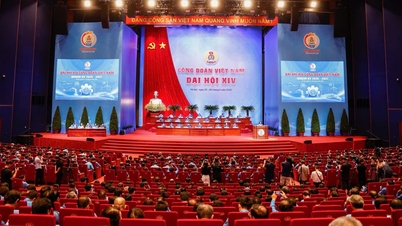
![[Photo] First session of the 14th Congress of the Vietnam Trade Union](https://vphoto.vietnam.vn/thumb/1200x675/vietnam/resource/IMAGE/2026/06/03/1780465947883_ndo_br_img-3852-jpg.webp)
![[Photo] Secretary of the National Assembly Party Committee, Chairman of the National Assembly presides over the meeting of the Standing Committee and Executive Committee of the National Assembly Party Committee.](https://vphoto.vietnam.vn/thumb/1200x675/vietnam/resource/IMAGE/2026/06/03/1780480353201_ndo_br_bnd-2585-jpg.webp)




























![[Video] Sunset at Lap An Lagoon – Where the sun sets over the fishing nets](https://vphoto.vietnam.vn/thumb/1200x675/vietnam/resource/IMAGE/2026/05/31/1780192137701_beach-landscape-sea-water-nature-grass-745871-pxhere-com.jpeg)


























Comment (0)