

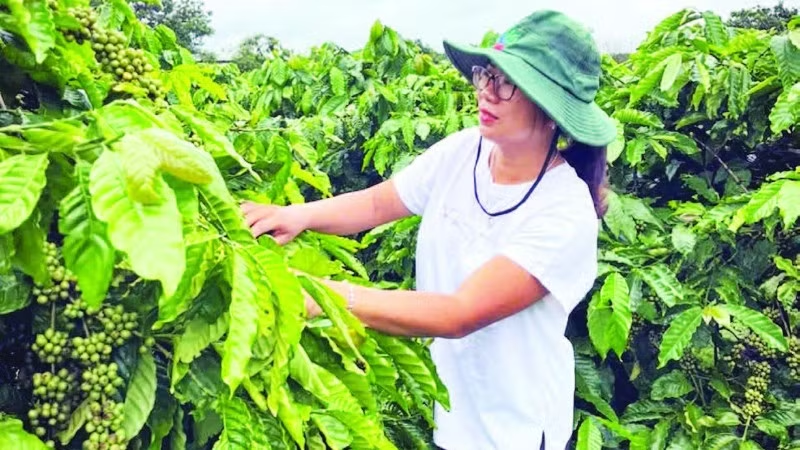
In recent years, thanks to government guidance, many farming households have boldly shifted to an integrated economic model combining crop cultivation, livestock farming, aquaculture, and agricultural services.
The benefits of diversification
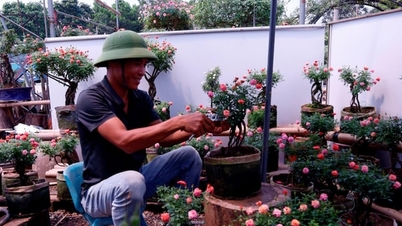
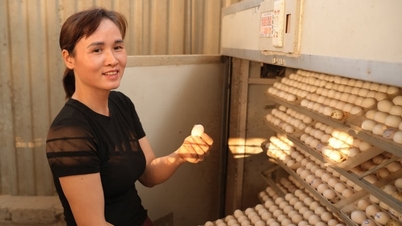
A key feature of the integrated economic model is the diversification of production. Instead of relying on a single crop or livestock, many households in Gia Lai have combined various occupations on the same farm, simultaneously cultivating coffee, pepper, and fruit trees while raising pigs, chickens, and ducks. This combination creates a closed-loop production ecosystem; in which livestock waste is processed into fertilizer for crops, and crop by-products are utilized as animal feed.
This approach significantly reduces production costs, protects the environment, and generates diverse income streams. When coffee or pepper prices fall, farmers can compensate with income from livestock or fruit farming. Conversely, when the livestock and poultry market faces difficulties, income from crops helps maintain stability. This is a way to minimize risks and ensure long-term income for producers.
In Linh Nham village, Mang Yang commune, Ms. Nguyen Thi Thuy Trang has built a comprehensive farm on an area of 20 hectares, combining coffee and mulberry cultivation with pig and duck farming. The farm is designed as a closed-loop, recirculating system, supplying tens of tons of agricultural products to the market each year, generating a profit of over 3 billion VND, and providing stable employment for 20 local workers with incomes ranging from 7-9 million VND per month.
Ms. Trang shared: “To develop agricultural economics effectively, first and foremost, you must choose a direction that suits the natural conditions and resources of your family. I don't invest in a scattered way, but focus on an integrated model, utilizing livestock waste as fertilizer, and growing mulberry trees to raise silkworms to increase income and mitigate risks when meat or coffee prices fluctuate.”
According to H. Lay, Chairman of the Farmers' Association of Mang Yang commune, Ms. Trang is a model member in production. Her shared experiences have helped many households in the commune confidently invest, change their farming methods, and gradually escape poverty; at the same time, contributing to the development of the new rural development movement in Mang Yang. Not only is she successful in business, but she also has a high sense of social responsibility, regularly participating in community activities, supporting poor households, and contributing to the construction of rural infrastructure.
Standing alongside farmers
According to the Gia Lai Provincial Farmers' Association, thousands of households in the province have been awarded the title of "Excellent Farmers in Production and Business" at various levels. These models not only help many farmers escape poverty but also form concentrated commodity production areas, creating high-value products that meet the needs of domestic and international markets. Thanks to this diversification, farmers can minimize risks from price fluctuations while improving the efficiency of land and resource utilization.
Gia Lai currently has over 300 agricultural cooperatives, many of which have signed contracts to purchase products from farmers. This is an important step, helping to stabilize output and limit the situation of bumper harvests leading to price drops. With the support of cooperatives and businesses, farmers can confidently invest in production, boldly apply scientific and technical advancements, thereby improving productivity, quality, and value of agricultural products.
In Chu Se commune, many farmers have boldly developed a model of intercropping durian with pepper, combined with beekeeping for honey production. Thanks to this combination, many households have a stable income from both industrial crops and honey products. Meanwhile, in Ia Grai commune, organic coffee cooperatives have also combined it with raising hybrid cattle, creating a closed-loop production model. The cooperatives have signed contracts with businesses, ensuring a stable market for hundreds of households. The common feature of these models is the diversification of production and the close linkage between farmers, cooperatives, and businesses. This is the foundation for forming concentrated commodity production areas and increasing the value of agricultural products in Gia Lai.
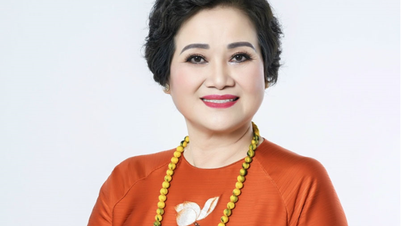
According to Rơ Chăm H'Hồng, Chairwoman of the Gia Lai Provincial Farmers' Association: The model of combining crop cultivation with livestock farming helps reduce costs and protect the environment. More importantly, the diversification of production has helped farmers minimize risks, stabilize income, and create jobs for local laborers. “The Provincial Farmers' Association will continue to support farmers; organize training courses, transfer scientific and technical knowledge, provide capital support, and connect them with businesses to replicate this integrated economic model,” Ms. Rơ Chăm H'Hồng affirmed.
Source: https://nhandan.vn/phat-huy-hieu-qua-mo-hinh-kinh-te-tong-hop-post942994.html



![[Image] Nearly 125,000 Hanoi students completed the Literature exam for the 10th grade entrance exam.](https://vphoto.vietnam.vn/thumb/1200x675/vietnam/resource/IMAGE/2026/05/30/1780117233041_ndo_br_thiet-ke-chua-co-ten-2-png.webp)






![[Photo] The General Secretary, President and Prime Minister of Singapore attend the tree planting ceremony at the Singapore Botanic Gardens.](https://vphoto.vietnam.vn/thumb/402x226/vietnam/resource/IMAGE/2026/05/30/1780122934945_vna-potal-tong-bi-thu-chu-tich-nuoc-va-thu-tuong-singapore-du-le-trong-cay-8794687-jpg.webp)

![[Photo] Admire the coral "masterpiece" amidst the million-year-old heritage of Dak Lak province.](https://vphoto.vietnam.vn/thumb/1200x675/vietnam/resource/IMAGE/2026/05/30/1780107638639_y25-jpg.webp)




















































Comment (0)