

Kinhtedothi - The 2024 Law on the Capital City defines the goal of developing education and training in the Capital City as follows: "Developing the education and training sector so that the Capital City becomes a major, exemplary center of the country for high-quality education and training..."
Development of education and training (Article 22; Clause 2 of Article 43)
Resolution No. 15-NQ/TW outlines the direction for the development of education in the capital city: "Attracting social resources to invest in the development of education and training; a system of schools with multiple levels, high-quality schools; and various forms of domestic and international collaborative training."
The 2024 Law on the Capital City defines the goal for the development of education and training in the Capital City as follows: “Developing the education and training sector so that the Capital City becomes a major, exemplary center of the country for high-quality education and training, adapting to the national digital transformation process, innovation, and international integration” (Clause 1, Article 22).
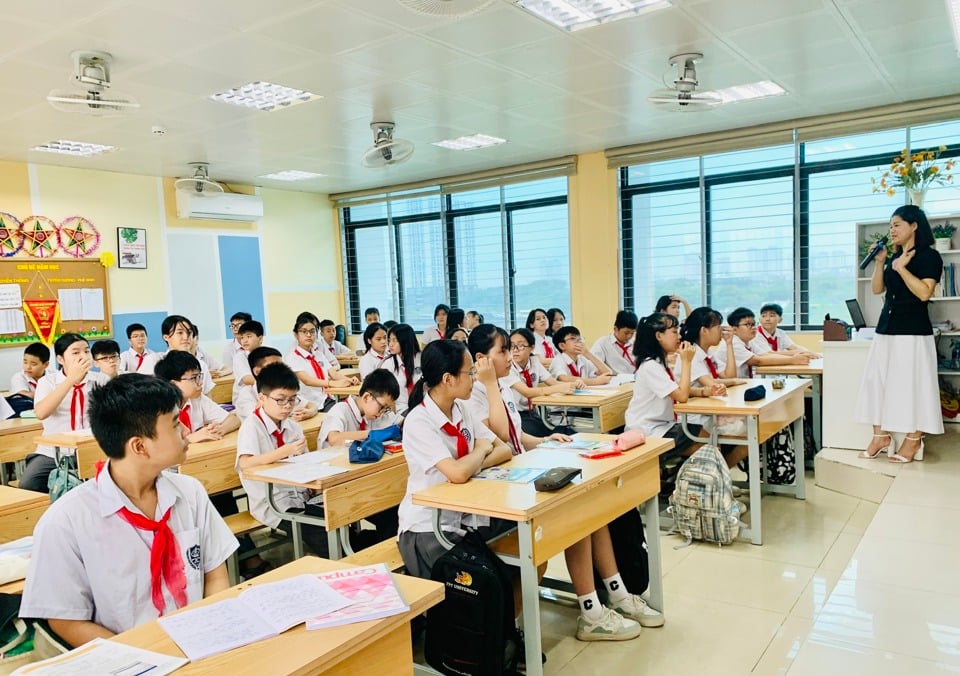
The 2024 Capital City Law inherits the provisions on education from the 2012 Capital City Law, while also adding provisions for some specific policies aimed at developing education and training in the Capital City towards the aforementioned goals.
Specifically: a) Allow public preschools and primary and secondary schools in the capital to conduct educational partnerships with foreign educational institutions, and entrust the Government with the task of specifying the conditions, procedures, educational programs, and the issuance of diplomas and certificates (Clause 3, Article 22).
Current legislation only permits private educational institutions to conduct joint training programs. This new regulation in the 2024 Capital City Law aims to create a legal basis to promote the development of domestic and international joint training programs in public educational institutions, improve the quality of education in public preschool and primary education in the Capital City, and create favorable conditions for students and children to access high-quality education.
b) Delegating authority to the City People's Council to regulate certain specific policies, different from current laws, regarding the development of education and training in the city.
- Regulations on financial mechanisms applicable to high-quality public educational institutions, public educational institutions with multiple levels of education, and public educational institutions implementing educational partnerships with foreign educational institutions (point a, clause 4, Article 22).
- Tuition fee support for primary and secondary school students and preschool children in the city, regardless of whether they attend public, private, or independent schools; tuition fee support for vocational training at the intermediate and advanced levels for learners residing in Hanoi (point b, clause 4, Article 22).
Currently, existing laws lack specific regulations on financial mechanisms applicable to high-quality public educational institutions, multi-level public educational institutions, and public educational institutions that collaborate with foreign educational institutions, making financial management difficult. Current laws also lack provisions for subsidizing service fees for students regardless of whether they attend public or private schools. These regulations would contribute to promoting the socialization of education, attracting domestic and foreign investors to expand the private school system, gradually reducing the burden on the public school system, and better meeting the educational needs of society.
c) Delegating authority to the People's Committee of Ho Chi Minh City to regulate certain specific and superior aspects of high-quality education compared to current laws, and to supplement and adjust educational programs.
- The People's Committee of Ho Chi Minh City has regulations on high-quality education:
+ Criteria regarding facilities, management staff, teachers, curriculum, teaching methods, and educational services of high-quality educational institutions and multi-level educational institutions (point a, clause 5, Article 22);
+ The sequence and procedures for recognizing and revoking decisions recognizing high-quality educational institutions; the evaluation, accreditation, and maintenance of quality assurance of high-quality educational institutions (point b, clause 5, Article 22). The People's Committee of Ho Chi Minh City decides on the recognition and revocation of decisions recognizing high-quality educational institutions (clause 6, Article 22).
The model of high-quality education at some preschool and general education institutions has been stipulated in the 2012 Capital City Law. The specific regulations on high-quality schools in the 2012 Capital City Law have been applied consistently from 2013 to the present. Therefore, this provision in the 2024 Capital City Law is a completion and legalization of regulations that have been tested in practice.
- The People's Committee of Hanoi City stipulates the adjustment and supplementation of preschool and general education programs for certain subjects and supplementary educational activities at high-quality public educational institutions to suit the economic, cultural, and social conditions of the Capital, contributing to better meeting the needs of enhancing understanding and preserving the knowledge, values, and unique cultural characteristics of the Capital, while increasing students' initiative and creative thinking; bringing the Capital's education program closer to the advanced education systems of the region and the world (Clause c, Point 5, Article 22).
d) Applying investment incentives
Investment incentives are granted to projects establishing new preschools, high-quality schools, and multi-level schools; preschools and general education schools in economically and socially disadvantaged areas; and training facilities for people with disabilities and disadvantaged children. Investors with such projects are entitled to incentives such as exemption or reduction of land and water lease fees, preferential tax rates, and exemption or reduction of corporate income tax (Clauses 1 and 2, Article 43).
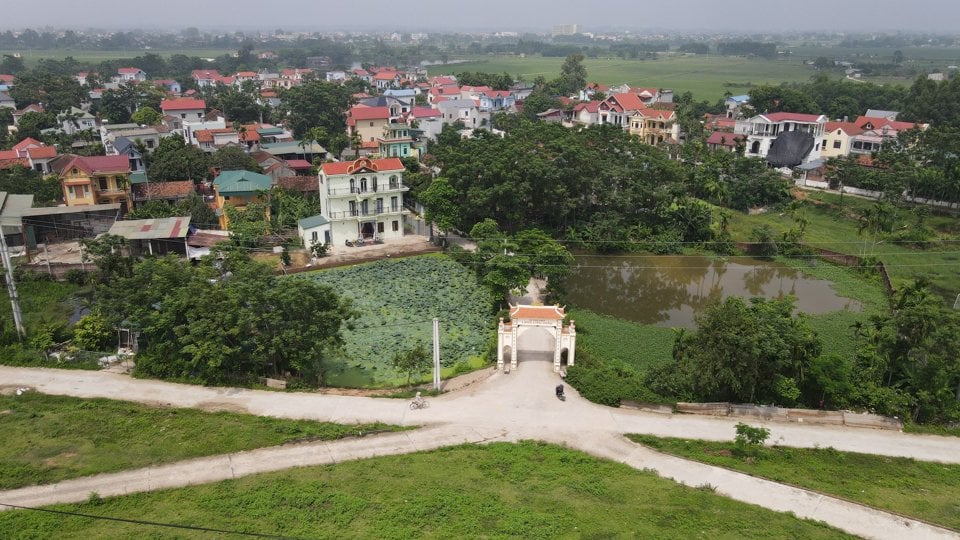
To make Hanoi a leading center for high-quality education and training.
The new provisions on education and training in Article 22 of the 2024 Law on the Capital City clearly demonstrate profound significance, affirming the continuity and consistency in the views of the Party and the State in general, and Hanoi in particular. This includes always emphasizing the role and position of education and training, considering it a top national priority to promote, build, and develop the capital city's socio-economic development rapidly and sustainably.
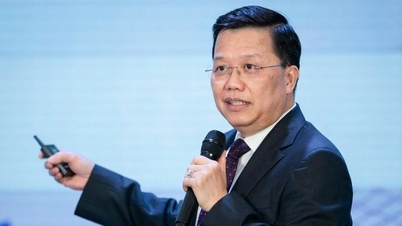
Expressing his views, Dr. Nguyen Tung Lam, Vice President of the Vietnam Association of Educational Psychology, stated that the 2024 Capital City Law, with its many specific regulations, allows Hanoi to accomplish a great deal. The education sector needs to lead the country and maintain its leading position. Hanoi's education sector should focus on building schools with four key elements: autonomy, democracy, humanism, and creativity, with autonomy being particularly important. Each school needs autonomy to choose its own teaching methods and develop curricula suitable for its students and educational conditions, helping students maximize their abilities and qualities.
It can be said that the enactment of the 2024 Capital City Law will provide many specific mechanisms for Hanoi to improve the overall quality of education; gradually building the capital into a truly major and exemplary center of high-quality education and training for the whole country.
At the same time, the Capital City Law also empowers Hanoi to be more proactive in its financial mechanisms, supporting tuition fees for students in the city regardless of whether they attend public, private, or independent schools, as well as in many other areas, to ensure "the development of education and training so that the Capital City becomes a major, exemplary center of the country for high-quality education and training, adapting to the national digital transformation, innovation, and international integration."
Meanwhile, according to Dr. Ngo Van Hiep (lecturer at Hanoi Metropolitan University), as the "heart of the country," Hanoi needs necessary mechanisms and policies to develop its education and training sector so that it truly becomes a major, exemplary center of high-quality education and training, adapting to the national digital transformation, innovation, and international integration.
The 2024 Capital City Law, with its many unique, outstanding, and groundbreaking policies and mechanisms, aims to build and develop the capital city to be worthy of its position as the political, administrative, economic, and cultural center, moving towards a smart, modern, green, clean, beautiful, and safe city; developing rapidly, sustainably, and with a ripple effect to promote the Red River Delta region, the Northern key economic region, and the whole country.
The completion and amendment of the Law on the Capital City, with many groundbreaking policies such as those on the development of education and training; science, technology, innovation and digital transformation; attracting and utilizing talented individuals, etc., has impacted universities and colleges in the city.
This provides a foundation for schools to diversify their educational programs; expand cooperative relationships with many countries; attract high-quality human resources to the capital; respect and utilize people with virtue and talent; and develop scientific and technological products, so that the capital can rightfully become the cultural, political, and economic center of the country.
Assoc. Prof. Dr. Nguyen Anh Tuan - Chairman of the University Council of Hanoi Capital University
Source: https://kinhtedothi.vn/phat-trien-giao-duc-va-dao-tao-trong-luat-thu-do-2024.html



















































































Comment (0)