

According to Ms. Phan Thi My Hanh, the project leader, the overall objective of the project is to assess the current status of the black eel gene pool, collect and conserve the black eel gene pool in the province; and at the same time, propose effective solutions for protecting the eel and improve the process of raising white eel fry to black eel juveniles. Notably, the process of collecting and reviewing literature shows that domestic research mainly focuses on the classification, distribution, and resource management of the eel.
The fields of breeding and commercial farming have also received attention and investment in research; however, this has mainly been implemented for spotted eel. Research on black eel in Vietnam is very limited and rarely published. Currently, no research in Vietnam has been published on the analysis of the genetic diversity of black eel, nor on breeding black eel from albino broodstock. Therefore, this project is the first research in Vietnam conducted on black eel.
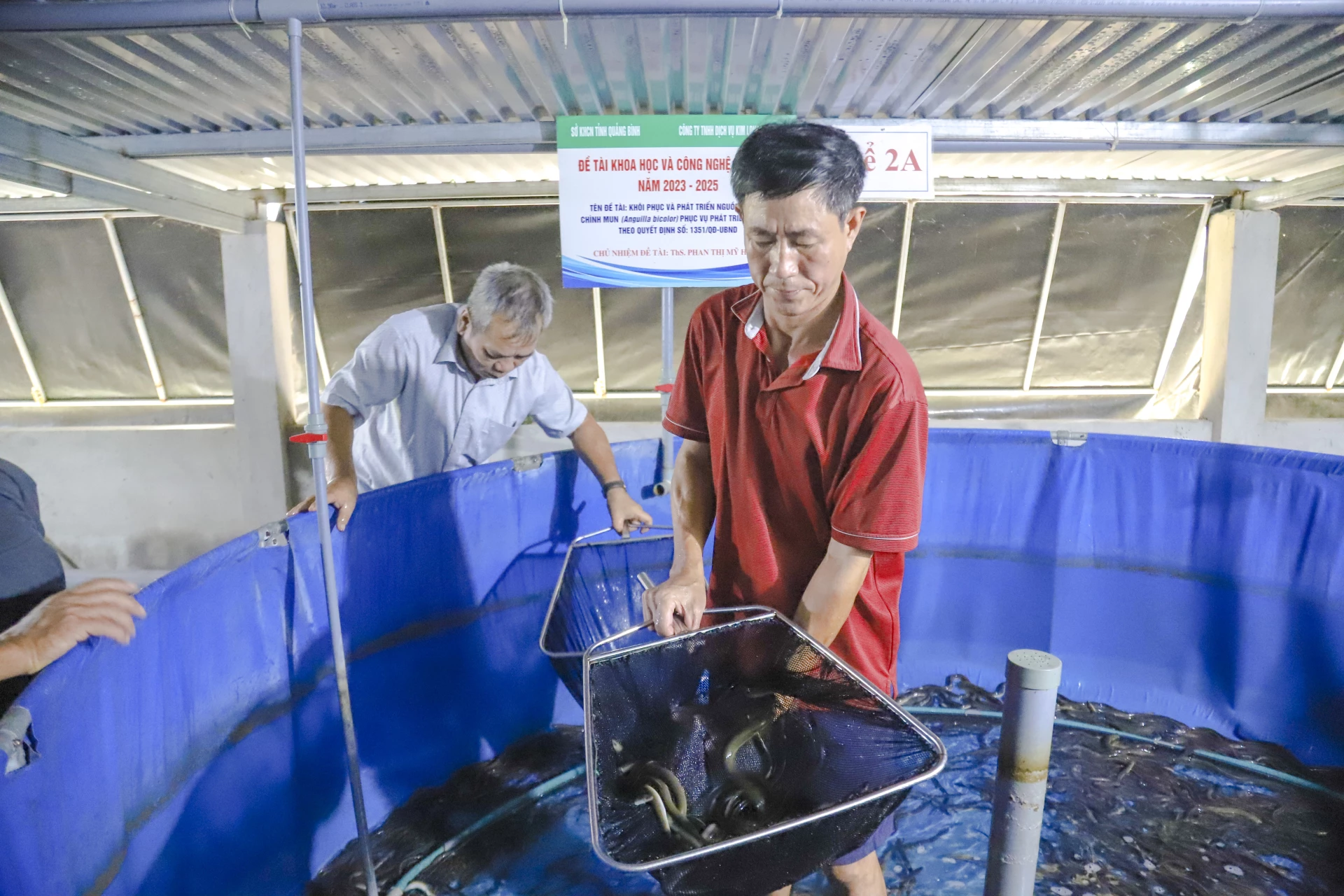 |
| Harvesting juvenile black eels - Photo: Department of Science and Technology |
From August 2023 to April 2026, using effective scientific research methods, the project published results on the resources of the Anguilla bicolor eel in Quang Tri province, including: distribution, exploitation situation in estuaries (fishing gear, seasons, catch volume, etc.). The research team analyzed DNA and sequenced the genes of Anguilla bicolor eels from 31 samples collected from 5 estuaries in Quang Tri province. Genetic studies confirmed that Anguilla bicolor has high haplotype diversity, reflecting a complex evolutionary process and a wide migration range.
In Vietnam, this species is clearly present in the central and south-central regions under the name A. bicolor pacifica. However, larger-scale studies incorporating ecological and genetic data are still needed to clearly identify population characteristics, breeding sources, and support the development of sustainable eel resource management and restoration strategies.
Regarding the results of the black eel fry rearing, the survival rate reached 76.78%, exceeding the initial target. After 8 months of rearing in two stages – stage 1 from whitefish to first-grade eel fry, and stage 2 from first-grade to second-grade eel fry – the team proceeded with harvesting the fry. The harvested fry had an average size of 33.215 cm/fish, corresponding to an average weight of 50.363 g/fish. The number of harvested fish was 8,446 (exceeding the set target). The team then released nearly 1,000 black eel fry back into the Long Dai River to replenish the natural population.
Ms. Phan Thi My Hanh, M.A., further shared that the project also proposes measures for managing, protecting, and sustainably developing eel resources in Quang Tri province. This includes focusing on raising awareness and training people on protecting valuable aquatic resources; strictly prohibiting destructive exploitation; controlling seed harvesting through quotas and seasonal regulations; establishing protected areas and seasonal conservation zones; and implementing a traceability system for eel seeds.
Simultaneously, it is proposed to establish inter-sectoral coordination mechanisms in eel resource management and to improve the legal framework and strengthen law enforcement. Furthermore, developing community-based models for protecting eel resources plays a crucial role. When communities are empowered to participate in monitoring, decision-making, and benefiting from conservation efforts, management effectiveness often increases significantly.
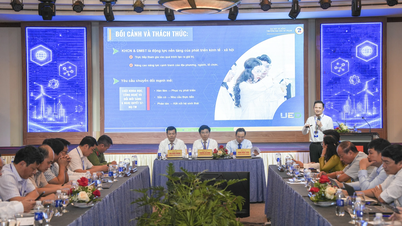
At the project acceptance conference, the task was highly appreciated for its practical application, contributing to the conservation of the black eel gene pool, developing the eel farming industry, and opening up a direction for the rational exploitation of local aquatic resources. The results of the task are expected to create an important scientific and practical basis for building a model for commercial black eel farming, contributing to increasing people's income and promoting sustainable socio -economic development.
MN
Source: https://baoquangtri.vn/khoa-hoc-cong-nghe/202606/phat-trien-nguon-gen-ca-chinh-mun-6b56fdb/

















































































Comment (0)