

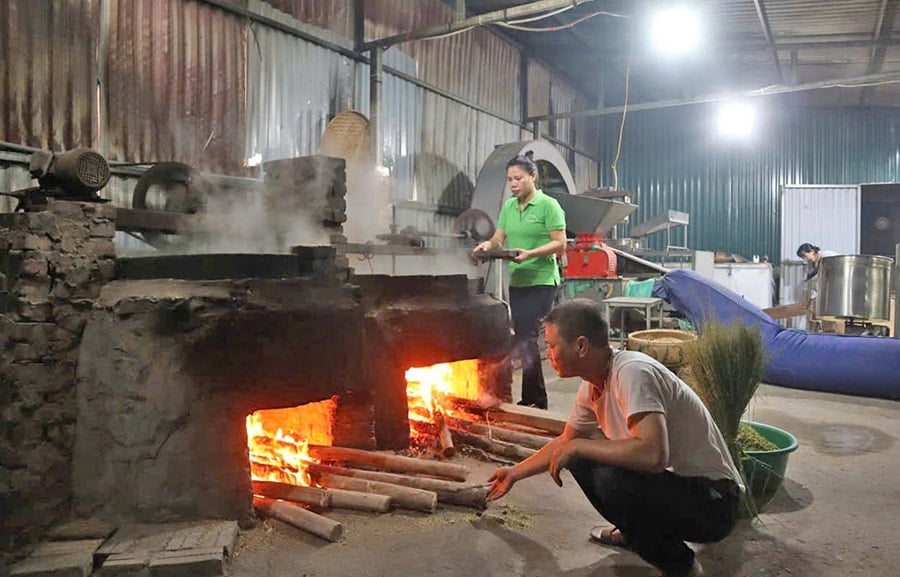
Rice flake production in the traditional craft village of Me Tri (Tu Liem ward).
Innovate to adapt to the market.
The Minh Hang brand of fresh green rice flakes, produced by the family of Ms. Nguyen Thi Hang in the traditional rice flake making village of Me Tri, Tu Liem ward, has been recognized as a 4-star OCOP product. Ms. Hang still produces rice flakes using traditional methods, but some stages are assisted by machinery, resulting in higher productivity and better quality. Notably, in addition to producing fresh rice flakes seasonally (spring and autumn rice harvests), the family also freezes them to process into dishes such as rice flake patties, sticky rice with rice flakes, and rice flake sausages, which are sold year-round. Fresh rice flakes and other rice flake products under the Minh Hang brand are widely consumed throughout the city, and are especially popular at many stalls at Noi Bai International Airport as a delicious Hanoi delicacy for both domestic and international tourists.
In Phu Nghia commune, one of the "capitals" of rattan and bamboo weaving villages in Hanoi, businesses and production facilities are constantly improving designs and applying environmentally friendly coating technologies to suit modern consumer tastes. According to Meritorious Artisan Nguyen Van Trung, Chairman of the Phu Vinh Rattan and Bamboo Business Association, his family has 23 products certified under the OCOP program. Craftspeople cannot simply produce products that are "beautiful to their own eyes"; they must carefully survey market demand and cooperate with distribution units. Currently, Phu Vinh rattan and bamboo products are available in Hanoi's OCOP store system, several e-commerce platforms, and exported to many countries around the world .
According to the Hanoi City Office for Coordinating the New Rural Development Program, by June 2025, the city will have 3,463 OCOP products rated from 3 to 5 stars. OCOP producers are increasingly focusing on the market: investing in machinery, standardizing production processes; developing geographical indications, registering trademarks; and designing packaging suitable for modern consumer needs. In addition, after receiving OCOP certification, producers are supported by the city and localities in designing packaging and labels, and are provided with OCOP stamps containing QR codes. As a result, Hanoi's OCOP products have become familiar brands, winning over domestic consumers. Some 4-star and 5-star OCOP products are even exported to many countries around the world.
Diversify distribution channels.
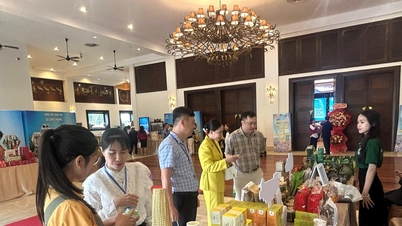
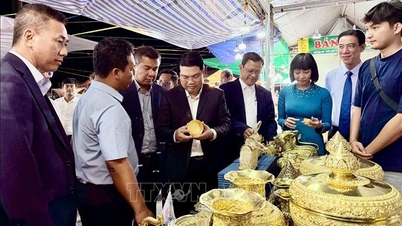
To support OCOP products in accessing the market, Hanoi has recently intensified the organization of trade fairs, seminars, and trade weeks to promote the recovery and development of commercial services, connect trade, and stimulate consumer demand for OCOP products. According to the Hanoi City Office for Coordinating the New Rural Development Program, the city has developed 110 points for introducing and selling OCOP products, creating conditions for consumers in the capital to identify and consume these products. In addition, the Hanoi Department of Agriculture and Environment organizes events to introduce OCOP products associated with regional cultures (Northern mountainous provinces, Red River Delta, Central and Central Highlands, and Southern Vietnam), along with many trade weeks for consulting, introducing, and promoting the consumption of OCOP products, traditional crafts, and agricultural food products.
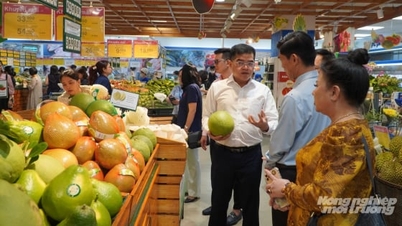
Hanoi city has also signed cooperation agreements with many retail corporations such as Central Retail, AEON, Winmart, and Hapro to bring OCOP products into modern distribution systems. In addition, businesses are trained in sales skills and building digital storefronts on e-commerce platforms such as Postmart, Voso, Tiki, Lazada, and Shopee…
However, the reality shows that many OCOP products still remain small-scale, handcrafted, with simple packaging, incomplete product information, and lack of traceability, leading to difficulties in accessing large distribution systems and international market standards. Furthermore, many OCOP producers are individual households or small cooperatives with limited management capacity and a lack of professional personnel in marketing, design, and communication, making it difficult for even high-quality products to penetrate larger markets.
To develop OCOP products in line with market demand, Ngo Van Ngon, Deputy Head of the Office in charge of the New Rural Development Program Coordination Office of Hanoi City, said that the Office will continue to implement many solutions simultaneously, such as: Enhancing the capacity of OCOP producers through in-depth training on product development, market research, brand building, and digital transformation; promoting regional linkages and value chains between production households, cooperatives, businesses, and distributors. This will lead to the formation of stable raw material areas and production based on orders.
Hanoi will also continue to expand the distribution network, increasing the number of OCOP (One Commune One Product) sales points in urban areas; prioritize display at tourist destinations; support logistics costs and promotion on e-commerce platforms. In addition, policies will be developed to support packaging upgrades, quality inspection, traceability, and quality standard certification… to ensure OCOP products are competitive in the market.
Hanoi's OCOP products have moved beyond the "quantity" stage and now need to shift strongly towards "quality," placing consumers at the center and the market as the guiding principle. When OCOP products are not only visually appealing and high-quality but also "suit consumer taste" and "the right channel," sustainable value will be built, not only domestically but also reaching international markets.
Source: https://hanoimoi.vn/phat-develop-product-ocop-meeting-market-needs-709049.html























































































Comment (0)