
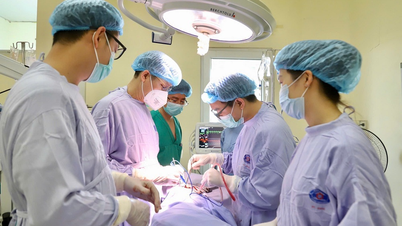
Doctor Manh examines a patient - Photo: BSCC
Ms. NL (54 years old, Hanoi ) was recently hospitalized for emergency treatment due to dizziness and fainting. At the hospital, she was diagnosed with a small cerebral aneurysm. Although no intervention has been indicated yet, she must have the aneurysm monitored regularly.
According to Dr. Doan Du Manh, a member of the Vietnam Vascular Society, cerebral aneurysms are usually cerebral artery aneurysms, which are bulging areas of blood vessels with thin walls. When they rupture, blood spills into the subarachnoid space around the brain, into the brain parenchyma and ventricles, causing paralysis and many other severe complications for the patient, even death.
"The exact cause of aneurysms is still not fully understood. Previously, it was thought to be due to a congenital defect in the vessel wall that caused the bulge."
Currently, it is understood that aneurysm formation is a degenerative process of cerebral blood vessels, with contributing factors such as old age; smoking; atherosclerosis; hypertension; heavy alcohol consumption; drug addiction; trauma or vascular damage; and complications from certain types of blood infections," Dr. Manh clarified.
The expert also stated that the symptoms of a brain aneurysm are quite vague, and the disease progresses silently. Most cases are asymptomatic, with only a few experiencing headaches or dizziness.
When a cerebral aneurysm ruptures, patients often experience symptoms such as sudden, severe headache, neck stiffness, nausea, vomiting, confusion, and coma. In such cases, the patient needs to be taken to a medical facility as soon as possible.
Currently, cerebral aneurysms can be treated using methods such as aneurysm embolization, which may involve metal wire embolization, or surgical removal of the aneurysm… This is combined with medical treatment to prevent cerebral vasoconstriction, reduce cerebral edema, protect nerves, control bleeding, and relieve pain…
To prevent this situation, Dr. Manh advises people with underlying health conditions to control their blood pressure, blood sugar, etc. In addition, they should avoid being overweight or obese, limit alcohol consumption, and quit smoking.
According to Dr. Manh, cerebral aneurysms can easily be mistaken for vestibular disorders. Therefore, patients need to be aware of early screening and diagnosis to monitor and treat them promptly, avoiding the risk of death from ruptured cerebral aneurysms.
Read more Back to Homepage
LINH HAN







![[Photo] Standing Committee member of the Party Central Committee Tran Cam Tu working with the Central Inspection Committee](https://vphoto.vietnam.vn/thumb/1200x675/vietnam/resource/IMAGE/2026/05/28/1779969579668_ndo_br_bnd-2495-jpg.webp)




































































































Comment (0)