

Reporter: How do you assess the development orientation of An Giang province as outlined in the draft political report and socio-economic report to be presented at the An Giang Provincial Party Congress for the 2025-2030 term?
Associate Professor, Dr. Tran Dinh Thien: Firstly, Vietnam in general, and An Giang province in particular, is a "bright spot," a "peaceful" location in a world full of risks and instability, and a reliable partner in a development environment fraught with uncertainties. This is a great advantage, opening up rare opportunities to boost investment attraction and development cooperation, especially on the international stage.
Vietnamese countries and localities, specifically An Giang province, cannot achieve true (rapid and sustainable) development in the modern global competitive and cooperative environment without creating and relying on new and different development capabilities, and without fundamentally improving policy flexibility and adaptability. Achieving double-digit growth is a vital requirement for each locality. For An Giang, a province with a high degree of "agricultural" activity, the challenge is even greater.
The provincial Party Committee's political report must clearly demonstrate that global competition is a mandatory requirement for An Giang – immediate and vital. It demands that An Giang, and each economic entity within the province, adopt a strategy of "selective self-reliance" – that is, a strategy of building strong endogenous capacity, based on advantages, especially dynamic and integrated advantages of the newly established province, while proactively and effectively expanding regional, national, and international linkages. Given its geo-economic position and unique development potential, An Giang must, and even more so, adopt this strategy.
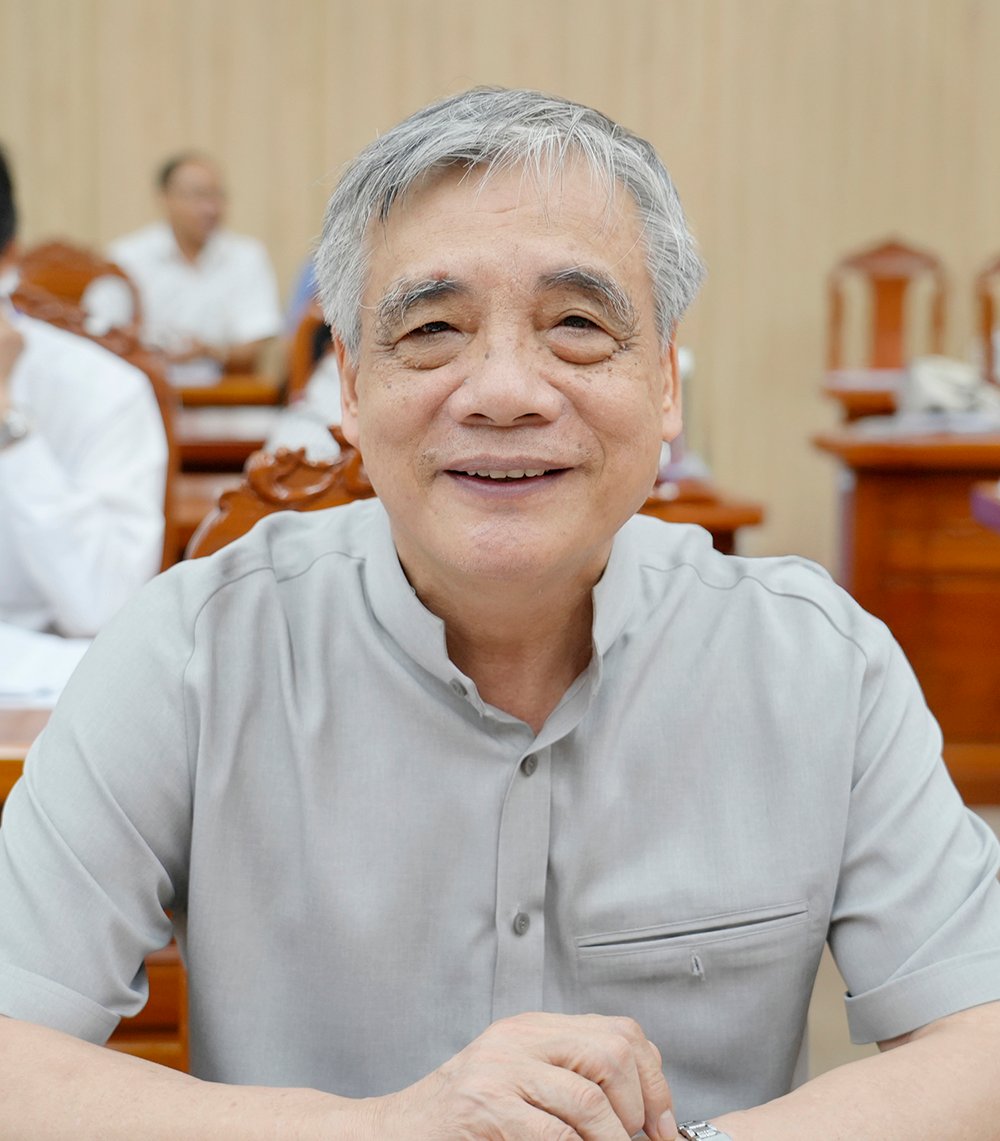
Associate Professor, Dr. Tran Dinh Thien.
Secondly, the country is entering a new phase and pace of development, fundamentally changing its vision and approach, with new drivers and models of growth and development. This trend creates a particularly positive new development mindset for the entire nation; transforming the current development situation into a once-in-a-thousand-years historical opportunity that must not be wasted or ignored.
In this context, the challenges and opportunities for development are extraordinary, global in scope, and historically significant. To overcome these challenges and realize these opportunities, continuing with traditional development logic and relying on the "exploitation" of existing resources and old drivers is insufficient and impossible. Vietnam in general, and An Giang province in particular, need new and different development capabilities and drivers.
With that approach, the "Four Pillars of Resolution" - "Four Pillars of Strategy," recently issued by the Politburo, should be considered the framework for shaping development thinking and establishing the most important strategic priorities that An Giang province will address in the coming period.
Thirdly, the official nationwide implementation of a two-tiered (provincial and commune) local government model from July 1, 2025, represents a major institutional shift. However, the issue is no longer a "pilot project" but rather the effective operation across all localities. To achieve the set goals early – which is crucial to avoid disruptions in governance and hinder efforts towards sustainable high growth – provinces need to pay special attention to establishing inter-commune coordination mechanisms, ensuring centralized management while still promoting the initiative of each grassroots unit, and avoiding the dispersion of resources, duplication of functions, or the "bureaucratization" of communes and wards.
Fourth, after the reorganization of administrative units nationwide from 63 provinces and cities to 34, many newly formed provinces possess superior scale and competitiveness. In this highly competitive and dynamic development environment, An Giang province will have to transform its growth model, shifting from reliance on traditional resources and physical assets (which are still not being exploited effectively) to reliance on flexible institutions, high technology, and high-quality human resources. This is a prerequisite for the new An Giang province to leverage its new advantages, maintain its position, and achieve high and sustainable development within the new national structure.
Against this backdrop, I propose a strategic development orientation for An Giang province for the 2025-2030 term, based on the framework of the "Four Pillars of Strategy" and the two action lines of "restructuring the apparatus" and "reorganizing the country" that the Central Government is prioritizing and promoting.
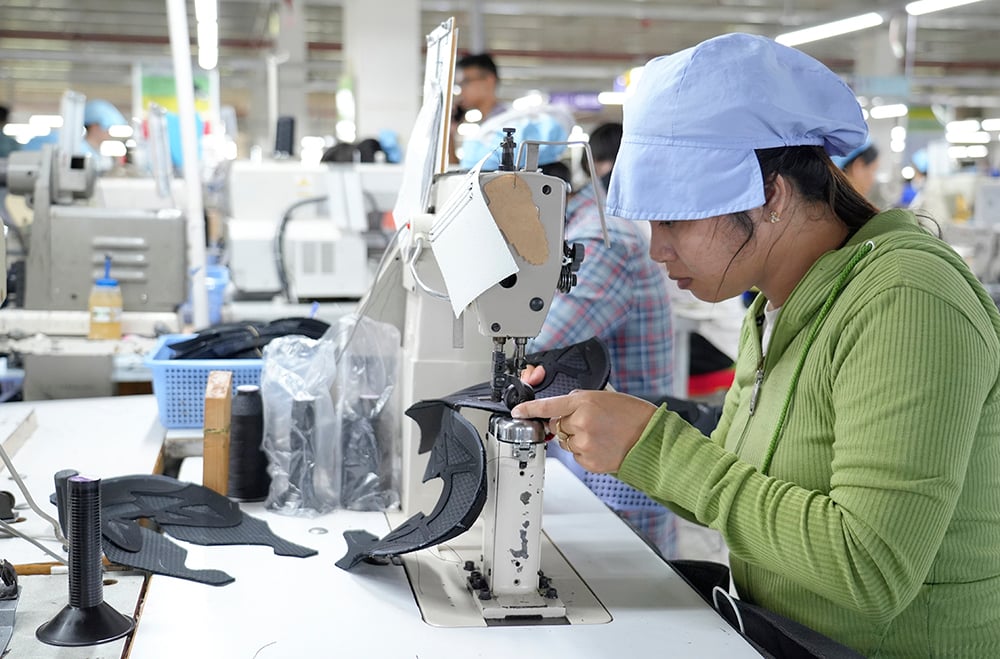
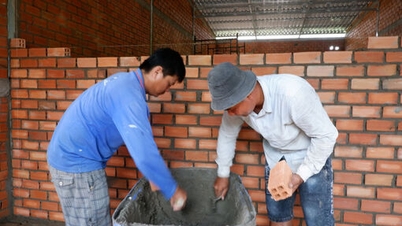
Workers at Thai Binh Kien Giang Joint Stock Company.
Reporter: In your opinion, what is An Giang province's strategic vision and priority choices until 2030?
Associate Professor, Dr. Tran Dinh Thien: In terms of strategic vision, An Giang needs to be developed into a strategic regional growth pole with high competitiveness and world-class international integration, based on three modern pillars: innovation, effective institutions, and dynamic private enterprises, within a stable, open, flexible, and highly competitive development environment.
Strategic message: Through innovation, modern institutions, pioneering enterprises, and deep integration, the province will transform itself into a strategic growth hub for the region.
Strategic breakthroughs include:
Firstly, regarding breakthroughs in science, technology, and innovation: Establish innovation centers linked to universities, technology companies, and research institutes; promote comprehensive digital transformation in agriculture, tourism, land management, and public services. Form inter-ward and inter-commune innovation clusters in urban and rural areas, strengthening innovation linkages from the grassroots level. By 2030, the digital economy will account for at least 30% of GRDP and 1,000 innovative enterprises will be established.
Secondly, regarding institutional reform and improving the effectiveness of law enforcement: Establish a policy review and implementation monitoring mechanism at the commune level, ensuring that all policies reach the people and businesses. Implement a model of a local policy and legal analysis center to help appraise, review, assess the impact, and monitor the effectiveness of implementation. In particular, it is necessary to clearly identify the current critical issue of the province: the weak quality of the public administration system, both in terms of capacity and public service ethics. A comprehensive program is needed to build a professional, responsible, and honest team of officials and civil servants, linked to recruitment reform, performance evaluation based on KPIs, a system of incentives, and a strict disciplinary mechanism. Build a transparent, disciplined, and service-oriented law enforcement environment, instead of bureaucratization and abuse of power.
Thirdly, regarding the robust development of the private sector: An Giang will issue a strategy for the development of Vietnamese businesses, prioritizing the encouragement of "leading" businesses with vision, competitiveness, social responsibility, and leadership. The startup ecosystem will be expanded, providing financial, technological, land, and administrative support through a "one-stop shop" model. Green and smart industrial parks will be planned and operated effectively, prioritizing high-tech and export-oriented private enterprises. Property rights and the freedom of business of private enterprises will be protected in accordance with constitutional principles and international commitments.
Fourth, regarding proactive, comprehensive, and effective international integration: Establishing a Vietnam-Cambodia-ASEAN economic and logistics corridor, linked to border gates, seaports, airports, and expressways passing through the province. Developing superior institutions for special economic zones, coupled with exceptional development potential for Phu Quoc to compete at the highest global level. Implementing a unique human resource development strategy. Building a "national integration identity" for Phu Quoc, preserving and promoting the core traditions of Southern Vietnam while converging the essence of Vietnamese culture and expanding upon and embracing global excellence.

Tourists visit Phu Quoc night market.
The province needs to clearly define the development of a modern, green, high-tech industrial park system as a strategic breakthrough to enhance provincial competitiveness, in line with the province's conditions and capabilities. This includes encouraging large domestic private enterprises to invest in industrial park infrastructure and logistics services. Connecting industrial parks with innovation, gradually forming a closed industrial value chain, and linking it with local human resource training are also crucial. The technical infrastructure, energy, environment, and urban areas surrounding industrial parks should be synchronized towards sustainable and in-depth development.
An Giang province is at a strategic turning point; inaction means falling behind, but half-hearted change will not provide the necessary impetus for growth. Only by innovating thinking, resolutely reforming institutions, investing in human resources and technology, and operating an efficient and clean system can the province transform its geographical location into a development advantage, turn tradition into a driving force for innovation, and affirm its role as one of the country's new development hubs.
Reporter: Thank you!
Source: https://baoangiang.com.vn/pho-giao-su-tien-si-tran-dinh-thien-tinh-an-giang-dang-dung-truc-buoc-ngoat-chien-luoc-a424277.html






































































Comment (0)