

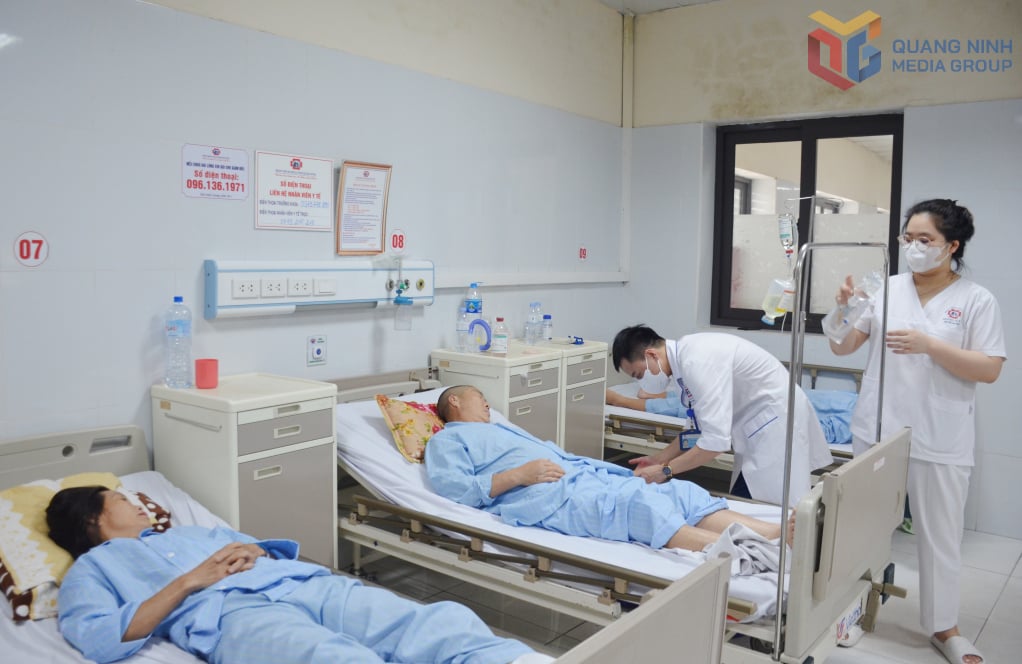
Treatment for patients at the Cardiology Department (Provincial General Hospital).
At the Cardiology Department (Provincial General Hospital), all 88 beds are constantly occupied by patients during the hot weather. The patients are mainly elderly people and those with a history of hypertension, heart failure, and coronary artery disease… admitted with symptoms such as fatigue, dizziness, shortness of breath, and a risk of stroke or acute heart failure if not treated promptly.
Dr. Ngo Van Tuan, Head of the Cardiology Department, advises: During prolonged hot weather, cardiovascular patients should pay special attention to maintaining their medication schedule, drinking enough water, avoiding strenuous exercise, and not staying in air-conditioned rooms at excessively low temperatures. In particular, they should eat a balanced diet, supplement with vitamins, and limit sudden temperature changes, such as going from an air-conditioned environment to the hot outdoors.
Even young, healthy people are at high risk if they underestimate the effects of the weather. Recently, Bai Chay Hospital admitted two severe cases of electrolyte imbalance and acute kidney failure due to severe dehydration after participating in a marathon in hot weather. The patients were Mr. L.D.T (44 years old, Ha Long City) and Mr. D.VH (35 years old, Thai Nguyen City), who were admitted with symptoms of exhaustion, shortness of breath, vomiting, cramps, and spasms in their limbs. Blood tests showed blood concentration, elevated liver enzymes, and acute kidney failure – warning signs of multi-organ damage. Thanks to intensive emergency care, intravenous fluids, and nutritional supplementation, after 48 hours, both patients' health stabilized, and they were discharged.
According to Dr. Luong Minh Tuyen, Deputy Head of the Nephrology and Dialysis Department (Bai Chay Hospital), hot weather increases sweating, leading to dehydration and reduced circulatory volume. This causes a decrease in blood flow to vital organs such as the kidneys, heart, and brain, easily leading to acute kidney failure, heatstroke, coma, and even death. Heatstroke can occur not only in weak individuals but also in young, healthy people if they exert themselves in excessively high temperatures. Patients hospitalized due to mild heatstroke can be treated with fluid and electrolyte replacement to prevent acute kidney failure. Severely ill patients with heatstroke may require dialysis and intensive care.

Doctors from the Nephrology and Dialysis Department (Bai Chay Hospital) examine and treat patients with electrolyte imbalance and acute kidney failure due to dehydration.
When ambient temperatures rise, the body tends to increase sweating to cool itself, leading to rapid dehydration and electrolyte loss. If not replenished promptly, this can cause a decrease in circulating blood volume, leading to cardiovascular collapse and severe electrolyte imbalance, even death. Common initial symptoms include headache, dizziness, lightheadedness, muscle cramps, and spasms in the limbs. More dangerously, prolonged dehydration and heatstroke can cause impaired cardiovascular and renal function, especially complications such as acute kidney failure, coma, or death. Proactive and proper rehydration becomes a key factor in protecting health during the summer.
Nguyen Thi Hanh, a Bachelor of Nutrition from the Nutrition Department (Vietnam-Sweden Uong Bi Hospital), shared: Adults should drink 1.5-2.5 liters of water per day, evenly distributed throughout the day, and not wait until they are thirsty to drink. In addition to plain water, they should supplement with broth, fruit juices, and electrolyte drinks. Limit very cold drinks, carbonated drinks, and alcoholic beverages as they can easily cause digestive disorders and increase dehydration. Especially vulnerable groups such as young children, the elderly, and those with chronic diseases need to be closely monitored for signs such as dry lips, dark urine, rapid heartbeat, dizziness, etc., so that timely action can be taken.
To prevent dangerous illnesses caused by heat, doctors advise people to limit outdoor activities between 10 am and 4 pm, especially heavy labor and sports such as running and long-distance cycling. Ensure adequate hydration and electrolyte intake, especially for outdoor workers who may need to replenish 3-4 liters of water and electrolytes to avoid complications such as acute kidney failure due to dehydration. Increase nutritional intake, eat more fruits or drink fruit juices to ensure sufficient vitamins and boost the body's resistance. Eat cooked food and drink boiled water; avoid food left out in hot environments for too long, as this can easily cause diarrhea and food poisoning.
Wear protective equipment when working in the sun, such as wide-brimmed hats, long-sleeved shirts, and sunglasses. Use air conditioning properly, setting the temperature to around 28-29 degrees Celsius, and avoid sudden temperature changes when moving from indoors to outdoors. Do not let fans or air conditioners blow directly on people, especially young children and the elderly. If you see someone suffering from heatstroke, move them to a cool place, loosen their clothing, apply cool compresses, give them water or oral rehydration solution, and quickly take them to the nearest medical facility.
Nguyen Hoa
Source: https://baoquangninh.vn/phong-benh-mua-nang-nong-3363886.html
![[Photo] Prime Minister Pham Minh Chinh receives the Chinese Ambassador to Vietnam](https://vphoto.vietnam.vn/thumb/1200x675/vietnam/resource/IMAGE/2026/04/05/1775397481797_ndo_br_dsc-5512-jpg.webp)







































































































Comment (0)