

 |
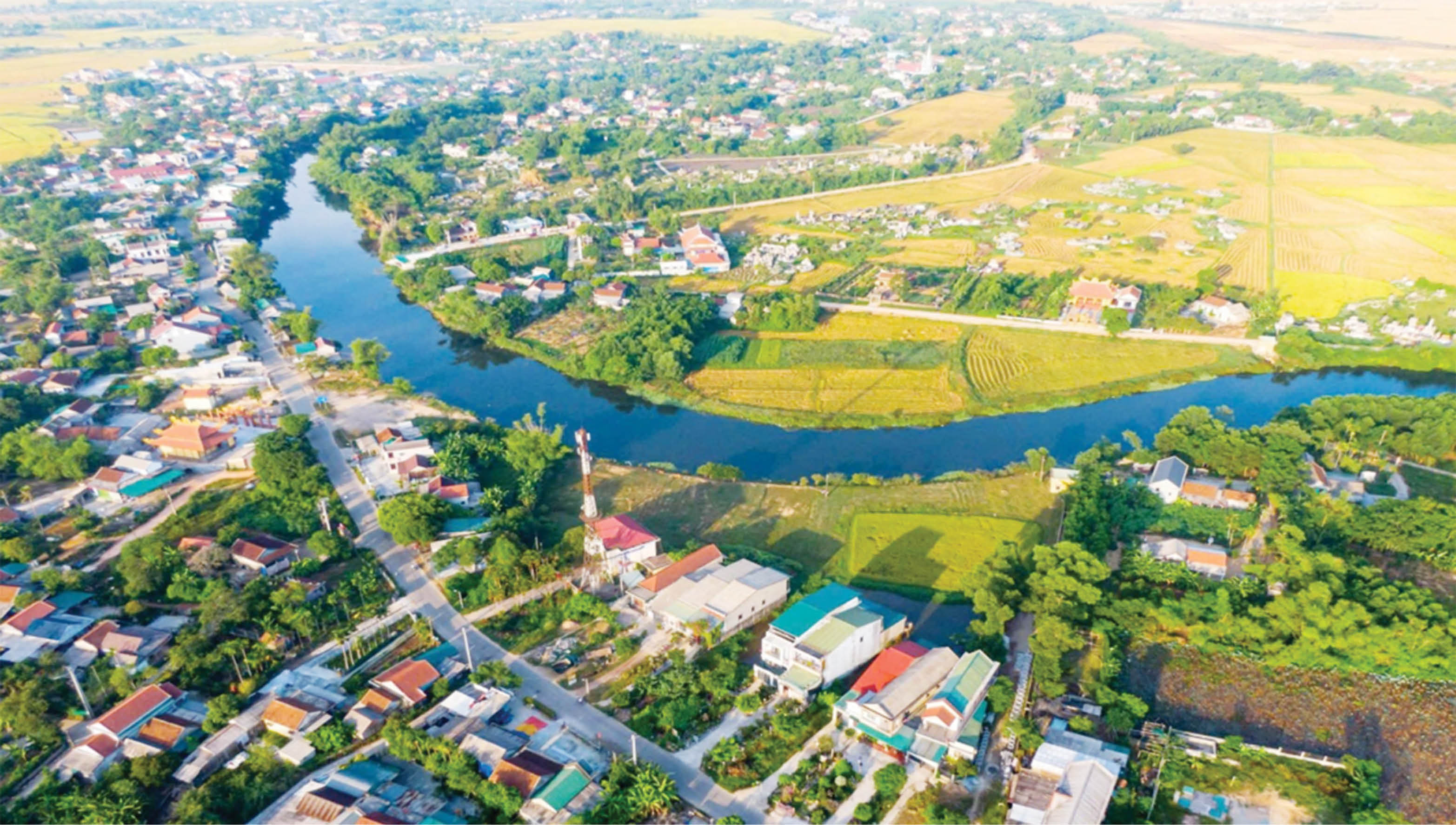
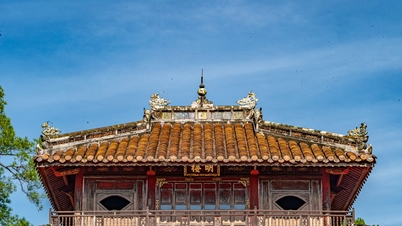
| Phong Dinh Ward is gradually developing into a civilized urban area. |
Glorious memories
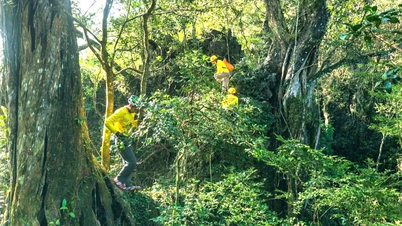
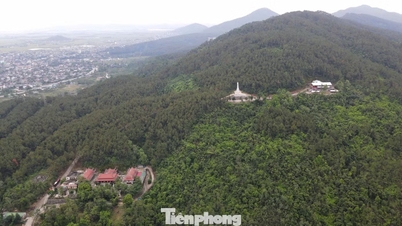
Leading visitors on a tour of the Rú Cát area – a revolutionary base of the former Phong Điền district during the resistance war – Mr. Nguyễn Ngọc Khánh, former Secretary of the Party Committee of Phong Bình commune, now part of Phong Dinh ward, informed: In the early period of the resistance war, the Phong Bình commune Party branch, then called Phong Dinh, mobilized a large number of people to participate in political struggles. From these struggles, many revolutionary bases were established, providing a reliable support for the Party in consolidating its forces in the locality. This Hỏa Chăm - Rú Cát base was firmly maintained, becoming a stronghold for cadres and Party members from the Hòa - Bình - Chương inter-commune area (now Phong Dinh ward). During that period, many families in Hóp, Tây Hồ, Đông Trung Hồ hamlets… did not hesitate to brave the dangers to shelter cadres in their homes and act as liaisons, transporting cadres to and from the guerrilla base.
Stopping on the paved road in the middle of Rú Cát, Mr. Khánh recounted: "Previously, during the resistance war, this road was just a dirt path full of white sand. The entire Rú Cát area was full of native trees, so there were many trenches and bunkers, serving as our revolutionary base. Because this area was close to the Hòa Mỹ War Zone, along with political and military activities, the Party branch and the people here also focused on production, storing rice to contribute to the resistance. The work was done at night. After the harvest, the villagers would hide sacks of rice in their gardens, and the guerrilla fighters would go from house to house to collect the rice, then gather it in Rú Cát to dig trenches and bury it, creating fake graves on top, and then notify the soldiers to come and collect it… That was a proud and glorious period of fighting against the enemy and protecting the homeland."
According to Mr. Khanh's account, I sought out Mr. Pham Ba Lien, 85 years old, a native of Phong Binh (formerly) with 60 years of Party membership, to learn about the land that endured many hardships during the resistance war. While offering tea to his guest, Mr. Lien reminisced: In early 1947, the sand dunes in Phong Binh became a stronghold for cadres and Party members of the Hoa-Binh-Chuong inter-communal area. By the summer of 1947, many cadres, Party members, and soldiers had returned to the base to rebuild the revolutionary movement. To sustain the resistance, the guerrilla forces and the people in the area built a system of combat trenches and secret tunnels...
The sandy hill area – a revolutionary base of the former Phong Dien district – was a strategic location throughout the years of resistance. Because of this, the enemy always deployed a large force of troops here, establishing dense military outposts to control and suppress our struggle. However, the people in the area, under the leadership of the Party branch, persevered, clinging to their land and villages, resolutely fighting against the enemy. Despite countless difficulties, the people still actively supported the resistance, playing a role as a transit point for food, supplies, and weapons from neighboring areas to the Hoa My resistance zone. “Phong Dinh land at that time was one of the first localities to form fighting villages and communes in the former Phong Dien district,” Mr. Lien asserted.
Forming a civilized urban environment
Building upon the resilient traditions of the resistance war, the Party committees, government, and people of Phong Dinh today are embarking on a "battle" to build a new homeland.
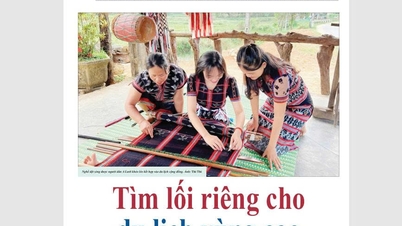
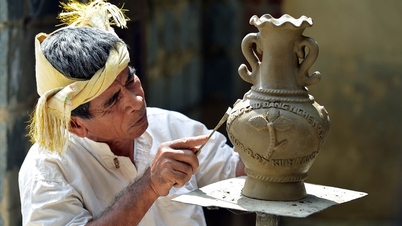
Introducing the local traditional craft villages, Mr. Tran Van Huy, Vice Chairman of the People's Committee of Phong Dinh Ward, enthusiastically stated: "The industrial and handicraft sector in the area continues to affirm its position as a key economic sector, making a significant contribution to the socio-economic development of the ward. Production value increases by an average of 15% annually, accounting for 52% of the economic structure. Currently, the locality has 4 recognized traditional craft villages, including: My Xuyen fine art wood carving, Pho Trach sedge mat weaving, Van Trinh net weaving, and Phuoc Tich pottery; and 9 products recognized as typical rural industrial products…"
Alongside this, the trade and service sectors in the area have developed diversely, with an impressive average annual increase in production value of 18%. Many essential infrastructure and facilities serving tourism and service development have received significant investment. The planning of areas with potential and advantages for tourism development has attracted investment capital, diversified tourism services, and led to a steady increase in the number of tourists visiting the area.
Another noteworthy point is that Phong Dinh is strongly developing its economic sectors, promoting investment in projects outside the state budget to create economic restructuring. Currently, the ward has 19 cooperatives and cooperative groups; 46 enterprises, including 9 enterprises investing in the industrial park (1 enterprise with 100% foreign capital); and more than 190 individual business households operating in various fields. Through policies, 7 establishments have received support from the national industrial promotion program with a total amount of 543 million VND. Mr. Nguyen Viet Nam, a household in the Pho Trach sedge mat weaving village, said: "Thanks to the support policies, new business opportunities have opened up for the people here. My NX sedge mat product has been nominated for national-level exemplary product recognition."
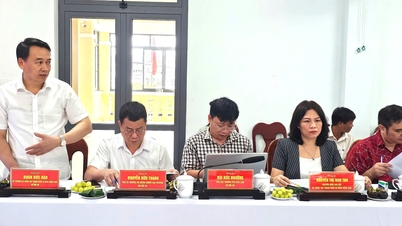
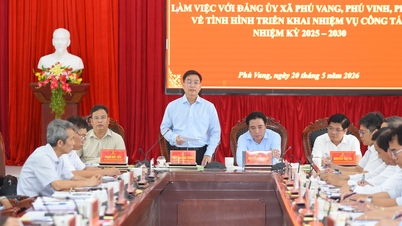
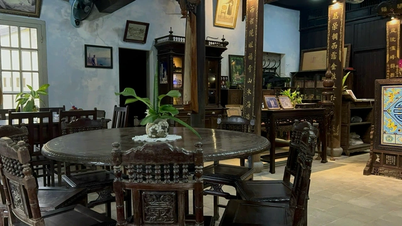
According to Hoang Van Thai, Secretary of the Phong Dinh Ward Party Committee, the locality is currently enjoying favorable conditions thanks to the City People's Committee's approval of a list of more than 10 investment projects in the ward, covering potential areas such as tourism, services, resorts, minerals, and energy. These include large projects such as the Ngu Ho Golf Course and its supporting facilities; the Ngu Ho Eco-tourism Area; the Ngu Ho Commercial and Service Area; the Hue traditional house museum in My Xuyen craft village; the white sand mine in Phong Chuong and Phong Hoa communes; and the Phong Hoa solar power plant...
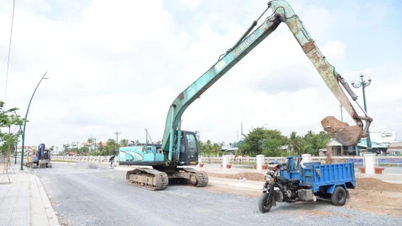
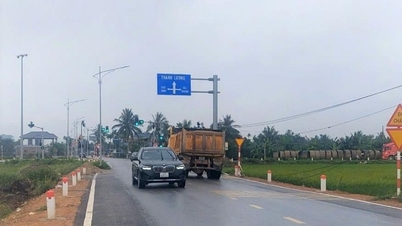
Therefore, in the new phase, Phong Dinh will mobilize resources to focus on building a synchronous socio-economic infrastructure system; prioritizing the development of connecting transportation infrastructure and key transportation systems according to the plan, creating a foundation for urban development. This includes coordinating with relevant departments to effectively implement the medium-term investment plan for the period 2026-2030 and annually, prioritizing resources for key, important, and strategic projects in the ward. At the same time, it will create favorable conditions to attract investment from businesses and non-budgetary projects to develop socio-economic aspects, especially projects in the Ngu Ho area, striving to gradually build Phong Dinh ward into a civilized urban area.
Source: https://huengaynay.vn/kinh-te/phong-dinh-chuyen-minh-157160.html
![[Photo] General Secretary and President To Lam works with the Party Committee of the Ministry of Health on the work of Vietnamese traditional medicine.](https://vphoto.vietnam.vn/thumb/1200x675/vietnam/resource/IMAGE/2026/05/20/1779294323718_a1-bnd-2978-3319-jpg.webp)
![[Photo] National Assembly Chairman Tran Thanh Man working with the Standing Committee of the National Assembly's Delegation Affairs Committee.](https://vphoto.vietnam.vn/thumb/1200x675/vietnam/resource/IMAGE/2026/05/20/1779294340023_ndo_br_1-1691-jpg.webp)
![[Image] "Journey of Hope" promotes the organ and tissue donation movement in Vietnam.](https://vphoto.vietnam.vn/thumb/1200x675/vietnam/resource/IMAGE/2026/05/20/1779294400833_1-8910-jpg.webp)
























































Comment (0)