

In the article “Vietnam-Indonesia Cherish Seven Decades of Bilateral Relations” published in Policy Brief Special Edition, author Vijay Sakhuja, Professor of Geopolitics and International Relations and former Director of the National Maritime Foundation of India, offered insightful assessments of the more than 70-year journey of Vietnam-Indonesia relations, considering it one of the most exemplary and strategically profound bilateral relationships in Southeast Asia.
According to the article, after more than seven decades of formation and development, the Vietnam-Indonesia relationship has transcended the framework of conventional bilateral cooperation to become an important pillar of the regional structure.
Founded in the 1950s, against the backdrop of both nations emerging from struggles for independence, this relationship is forged by political trust, shared strategic interests, and a common vision for peace, stability, and sustainable development in the region.
Vietnam and Indonesia share many rare points of convergence in modern history. Both are nations that gained independence through long struggles, thereby fostering a spirit of national self-reliance and a determination to protect their sovereignty .
According to Professor Sakhuja, it was the similarities in history and aspirations that created a deep understanding between the two countries, laying the foundation for the establishment of formal diplomatic relations on December 30, 1955.
The friendship and close bond between President Ho Chi Minh and President Sukarno is considered one of the earliest symbols of the Vietnam-Indonesia relationship. This political legacy has continued to be inherited and developed by successive generations of leaders, helping to maintain bilateral relations even during periods of significant regional and global upheaval.
From a traditional friendship, the two countries have gradually upgraded their relationship, reaching the Strategic Partnership milestone in 2013 and, notably, the Comprehensive Strategic Partnership in March 2025, during General Secretary To Lam's visit to Indonesia. According to Professor Sakhuja's assessment, this is a "historic turning point," reflecting the highest level of political trust between the two nations.
From a geopolitical perspective, both Vietnam and Indonesia hold key positions in the Indo-Pacific region. Vietnam lies on vital shipping lanes and supply chains connecting Northeast Asia with mainland Southeast Asia, while Indonesia – the world's largest archipelago nation – controls strategic sea lanes such as the Malacca, Sunda, and Lombok Straits.
This strategic spatial complementarity creates the conditions for the two countries to become natural partners in promoting regional economic connectivity. Professor Sakhuja noted that the economy is emerging as the most dynamic pillar in bilateral relations.
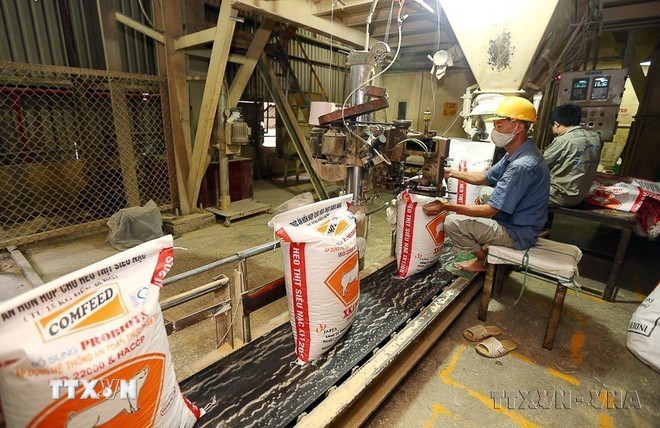
Indonesia is currently Vietnam's second-largest trading partner within the Association of Southeast Asian Nations (ASEAN), while Vietnam is Indonesia's fourth-largest trading partner. Both sides aim to increase bilateral trade to US$18 billion by 2028.
Notably, Professor Sakhuja's article emphasizes the role of strategic investment cooperation, highlighting VinFast's $1.2 billion investment plan to build an electric vehicle manufacturing plant in Indonesia.
This project is not only of economic significance but is also considered a symbol of Vietnam's rise in green technology and innovation, while aligning with Indonesia's energy transition and sustainable development orientation.
As an expert on maritime security, Professor Sakhuja pays particular attention to defense and security cooperation between Vietnam and Indonesia. The two countries share a vision of a free and open Indo-Pacific region based on international law, with the 1982 United Nations Convention on the Law of the Sea (UNCLOS) considered the core legal foundation.
The completion of negotiations on the delimitation of the exclusive economic zone (EEZ) between the two countries is seen as clear evidence of their commitment to resolving sensitive issues peacefully, making a positive contribution to maintaining stability and order in the South China Sea.
On a broader level, Vietnam and Indonesia are both core members of ASEAN, sharing the responsibility of maintaining internal unity and ASEAN's central role amidst increasing strategic competition among major powers.
According to Professor Sakhuja, close coordination between Hanoi and Jakarta is crucial in shaping a common voice for Southeast Asia in regional and global forums.
The author observes that after 70 years of partnership, Vietnam and Indonesia are entering a new phase of development in their bilateral relations. Beyond mere cooperation between the two countries, this relationship reflects the increasingly prominent roles of Vietnam and Indonesia as responsible "middle powers," jointly shaping the security and economic structure of the region.
Source: https://www.vietnamplus.vn/quan-he-viet-nam-indonesia-bay-thap-ky-dong-hanh-post1086499.vnp
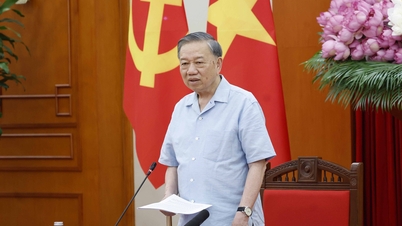
![[Photo] General Secretary and President To Lam presides over a meeting on preparations for the review of one year of operation of the three-tiered government system.](https://vphoto.vietnam.vn/thumb/1200x675/vietnam/resource/IMAGE/2026/06/02/1780391821195_a1-bnd-4595-9717-jpg.webp)








































































Comment (0)