

Two ends of longing
During every holiday season, the sight of congested traffic on the roads leaving Hanoi or Ho Chi Minh City has become familiar. On motorbikes laden with luggage, faces covered in road dust, but eyes shining with excitement. It's a journey home, simple yet profound.
For many, the city is a place of opportunity but also a space of loneliness. Factory workers, small traders in markets, office workers, and civil servants all choose the city to make a living. Many young families remain because their children need better educational environments and healthcare .
But behind that stable life lies a void that is difficult to fill. The homeland remains, with aging parents, with irreplaceable memories and experiences. The struggle between making a living and family ties turns each holiday into a race to return home.
Among that crowd, a full range of emotions awaited. Some longed for meals with family and friends from their humble beginnings, while others worried about insufficient income. No matter how modern the city becomes, many still consider it a "temporary residence." They work and contribute in the city, but their dreams remain anchored in their hometown. This feeling of not belonging leaves their spiritual lives constantly in limbo.
Therefore, trips back home are not only for rest but also to "recharge" emotionally, to remind ourselves that there is still a place to return to.
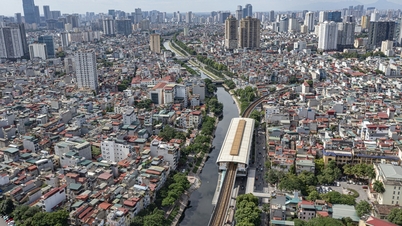
Conversely, the concentration of population in large cities is putting immense pressure on transportation, healthcare, and education infrastructure. Overcrowded roads and congested vehicles not only cause fatigue but also pose safety risks. There have been instances of family reunions being cut short.
This reality highlights the growing need to live and work near one's hometown or in a conveniently connected environment.

Narrowing the gap, connecting the two banks.
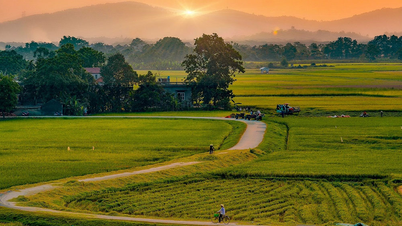
To solve that problem, the approach of "leaving agriculture but not leaving one's hometown" is gradually becoming clear. The goal is not just to keep people in rural areas, but to create conditions for them to live, work, and develop right in their hometowns.
The National Target Program for Building New Rural Areas in the period 2021-2025, as stipulated in Decision 263/QD-TTg, lays the foundation for on-site economic transformation. Beyond just infrastructure, the program aims to bring industry and services to rural areas, forming production clusters and creating jobs right in the locality.
Simultaneously, the vocational training policy for rural workers under Decision 1956/QD-TTg helps workers acquire the skills to change jobs without having to leave their hometowns. When jobs can be found right where they live, the problem of "maintaining physical well-being" is gradually solved, leading to greater mental stability.
Policies encouraging businesses to invest in agriculture and rural areas, as stipulated in Decree 57/2018/ND-CP, have also contributed to creating many local jobs. Businesses not only bring capital but also provide services and amenities, helping to transform the face of rural areas.
On a broader scale, regional development planning under Resolution 81/2023/QH15 is opening up new economic spaces. Localities such as Bac Ninh, Hung Yen, Binh Duong, and Long An are gradually becoming growth poles, sharing the pressure with central urban areas.
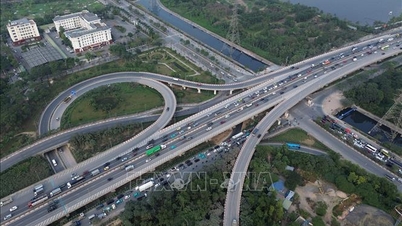
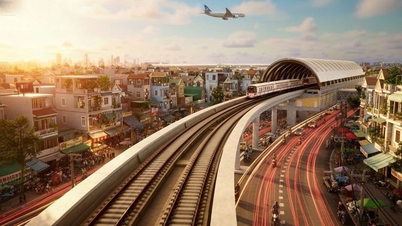
Transportation infrastructure plays a crucial role in this process. Ring roads and inter-regional expressways not only shorten geographical distances but also connect job opportunities and living spaces. When commuting is convenient, choices for where to live and work are no longer limited.
Furthermore, the social housing development program under Decision 338/QD-TTg is creating conditions for workers to settle down. A stable, affordable place to live, close to schools and healthcare facilities, will help them stay with their workplace for the long term. In that case, a foreign land can become a "second home".
The reallocation of educational and healthcare resources is also underway. The expansion of hospital and university facilities to suburban areas and neighboring provinces allows people to access high-quality services without having to concentrate in the city center.
These movements may not bring about immediate change, but they are gradually narrowing the gap between rural and urban areas. When work, education, and daily life are secured within a reasonable space, people's choices will also change.

Home is still the place to return to, while the city is where you grow. When these two spaces are no longer opposing but complement each other, holiday trips will no longer be exhausting journeys. They will be trips of peace, where each person no longer has to stand between two ends of longing.
Source: https://baophapluat.vn/que-nha-lay-dong-ky-uc-dat-khach-chong-chenh-niu-tam-hon.html






















![[Image] Hanoi's urban life under the challenge of a "scorching hot" environment](https://vphoto.vietnam.vn/thumb/1200x675/vietnam/resource/IMAGE/2026/05/25/1779706979265_nang-nong-t5-2026-minh-duy-7-4636-jpg.webp)












































Comment (0)