

- The impetus of the new rural development
- Those who "keep the flame" of the new rural development
- Making breakthroughs in building new rural areas and achieving sustainable poverty reduction.
Meeting standards doesn't always equate to achieving quality.
The core objective of building new rural areas is sustainable socio -economic development and improving the material and spiritual lives of the people. However, in some places, the implementation process still shows signs of chasing after achievements. Some communes are recognized as meeting the standards, but people still lack clean water for daily use, have unstable incomes, and unstable livelihoods. Some households are recognized as having escaped poverty, but in reality, their lives have not improved much.
This was also a concern of Comrade Pham Thanh Ngai, former Deputy Secretary of the Provincial Party Committee and former Chairman of the People's Committee of Ca Mau province, during his visits to the grassroots. Witnessing households still facing difficulties but being removed from the list of poor households to meet the criteria, he once reminded: "Building new rural areas must be genuine, not just chasing achievements. If people are still suffering, we must look straight at the truth to find ways to resolve the problems."
This concern serves not only as a reminder of the responsibility of officials in implementing policies but also highlights the need to re-examine the current approach to building new rural areas. Because if the focus is solely on "meeting standards" without addressing the real difficulties faced by the people, then the achieved title will hardly create lasting consensus and trust.
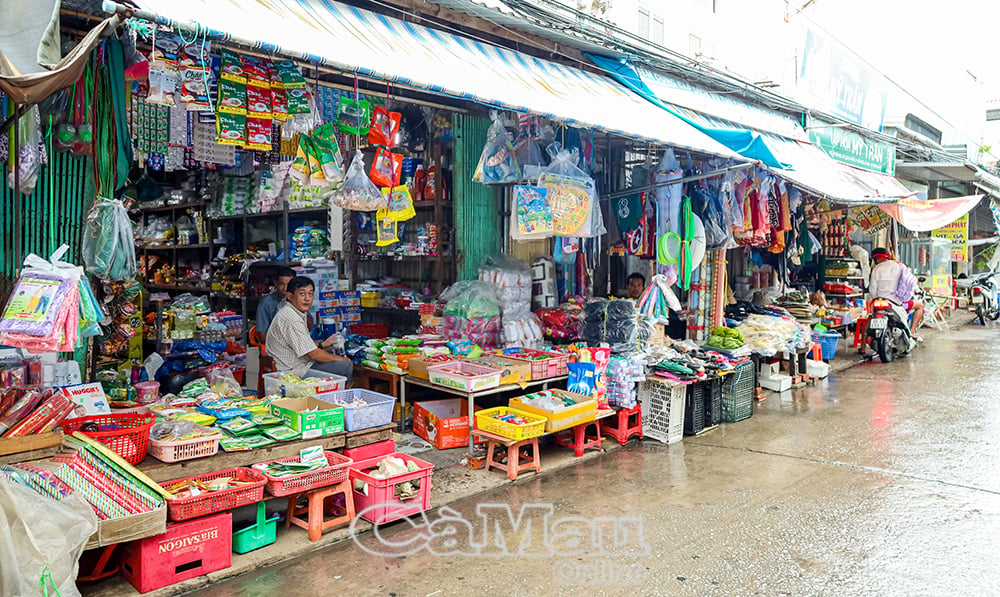 Small traders at Cai Keo Market (Quach Pham Commune) hope to have access to favorable loan sources and stable tax policies so that they can confidently conduct business, develop the economy, and improve their living standards.
This reality is also reflected in the slow progress of infrastructure projects. Many households living along the embankment of the Luong The Tran canal (Tan Hung hamlet, Ly Van Lam ward) have reported that the road has seriously deteriorated after more than 20 years of use. Many sections have subsided, peeled off, and are deeply flooded during high tides, making travel, schooling, and shopping difficult for residents, especially during the rainy season.
Residents reported that at a meeting with constituents in October 2025, local leaders acknowledged the situation and stated they would consider allocating funds to reinvest in the road in 2026. Therefore, they hoped the project would be implemented soon. However, to date, there has been no concrete action taken, causing residents considerable anxiety as the rainy season has begun.
It's not just a story about slow-developing roads; it's also the general sentiment of many residents in areas with prolonged planning delays. Projects stalled for years discourage people from investing in businesses, and they hesitate to repair dilapidated houses. This reality shows that building new rural areas cannot simply stop at fulfilling criteria on paper; it requires decisive implementation, responsible planning, and management closely aligned with the real lives of the people.
"Restarting" the mindset for building new rural areas.
Following the merger, Ca Mau province has 64 communes and wards. This is not only a change in administrative boundaries but also opens up opportunities to restructure resources and innovate rural development thinking towards a more substantive and sustainable direction.
Building new rural areas at this time requires reviewing the quality of communes that have already met the standards; prioritizing the resolution of essential social issues such as transportation, clean water, schools, and healthcare , while also resolving long-standing projects that affect people's lives.
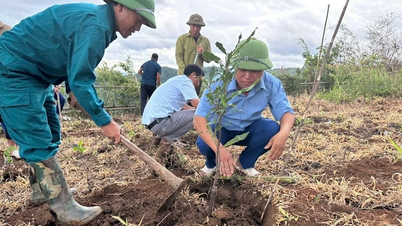
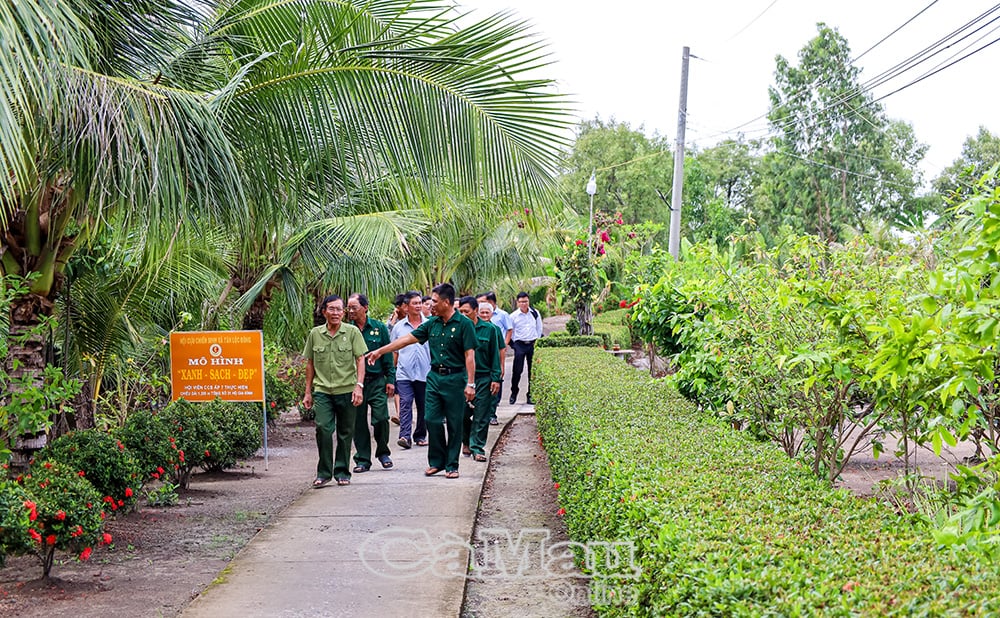 Veterans and local officials in Tram Mot hamlet (Tan Loc commune) actively participate in the construction of new rural areas in the locality.
Ms. Dinh Thi Mung, Chairwoman of the Tan Loc Commune People's Committee, believes that to build sustainable new rural areas, it must start from the actual needs of the people and take improving their living standards as the overarching goal. Therefore, the commune is focusing on shifting the economic structure, supporting production and business, developing infrastructure , and promoting the application of science, technology, and digital transformation in daily life. The locality also creates conditions for business households, cooperatives, and small enterprises to access capital, technology, and expand markets, because when people have stable livelihoods and clearly see the benefits from the projects, the new rural development movement will receive more consensus and active participation.
Sharing the same sentiment, Mr. Thach Hoa Ril (of Khmer ethnicity), from Ninh Thanh Loi commune, said that the people always agree with the policies and guidelines of the Party and the State if the projects truly serve the people's lives. According to him, what the people most long for is convenient transportation, clean water, and stable production conditions so that life becomes less difficult and they have the opportunity to improve their lives.
"Newness" must begin with the real lives of the people.
Throughout all stages of development, building new rural areas can only be sustainable when it truly relies on the people, fostering consensus and genuine participation of the people in every specific task. This was also emphasized by Comrade Huynh Dam, former member of the Central Committee of the Communist Party of Vietnam and former Chairman of the Central Committee of the Vietnam Fatherland Front, when discussing with the leaders of Ca Mau province.
According to Comrade Huynh Dam, the core role of the Fatherland Front in the current period is not only to mobilize movements but also to truly become a bridge between the Party's will and the people's aspirations , gathering and unleashing the people's strength in the development process. As we enter a new stage of development, we must increasingly value the voice and ownership of the people. All policies and projects directly related to people's lives need to be public and transparent so that people can discuss, participate in monitoring, and see the actual results. When the people agree, trust, and voluntarily join hands, that is the most sustainable foundation for building new rural areas and for the long-term development of the locality.
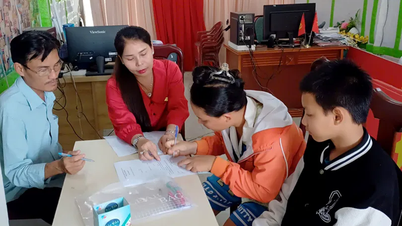
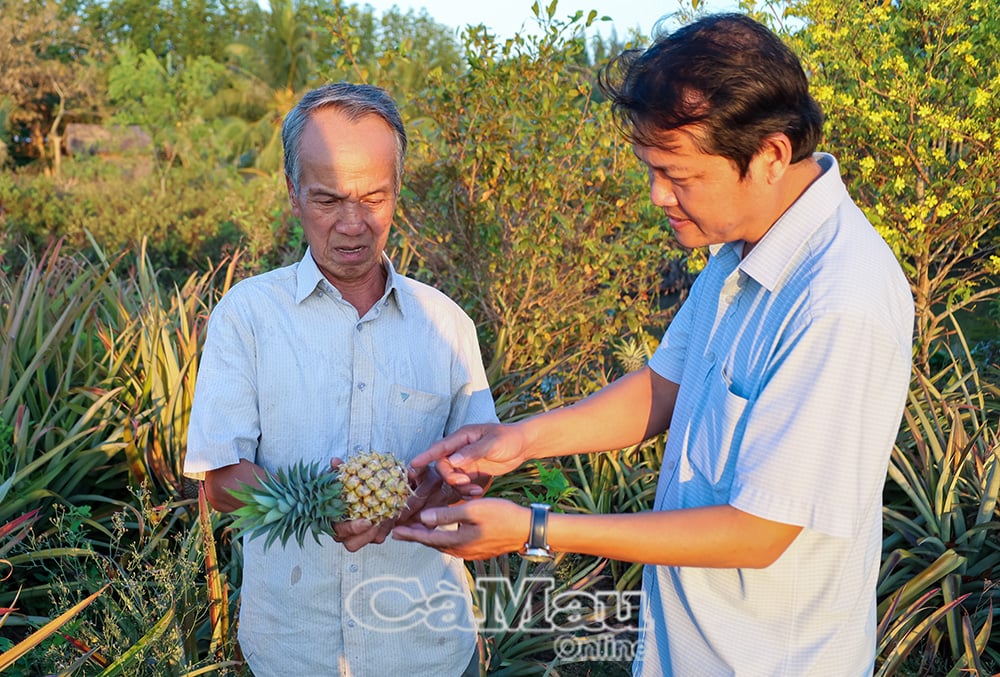 Effective livelihood models are raising expectations for increased income for the people. (In the photo: Mr. Cao Viet Huong, specialist from the Culture and Social Affairs Department of Dat Moi commune (on the right), visits the pineapple farming model of farmer Truong Van Kham, Xeo Sao hamlet).
In reality, rural development is more successful in areas where officials are close to the people, listen attentively, and promptly address their concerns. Conversely, focusing solely on meeting targets without dialogue with the people easily leads to a reactive and superficial approach. Therefore, besides funding and policy mechanisms, the most important factor remains the responsibility of the implementing officials. Officials who work with a spirit of serving the people will build trust; while delays and avoidance of responsibility will reduce the effectiveness of the entire program.
Rural areas today face many new development opportunities, from transforming production to applying technology, building modern infrastructure, and regional linkages after consolidation. However, all policies will be difficult to sustain if people's lives are not truly stable. Electricity, roads, schools, health centers, clean water, and livelihoods are always the most basic necessities that people look forward to. When these needs are fully addressed, people will trust and cooperate with the government in all initiatives.
Only when the people truly benefit from the fruits of development will the New Rural Development program achieve its goal of "satisfying the Party's wishes and winning the people's hearts," no longer a movement for reporting achievements, but becoming a sustainable journey to improve rural life.
Trinh Hong Nhi
Source: https://baocamau.vn/xay-dung-nong-thon-moi-dung-y-dang-duoc-long-dan--a129142.html

![[Image] Close-up view of the interchange connecting the two expressways and Long Thanh Airport.](https://vphoto.vietnam.vn/thumb/1200x675/vietnam/resource/IMAGE/2026/05/25/1779703378210_ndo_br_z7863716673926-224453a31600126cce10622af6290afd-4549-jpg.webp)



![[Image] Hanoi's urban life under the challenge of a "scorching hot" environment](https://vphoto.vietnam.vn/thumb/1200x675/vietnam/resource/IMAGE/2026/05/25/1779706979265_nang-nong-t5-2026-minh-duy-7-4636-jpg.webp)







































































Comment (0)