

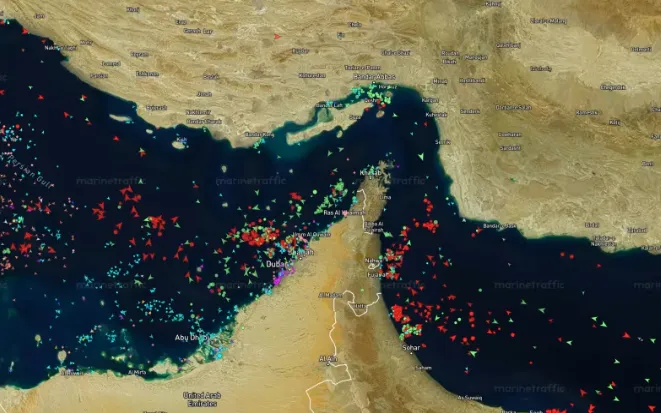
(Photo: NBC News)
To shed light on how Iran has consolidated its control of the Strait of Hormuz in recent weeks, Reuters interviewed 20 people familiar with the developing mechanism, including several Asian and European shipping sources, Iranian and Iraqi officials, reviewed Iranian documents related to security screening procedures, and analyzed ship movements. All sources requested anonymity due to the sensitivity of the issue.
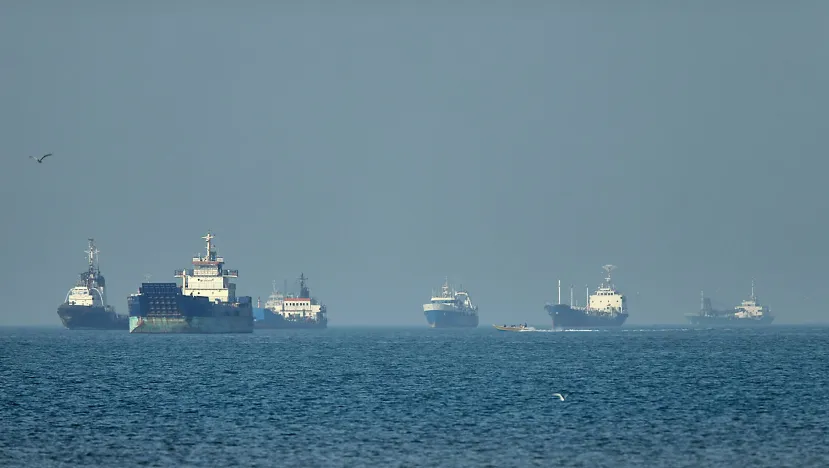
As of early May, approximately 1,500 ships with around 22,500 sailors on board were stranded in the Persian Gulf. Iran's control of the Strait of Hormuz has transformed the Iran conflict into what the head of the International Energy Agency described as the world's worst energy crisis ever. The U.S. Navy responded by imposing its own blockade of Iranian ships and cargo with an outer ring around the strait.
Only a handful of ships can pass through the Strait of Hormuz. From April 18 to May 6, fewer than 60 ships passed through this strategic choke point – according to an unpublished analysis by the US company SynMax Intelligence. Before the war, an average of 120 to 140 ships passed through the Strait of Hormuz each day, about half of them oil tankers.
(Photo: ISNA/AP)
Iran's new mechanism includes a hierarchical system, prioritizing ships linked to allies Russia and China, followed by countries with close ties to Tehran such as India and Pakistan. Next are ships licensed by Iran under agreements between the ship's country of origin and the Islamic Republic.
Iran has stated that ships linked to the US or Israel – the two countries that carried out airstrikes against Iran in late February – are not allowed to pass through the Strait of Hormuz.
Two European shipping sources say some ships not covered by agreements with the Iranian government are paying Tehran authorities more than $150,000 for safe passage through the Strait of Hormuz. Two senior Iranian officials told Reuters that ships sometimes have to pay security and navigation fees, which vary depending on the type of cargo. Neither official provided a specific figure, but one said that not all countries are subject to these fees.

(Photo: ISNA/AP)
Iran has not yet commented on the Reuters report.
However, Iran said it is considering a new peace proposal put forward by the US, mediated by Pakistan. This move comes amid ongoing diplomatic efforts to de-escalate tensions in the Middle East, particularly concerning security in the Strait of Hormuz.
Iranian Foreign Ministry spokesman Esmaeil Baghaei confirmed on May 20 that Tehran had received new positions from the US. Iran also reiterated its demands in the negotiation process, including the release of Tehran's assets frozen abroad and the lifting of the US maritime blockade.
According to Iran, Tehran is coordinating with Oman and international organizations to build a mechanism to ensure maritime safety in the Strait of Hormuz, and is ready to cooperate with coastal states to maintain long-term security for this strategic shipping route.
Regional media reports suggest that a new round of talks between Iran and the US could be held in Islamabad, Pakistan, at the end of May, after the Muslim Hajj pilgrimage concludes.
Source: https://vtv.vn/reuters-iran-cung-co-quyen-kiem-soat-eo-bien-hormuz-100260521114106468.htm

![[Image] Hanoi's urban life under the challenge of a "scorching hot" environment](https://vphoto.vietnam.vn/thumb/1200x675/vietnam/resource/IMAGE/2026/05/25/1779706979265_nang-nong-t5-2026-minh-duy-7-4636-jpg.webp)



















































































Comment (0)