

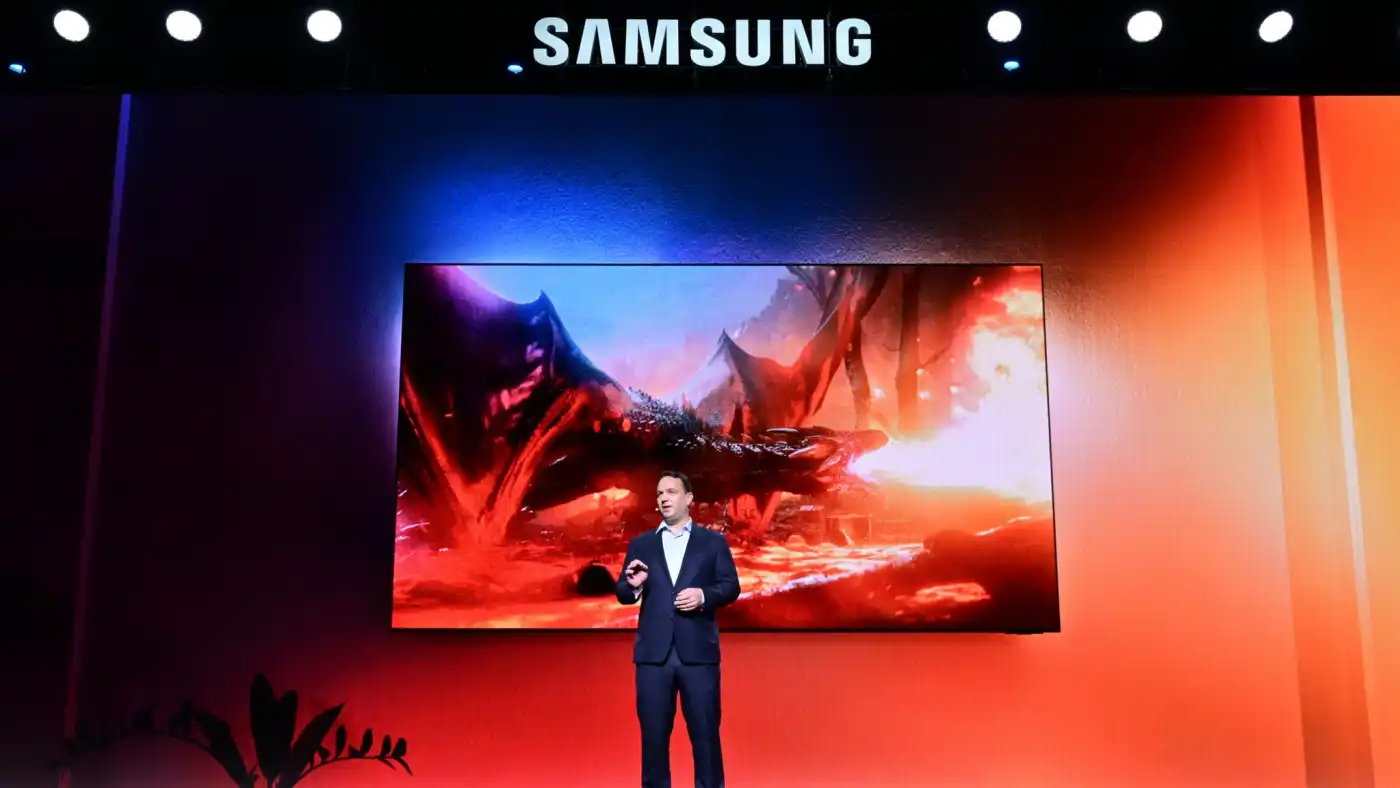
In August 2023, Samsung unveiled large-screen 4K TVs using white OLED panels from LG Display. However, the highlight wasn't the 83-inch screen or other features, but rather the collaboration between the two South Korean rivals.
White OLED (or WOLED) is a type of display that adds an extra white pixel alongside the RGB (red, green, blue) filters to create the full color spectrum. Panasonic and Sony's OLED displays also use this technology. Meanwhile, traditional OLEDs, commonly used by Samsung, contain pixels divided into three colors—red, green, and blue—without filters.
Samsung and LG – the world's two leading TV manufacturers – are locked in a fierce sales battle. Samsung once mocked WOLED as inferior to traditional OLED. However, the company has struggled to control the quality of large-format OLED panels for televisions and has been unable to improve its cost competitiveness, despite holding a dominant market share in the small-screen smartphone market.
Nikkei argues that for Samsung, buying display panels from LG would mean openly admitting technological failure to its rival. What brings them closer together is the rise of China.
Chinese electronics component manufacturer BOE Technology has become the world leader in LCD displays, a segment Samsung has withdrawn from due to declining profits and LG has ceased domestic production. OLED is likely to be the next segment.
In China, companies like BOE, China Star Optoelectronics Technology, and Visionox are leveraging government subsidies to build massive OLED panel factories in an attempt to seize market share from their South Korean rivals.
Samsung and LG Electronics still hold a combined market share of approximately 45% in the global TV market. If the two companies cooperate in sourcing display panels, profitability could be secured.
In the 2000s, the rise of South Korea and Taiwan (China) in the display industry forced the once-dominant Japanese businesses to shrink or withdraw.
Today, Chinese companies are trying to overthrow industry leaders in a similar way.
(According to Nikkei)
Source























































































Comment (0)