

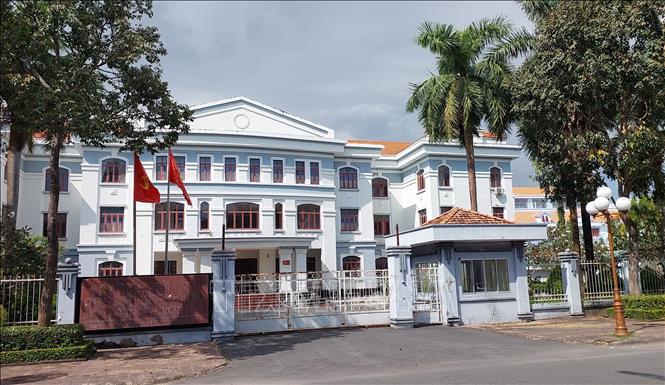
Deputy Minister of Finance Do Thanh Trung stated that ministries, sectors, and localities have proactively taken early action, promptly issuing resolutions, plans, and guiding documents to implement the new organizational model. During the implementation process, many provinces and cities have continuously updated directives, resolved arising difficulties, and strengthened inspection and supervision to ensure progress and compliance with regulations. According to the Deputy Minister, the close attention of Party committees, along with a clear legal framework, has created favorable conditions for localities to handle the large volume of public assets arising after the restructuring.
Along with the arrangement of office buildings, a crucial requirement was to ensure adequate means and equipment for local authorities. The review, transfer, and supplementation of vehicles, machinery, and equipment helped the newly merged communes and wards quickly stabilize their operations. Regarding assets to be handed over to the police and defense forces, the Ministry of Finance requested that relevant units coordinate closely, gather accurate information, and resolve issues decisively to avoid delays that could slow down the overall progress.
The implementation across the country has shown many positive results. According to the latest data from the Ministry of Finance on the arrangement and handling of public buildings and assets after the reorganization of the administrative apparatus and units, as of December 1, 2025, the whole country had processed 17,496 buildings and land, reaching 66%. Of this total, 798 were allocated for medical purposes, 4,002 for education , 1,314 for culture and sports, and 7,952 for use as offices or for public service activities. Also by that time, more than 97.3% of commune-level administrative units had been equipped with vehicles for general duties, and 100% of reports submitted to the Ministry reflected that localities had completed the equipping of machinery and equipment as required.
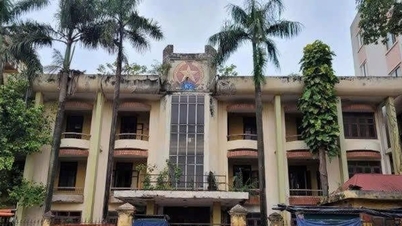
Hanoi is one of the outstanding localities in the arrangement, allocation, and handling of public assets. To date, departments, agencies, and many communes and wards have basically completed the review, arrangement, and handling of offices and land facilities after the administrative unit merger. The city proactively implemented the task of arranging, allocating, and handling offices and public assets immediately after the Central Government issued relevant conclusions and resolutions; at the same time, it organized adjustments to issues arising during the actual implementation process.
During the implementation process, the city's authorities held numerous meetings and conducted on-site surveys to accurately assess the condition of the assets, ensuring that the proposed solutions were realistic and in accordance with legal regulations. The city also established inspection and monitoring teams to track the progress of the tasks in each district, commune, and ward.
To date, the City People's Committee has approved several handling options, including transferring the land to agencies and units in need; converting its function to serve cultural, sports , and public purposes as proposed by the Department of Culture and specialized units; handing it over to central agencies and city-affiliated agencies; transferring it to public service units for management; and reclaiming it and handing it over to the Department of Natural Resources and Environment. In addition, some facilities that are no longer needed are being reviewed to be considered for reclamation or allocation for public purposes.
However, a significant amount of work remains to be done, as thousands of surplus properties and land parcels nationwide still need to be processed. The Ministry of Finance reports that as of December 1, 2025, there are still 9,056 surplus properties and land parcels nationwide that require further action. This is a substantial workload, demanding that localities concentrate their resources to meet the government 's requirements.
In Thanh Hoa province, the number of surplus housing and land properties requiring disposal currently exceeds 500. The handover of assets to communes and wards after administrative unit reorganization has not met the set schedule. The province has also not yet completed assigning tasks to units with housing business functions to carry out centralized procurement and management of public assets as prescribed.
One prominent difficulty identified is the large number of communes after the merger; many of the newly merged communes do not have enough vehicles for general use. The province has prepared funds, including local budget and supplementary funds from the central government, to carry out centralized procurement of vehicles with the goal of completing the process by December.
The leaders of Thanh Hoa province frankly acknowledged the current shortcomings, including the incomplete handover of assets to communes and wards; the large number of properties and land parcels that still need to be processed, leading to demands on time and resources; and the slow assignment of tasks to units responsible for managing and operating housing. In addition, some localities are still struggling to handle old assets due to issues with origin and legal documentation. Thanh Hoa has the largest number of commune-level administrative units in the country, resulting in a very large volume of headquarters and assets that need to be reviewed and processed.
Mr. Nguyen Tan Thinh, Director of the Public Assets Management Department, stated that in the coming period, there are many important tasks that ministries, sectors, and localities need to implement to complete the arrangement, organization, and handling of public offices and assets according to the two-tiered local government model. Therefore, it is necessary to immediately update and adjust provincial planning, land use planning, urban and rural planning, and other related plans after the relocation and conversion of the functions of buildings and land used for offices, public service facilities, medical facilities, educational, cultural, sports, public purposes, national defense, and security. The deadline for completing provincial (city) planning is before December 31, 2025.
Accordingly, the handling of land and property assets must comply with legal regulations, including recovery, relocation, transfer to local management, liquidation, or disposal of damaged assets. Priority should be given to public purposes, especially healthcare, education, culture, sports, and commune police stations; only surplus assets should be considered for exploitation to serve socio-economic development, ensuring strict control, economic efficiency, and compliance with legal regulations, preventing loss and waste.
For recovered and transferred assets in remote, mountainous areas that are no longer suitable for use and have no organization or individual needing to receive them, demolition may be carried out and the land handed over to the commune-level People's Committee or land development fund organization for management according to regulations. The conversion of function must comply with regulations on authority and procedures; this may include conversion within the unit or be linked to the transfer and handling in accordance with the law.
The Chairpersons of the People's Committees of provinces and cities should promptly issue documents delegating authority to decide on the handling of houses and land. Until such documents are issued, the decentralization stipulated before July 1, 2025, should continue to be implemented; for merged localities, the authority will remain with the locality that retains its name.
Furthermore, localities must accurately review surplus assets, avoiding omissions; update the handling plan clearly outlining the content, responsible parties, timeline, and expected results. Simultaneously, relevant departments should determine criteria for allocating land and buildings as a basis for developing handling plans. Based on the prescribed handling methods and authority, decisions should be made promptly to expedite progress, prevent deterioration, and avoid waste.
Source: https://baotintuc.vn/kinh-te/sap-xep-tai-san-cong-viec-lon-khong-the-cham-20251218163118440.htm
![[Photo] Prime Minister Pham Minh Chinh attends the Conference on the Implementation of Tasks for 2026 of the Industry and Trade Sector](/_next/image?url=https%3A%2F%2Fvphoto.vietnam.vn%2Fthumb%2F1200x675%2Fvietnam%2Fresource%2FIMAGE%2F2025%2F12%2F19%2F1766159500458_ndo_br_shared31-jpg.webp&w=3840&q=75)











































































Comment (0)