

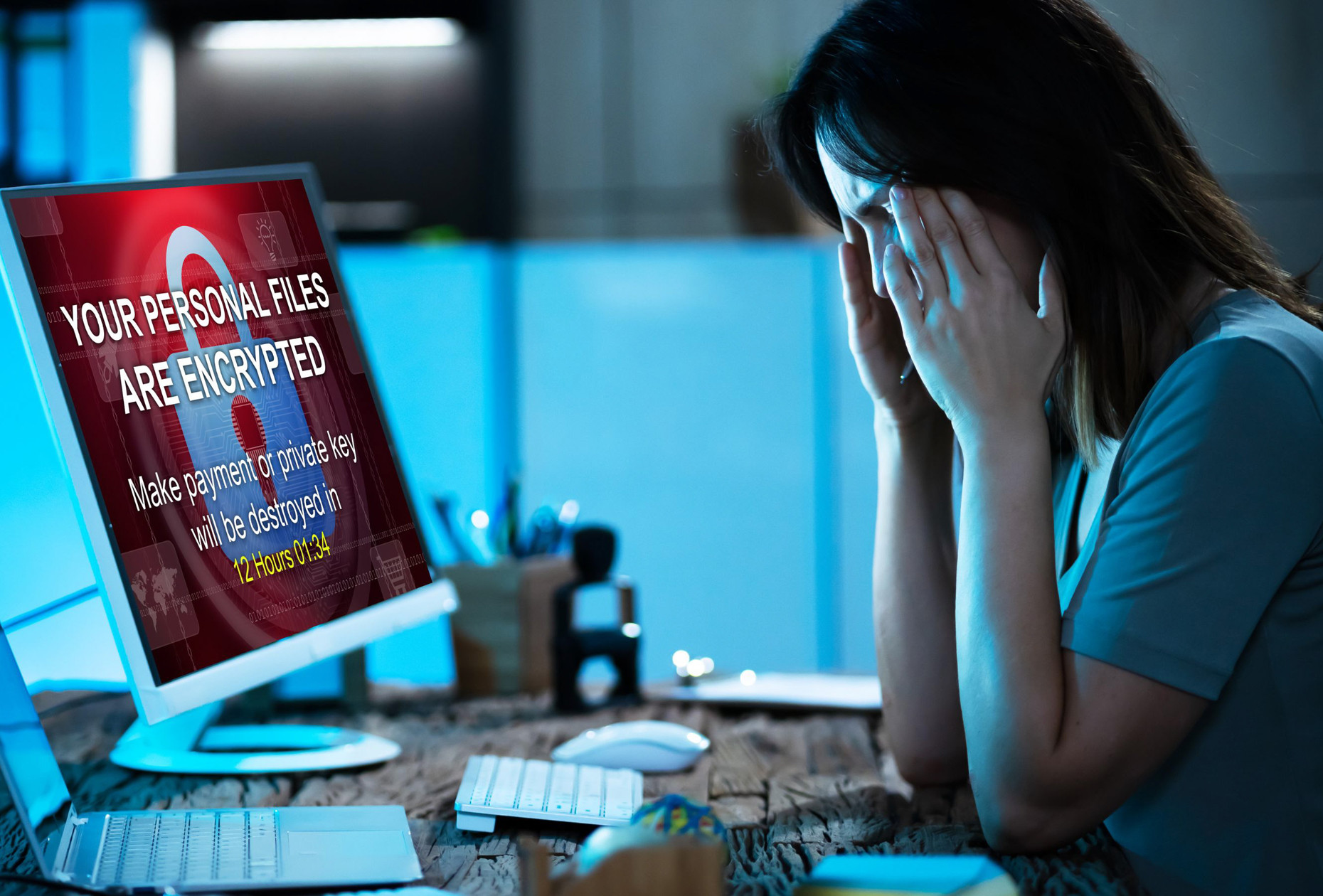
According to data released by Kaspersky, 1 in 2 Vietnamese people will encounter security risks on their devices in 2025 (nearly 110 million recorded incidents).
Although the use of licensed software has improved in Vietnam, the use of pirated or cracked software remains a major security risk.
Save money by using pirated software.
Despite tightened legal frameworks and strong media coverage, the actual implementation at the grassroots level still reveals many dark aspects.
The use of cracked software, pirated operating systems, or office suites has long been a deeply ingrained habit, not only among individual users but also a common occurrence in small and micro-enterprises (SMEs) and family businesses.
Mr. Ngo Tran Vu, Director of NTS Security Company, said: “In reality, small businesses or individual business owners often operate with a short-term cost optimization mindset. They are willing to spend tens or hundreds of millions of VND on hardware, furniture, and premises, but are extremely hesitant to spend a few million VND on licenses for an operating system, design software, or office solution.”
“The real trap begins with the very mechanism of how software cracking tools work. Technically, to crack commercial software, the tool writer must deeply interfere with the software's source code structure, breaking through copyright authentication barriers. When users download and run these activation files, often hidden as compressed files (.rar, .zip) or in .exe/.bat format, the default defenses of the Windows operating system are disabled, or users must manually disable antivirus solutions according to the accompanying cracking instructions. The moment the security barrier is lowered, the business opens the door wide for hackers,” Mr. Vu said.
One example is the widespread use of pirated software like WinRAR – a data compression and decompression application found on most computers in Vietnam – which also poses a fatal flaw if businesses are lazy about updating or using cracked versions. Criminals can simply send a price quote or a compressed file containing malicious information via Zalo or email.
When the victim opens the file using an older version of WinRAR, the malware will silently and automatically extract and install itself directly into the operating system's boot folder without any warning.
Because cracked software completely cuts off the ability to interact with and automatically update patches online from the manufacturer, businesses inadvertently turn their computers into a fortress without doors, exposing them to the risk of being remotely controlled by hackers (Remote Code Execution).
The "gift" of malware hidden in the cracked file.
For many years, cybersecurity researchers worldwide have consistently warned that the majority of software cracking tools (cracks, patches, or keygens) shared for free online are embedded with sophisticated malware. These are the unexpected "gifts" that users of pirated software receive.
Many small business owners believe that using cracked software will keep their computers running smoothly and their work uninterrupted. However, actual statistics from Kaspersky security firm regarding the Vietnamese market have poured cold water on this misconception.
In recent periodic reports, Kaspersky noted a surge in spyware attacks targeting organizations in Vietnam, reaching a record high of 78.8%, with 191,976 incidents, making Vietnam the hardest-hit area for spyware in Southeast Asia.
This means that, on average, more than 1,520 spyware attacks silently target Vietnamese businesses every day. Spyware doesn't crash computers immediately like ransomware; instead, it quietly "lies dormant," recording keystrokes, taking screenshots, draining bank accounts, and stealing all login information cookies stored on popular browsers like Chrome and Cốc Cốc, then sending them to the hacker's control server.
In addition, sophisticated scam campaigns like "ClickFix" and the spread of information-stealing malware (Infostealer) like Atomic Stealer are constantly exploding through pirated software download sites.
With just one click to use a free office typing software, the entire unit's internal and financial data was handed over to hackers without their knowledge.
"There's another equally dangerous reality: Many businesses, despite consciously equipping themselves with licensed software, neglect maintenance and never update with patches from the manufacturer. They operate their IT systems with the mindset that if it's working stably, there's no need to touch it. This is an extremely serious tactical loophole," Mr. Vu emphasized.
Source: https://vietnamnet.vn/mot-cu-click-dung-phan-mem-khong-ban-quyen-du-lieu-da-bi-hacker-chiem-doat-2521412.html



![[Photo] General Secretary and President To Lam presides over a meeting with the Central Organizing Committee.](https://vphoto.vietnam.vn/thumb/1200x675/vietnam/resource/IMAGE/2026/06/03/1780482764658_a1-bnd-4741-3342-jpg.webp)

![[Photo] Secretary of the National Assembly Party Committee, Chairman of the National Assembly presides over the meeting of the Standing Committee and Executive Committee of the National Assembly Party Committee.](https://vphoto.vietnam.vn/thumb/1200x675/vietnam/resource/IMAGE/2026/06/03/1780480353201_ndo_br_bnd-2585-jpg.webp)





















![[Photo] First session of the 14th Congress of the Vietnam Trade Union](https://vphoto.vietnam.vn/thumb/1200x675/vietnam/resource/IMAGE/2026/06/03/1780465947883_ndo_br_img-3852-jpg.webp)


























![[Video] Sunset at Lap An Lagoon – Where the sun sets over the fishing nets](https://vphoto.vietnam.vn/thumb/1200x675/vietnam/resource/IMAGE/2026/05/31/1780192137701_beach-landscape-sea-water-nature-grass-745871-pxhere-com.jpeg)






























Comment (0)