

The first operational step of the new mechanism.
On June 1st, the event of the TTC Duc Hue 2 solar power plant of TTC Duc Hue - Long An Joint Stock Company ( Tay Ninh province) selling electricity to Samsung Electronics Vietnam Thai Nguyen Co., Ltd. (SEVT) through the national grid attracted special attention because this was the first time in Vietnam that a power generation unit participated in the Direct Power Purchase Agreement (DPPA). Specifically, the TTC Duc Hue 2 solar power plant has been in commercial operation since May 19th. The renewable energy supplied to SEVT is produced from the TTC Duc Hue 2 solar power plant with a designed capacity of 49 MWp/41.4 MWac. With this DPPA contract, SEVT is expected to be guaranteed a solar power output of approximately 70 GWh/year, equivalent to supplying electricity to about 17,000 households; at the same time, the project is expected to contribute to reducing emissions by about 46,000 tons of CO₂/year.

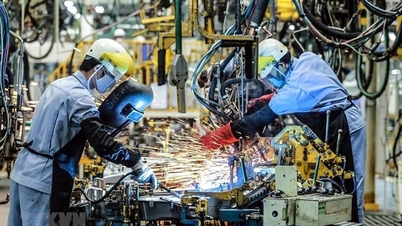
Thousands of manufacturing businesses in industrial zones have a huge demand for renewable energy.
PHOTO: NHAT THINH
The National Power System and Electricity Market Operator (NSMO), under the Ministry of Industry and Trade, announced that with this event, TTC Duc Hue - Long An Joint Stock Company has become the first power generation unit to officially participate in the DPPA mechanism through the national grid and trade through the electricity market in Vietnam. At the same time, SEVT has become the first corporate customer to purchase renewable electricity through the DPPA mechanism. This is not only the first commercial transaction but also an important practical step in the operation of a new mechanism.
In fact, the DPPA mechanism was implemented from July 2024 through Decree 80, and the legal framework was further refined and the scope of participants expanded in Decree 57 (March 2025). However, only now has the first contract been signed under this mechanism.
Dr. Ngo Duc Lam, former Deputy Director of the Institute of Energy (Ministry of Industry and Trade), commented that the fact that a solar power plant in Tay Ninh can directly sell electricity to a customer in Thai Nguyen is very welcome news, both economically and environmentally. From an economic perspective, the transition to clean energy is essential because it presents a great opportunity for goods originating from Vietnam to better meet the standards of major markets in Europe, America, and Asia. This is also the best message to attract investors about Vietnam's ability to supply green electricity. From an environmental perspective, it is a strong step in fulfilling the commitment to reduce greenhouse gas emissions.
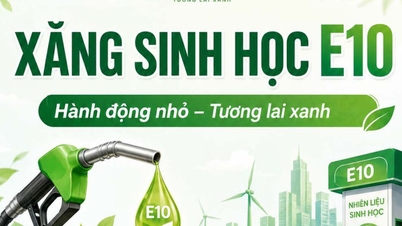
Energy expert Nguyen Quoc Viet, General Director of Vinasol JSC, analyzed that the DPPA mechanism has long been reserved for the construction of large-scale renewable energy projects (farms), not for residential solar power or rooftop solar power on factories and enterprises. Therefore, despite the huge demand for green electricity from businesses in industrial zones, they cannot access it. Surveys of many businesses in Phu My, Amata, Long Duc, and DEEP C industrial zones show that they all have a need for green electricity through direct purchase agreements. "Small and medium-sized enterprises in industrial zones need renewable energy, but they don't meet the average monthly electricity consumption of 200,000 kWh or more. Meanwhile, there are many of these, all involved in export production, requiring green certification for their export goods… If renewable energy receives open, decisive, and synchronized policies, similar to the implementation of E10 gasoline, I believe more green electricity will flow into the economy," Mr. Nguyen Quoc Viet emphasized.
Urgent measures needed to resolve a series of obstacles.
Mr. Phan Cong Tien, Director of the Institute for Smart Energy Application Research, stated that the biggest limitation of the current DPPA mechanism through the national power grid is the lack of genuine choice for customers. Sellers and buyers are still not free to negotiate commercial terms, especially long-term contract electricity prices, to mitigate the risk of price fluctuations in the spot market. Furthermore, the cost of grid services (transmission and distribution) is not clearly defined, making it difficult for participating businesses to determine costs during price negotiations...
Dr. Ngo Duc Lam recommended that barriers should continue to be removed to facilitate the participation of businesses and people in the green energy mechanism. With the increasing trend of hot weather, the demand for electricity for daily life and economic development is growing. Vietnam has set a goal of turning millions of rooftops into "power plants," so a more open policy is needed regarding buying and selling electricity to the grid and between neighboring households. "The more widespread the policy is in society, the more economic and environmental benefits it will bring. During this transition period, to encourage development, the government needs to provide tax incentives for equipment to reduce investment costs," Dr. Lam recommended.
Dr. Nguyen Duy Khiem, a lecturer at Quy Nhon University (Gia Lai province), cited the change in peak hours for electricity pricing applied to production and business entities as evidence of the continued increase in demand for rooftop solar power installation in the locality. Many service businesses are "racing" to install solar panels to have electricity for use during peak hours, especially at night. Besides self-consumption, many people also want to participate in developing rooftop solar power through investment to sell electricity directly. However, current policies are very difficult for this type of activity. The procedures requiring investors to have the function of producing, transmitting, and distributing electricity, issuing invoices, and selling electricity to the grid also create obstacles between investors and lessors. "There are many complex procedures and policies for this type of activity are still unclear. Therefore, what people and businesses need is an open legal framework to promote the development of this type of activity," Dr. Khiem emphasized.
According to the Ho Chi Minh City Renewable Energy Association (HCMREA), the biggest challenge for rooftop solar power currently lies in the mechanisms, market approach, and readiness of the power system. Currently, administrative procedures and implementation processes are complex, especially when it comes to selling electricity to the grid. Furthermore, the power system is still designed as a centralized model, so integrating distributed power sources like rooftop solar power faces many limitations. Ho Chi Minh City and the country as a whole urgently need more groundbreaking and substantive policies, such as developing green credit packages with preferential interest rates of around 5-6% through the support of the State Bank of Vietnam; and simultaneously simplifying administrative procedures as much as possible and eliminating unnecessary barriers.
Source: https://thanhnien.vn/sau-xang-xanh-can-tang-toc-dien-xanh-185260602203653586.htm


![[Photo] First session of the 14th Congress of the Vietnam Trade Union](https://vphoto.vietnam.vn/thumb/1200x675/vietnam/resource/IMAGE/2026/06/03/1780465947883_ndo_br_img-3852-jpg.webp)



































































Comment (0)