

Bank transactions should be mandatory.
According to this draft, the taxable value for real estate transfers is based on the contract price. Specifically, personal income tax on real estate transfers is calculated at 2% of the transfer price. The time of determining taxable income is when the transfer contract becomes effective or when the right to use or own the real estate is registered.

The Ministry of Finance 's proposed tax calculation is receiving mixed reactions.
PHOTO: DINH SON
The draft decree specifically stipulates that the real estate transfer price is the price stated in the transfer contract at the time of transfer. If the transfer contract does not state the land price, or if the land price in the contract is lower than the land price table and the land price adjustment coefficient (K coefficient), then the land transfer price will be based on the land price table and K coefficient (if any) applicable at the time of transfer.
In cases where both land use rights and assets attached to the land, such as houses and construction works, are transferred, if the contract does not specify the land price or the price is lower than the land price list, the value of the land use rights will be calculated according to the local land price list and coefficient K. If the value of the house or construction works in the contract is lower than the registration fee calculation level stipulated by the Provincial People's Committee, the tax authority will base the calculation on the price issued by the local authority.
Mr. Nguyen Van Hoa, Chairman of the Ho Chi Minh City Notary Association, assessed this proposal as appropriate and necessary because the practice of declaring "two prices" in real estate transfers has existed for many years, causing tax revenue losses and distorting market transparency. However, using only the land price table multiplied by the K coefficient or the price issued by the locality as the minimum basis only addresses a part of the problem. To effectively control it, additional synchronized solutions are needed, such as mandating payment through banks for real estate transactions. Simultaneously, data linkage between notaries, tax authorities, land agencies, and banks is necessary; a database of actual transaction prices must be built; and, most importantly, the responsibility of all parties to truthfully declare their transactions must be increased.
"I believe that the responsibility for valuation should not be placed on notaries. Notaries are not valuation agencies or tax authorities. The appropriate role of a notary is to explain and warn the parties about their legal obligations and to coordinate the provision of transaction data in accordance with the law. If these solutions are implemented synchronously, the policy will contribute to reducing 'two-price' transactions, combating budget revenue losses, and increasing transparency and legal security for the real estate market," Mr. Nguyen Van Hoa suggested.
Fear of adding further burden to the people.
According to real estate expert Tran Khanh Quang, the proposed tax calculation for "suspicious" real estate transactions by the Ministry of Finance is only partially reasonable. Previously, local authorities and experts alike recommended applying a 2% multiplier to the land price table for tax calculation. This is the most accurate method, ensuring no revenue loss, being easy to calculate, and closely reflecting market prices. This is because land price tables in provinces, such as Ho Chi Minh City, after many years of adjustments, are already around 80% of market prices. Adding a coefficient K would significantly increase taxes, placing a greater burden on citizens.
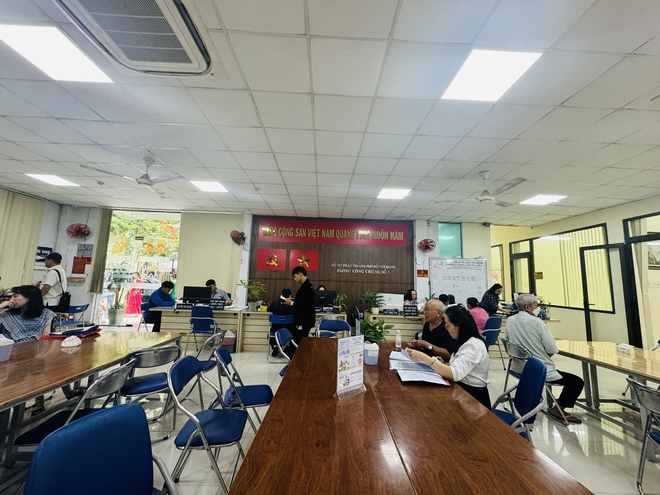
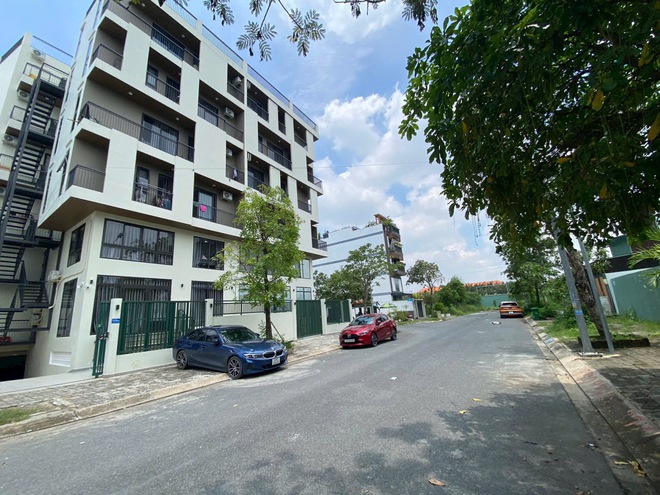
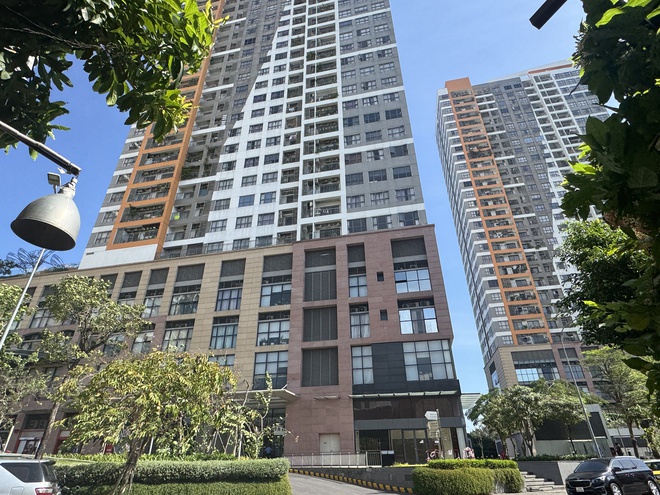
Many opinions suggest that land price tables should truly reflect market prices, and the coefficient K should be appropriate.
Photo: Dinh Son
"From July 1st onwards, localities will continue to issue the K coefficient, which will be applied to calculate land use fees. Currently, land use fees are too high, exceeding the affordability of the vast majority of people, causing them concern. Now, calculating personal income tax from real estate transfers and multiplying it by the K coefficient could cause prices to increase even higher than market prices, thereby pushing up the amount of tax people have to pay compared to the current situation," Mr. Tran Khanh Quang expressed his concern.
Mr. Le Hoang Chau, Chairman of the Ho Chi Minh City Real Estate Association, said that previously, to determine which cases involved under-declared prices and which involved over-declared prices, provinces would issue floor price tables based on the average price of each locality. When under-declared prices were detected, the tax authorities would recalculate by multiplying the land price table by 2%. Currently, with the Ministry of Finance's proposal, in cases where the price is suspected to be lower than the market price, the land price table will be multiplied by a coefficient K and then by 2%. While this method is theoretically applicable, it will create two possible scenarios in practice.
The first scenario, as proposed by the Ministry of Finance, would eliminate the need for local floor price lists. Applying this approach would ensure fairness in the law, ease government calculations, and reduce the burden on the state, thus facilitating accurate revenue forecasting from land and housing. This method would prevent both revenue loss and excessive taxation, ensuring fairness. Citizens would also use this method for declarations, avoiding both low and high figures. "However, once this method is implemented, the 2% threshold needs to be reconsidered, as the tax rate would be higher than the current rate. Therefore, a smaller figure of less than 2% could be considered; the Ministry of Finance needs to conduct a survey and recalculate accordingly," Mr. Le Hoang Chau suggested.
Secondly, if a 2% reduction is not implemented, a minimum price list should be established in each locality for control purposes. With a minimum price list, the government can determine who is declaring the correct price and who is underpaying, eliminating the current "suspicion." Citizens can then use this minimum price list as a basis for declaring their buying and selling prices and calculating taxes.
"Essentially, the Ministry of Finance's proposal has the right goal of combating tax evasion and ensuring market transparency. However, for it to be feasible and fair, the most important thing is that land prices must truly reflect market values, the K coefficient must be appropriate, and the application mechanism must be flexible, avoiding turning taxes into a burden for legitimate transactions," Mr. Le Hoang Chau suggested.
Sellers who incur losses may still have to pay taxes.
Conversely, many experts argue that if the tax rate is higher than the actual transaction price, people will still have to pay a large amount of tax even if they sell at a loss or break even. This particularly affects those who need to sell urgently due to financial difficulties, and those who bought real estate during the price boom but sell when the market "freezes," forcing them to cut their losses. Furthermore, if each locality applies a different K coefficient or adjusts it inaccurately, disputes will arise between citizens and tax authorities regarding the amount of tax payable, as some areas will have higher rates than others.
Source: https://thanhnien.vn/siet-thue-voi-nha-dat-ke-khai-hai-gia-185260525220445726.htm



![[Image] Hanoi's urban life under the challenge of a "scorching hot" environment](https://vphoto.vietnam.vn/thumb/1200x675/vietnam/resource/IMAGE/2026/05/25/1779706979265_nang-nong-t5-2026-minh-duy-7-4636-jpg.webp)






































































































Comment (0)