

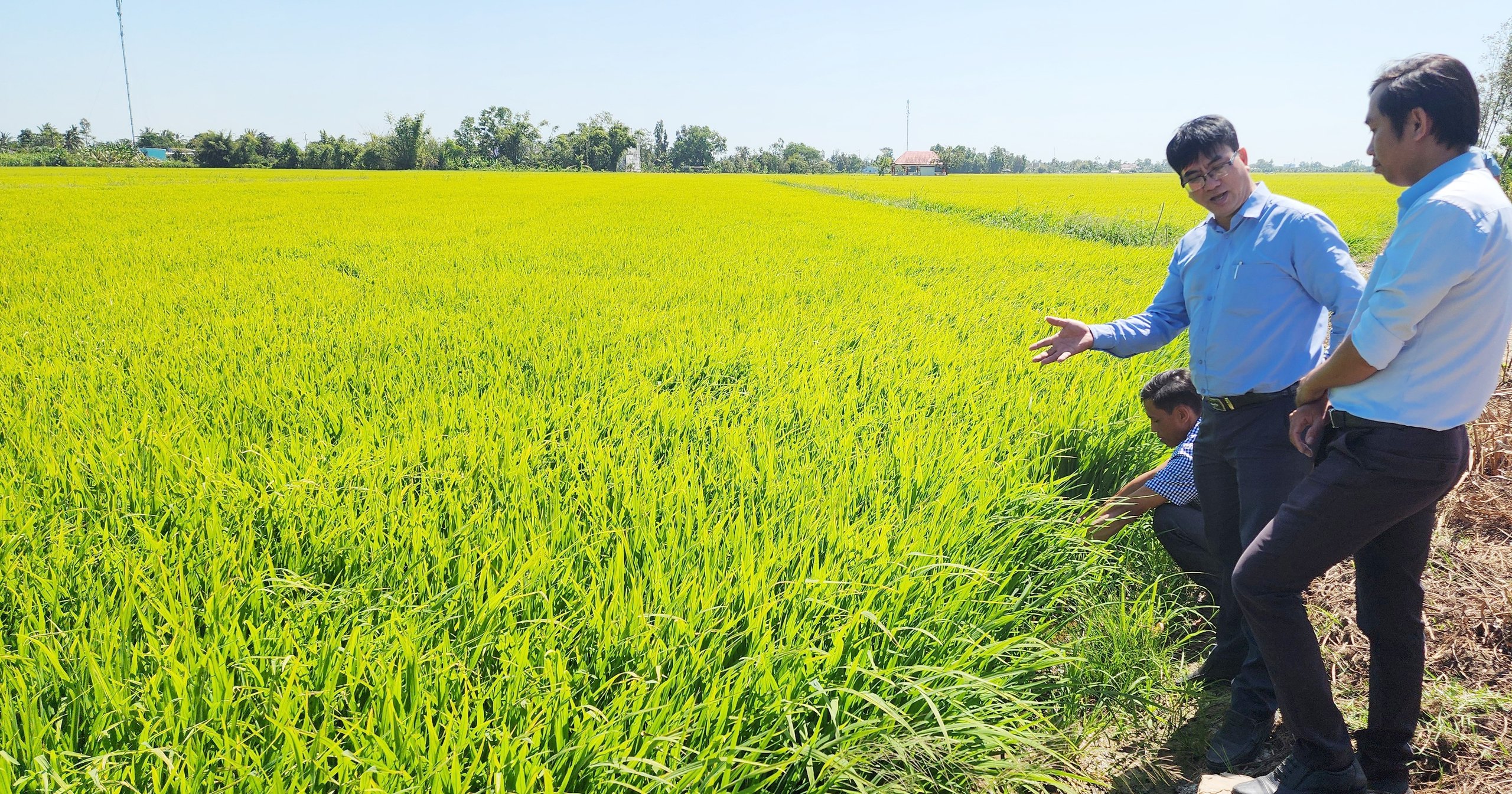
Mr. To Thanh Hai, Head of the Agriculture and Rural Development Department of Vinh Loi District (center), visits the rice raw material area of Dong Tam Cooperative.
Mr. Minh is a member of the Dong Tam Cooperative (Vinh Hung A commune, Vinh Loi district, Bac Lieu province). His family owns 33 acres of rice paddies, producing three crops a year with tens of tons of rice yield. Yet, he still spends his days leisurely working in the fields because sowing, fertilizing, spraying pesticides, and harvesting are all mechanized.
Large-scale model fields "without human footprints"
Mr. Trinh Van Ngan, Chairman of the Board of Directors of Dong Tam Cooperative, said that the cooperative was established in 2018. Initially, it had only 17 members, with an area of 100 hectares, mainly producing three rice crops per year, including varieties that change according to the season, such as: Doi Thom, ST24, and OM18. On average, each crop achieved a yield of 6-7 tons/ha. Thanks to its effective operation, the cooperative has now grown to 152 members, with an area of 210 hectares.
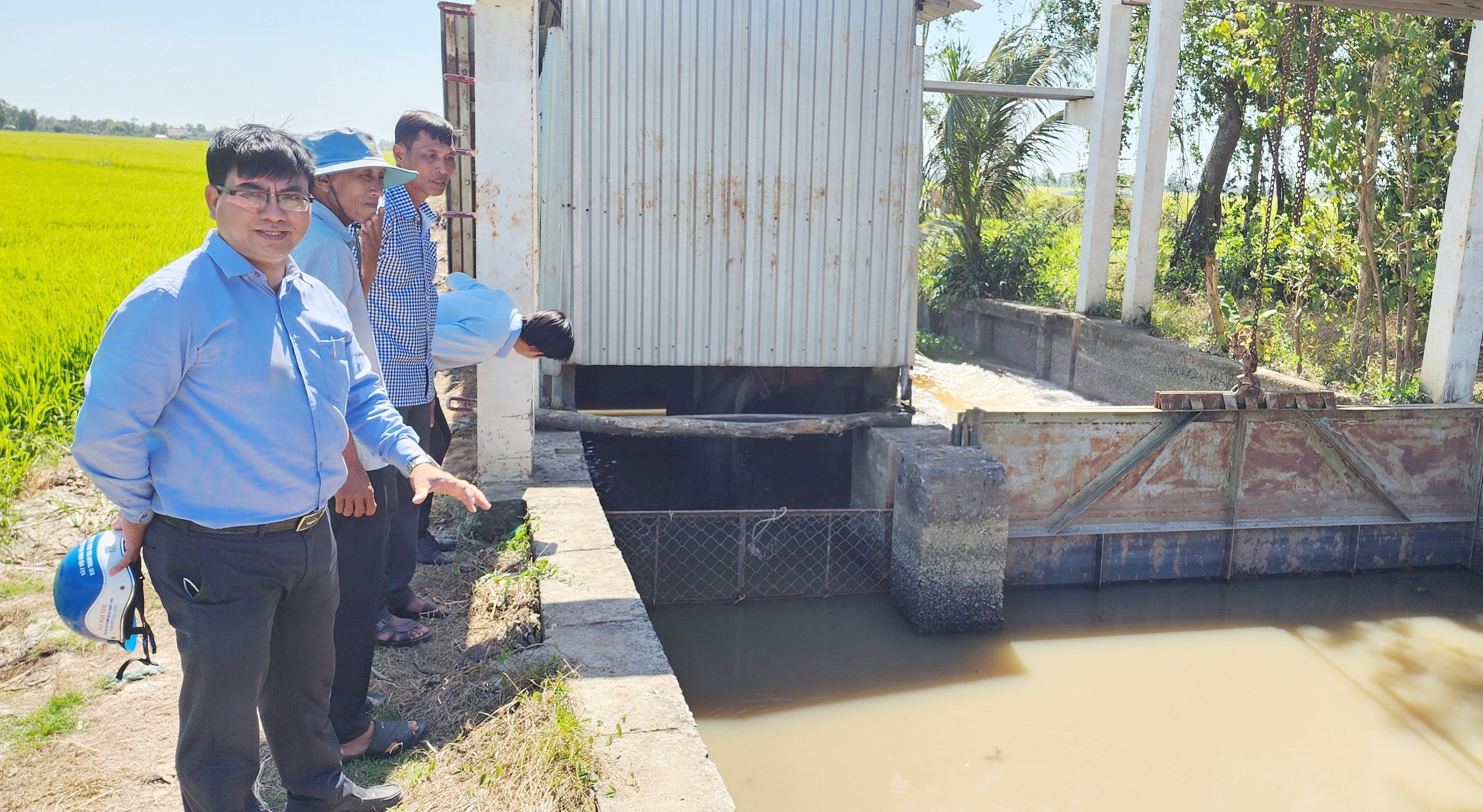
Mr. To Thanh Hai, Head of the Agriculture and Rural Development Department of Vinh Loi District (far left), visits the pumping station of Dong Tam Cooperative.
The cooperative has invested in two pumping stations, ensuring sufficient freshwater supply for irrigation. The cooperative implements a production linkage chain, such as partnering with Nam Hung Cooperative (Vinh Hung commune, Vinh Loi district) to supply high-quality rice seeds, fertilizers, and pesticides to members at low prices. Members only pay the cooperative after the rice harvest. In addition, the cooperative also leases combine harvesters, drones for rice planting, fertilizing, and spraying, applying a large-scale, "human-free" production process on the model fields.
"When the planting season arrives, the cooperative proactively schedules and informs farmers to prepare the land and sow seeds simultaneously. Fertilizing, spraying pesticides to control brown planthoppers, and pumping water are all done at the same time. Thanks to large-scale model farming, instead of small-scale production, costs have been reduced by 30-40%, while rice yield and quality have both increased significantly," Mr. Ngan shared.
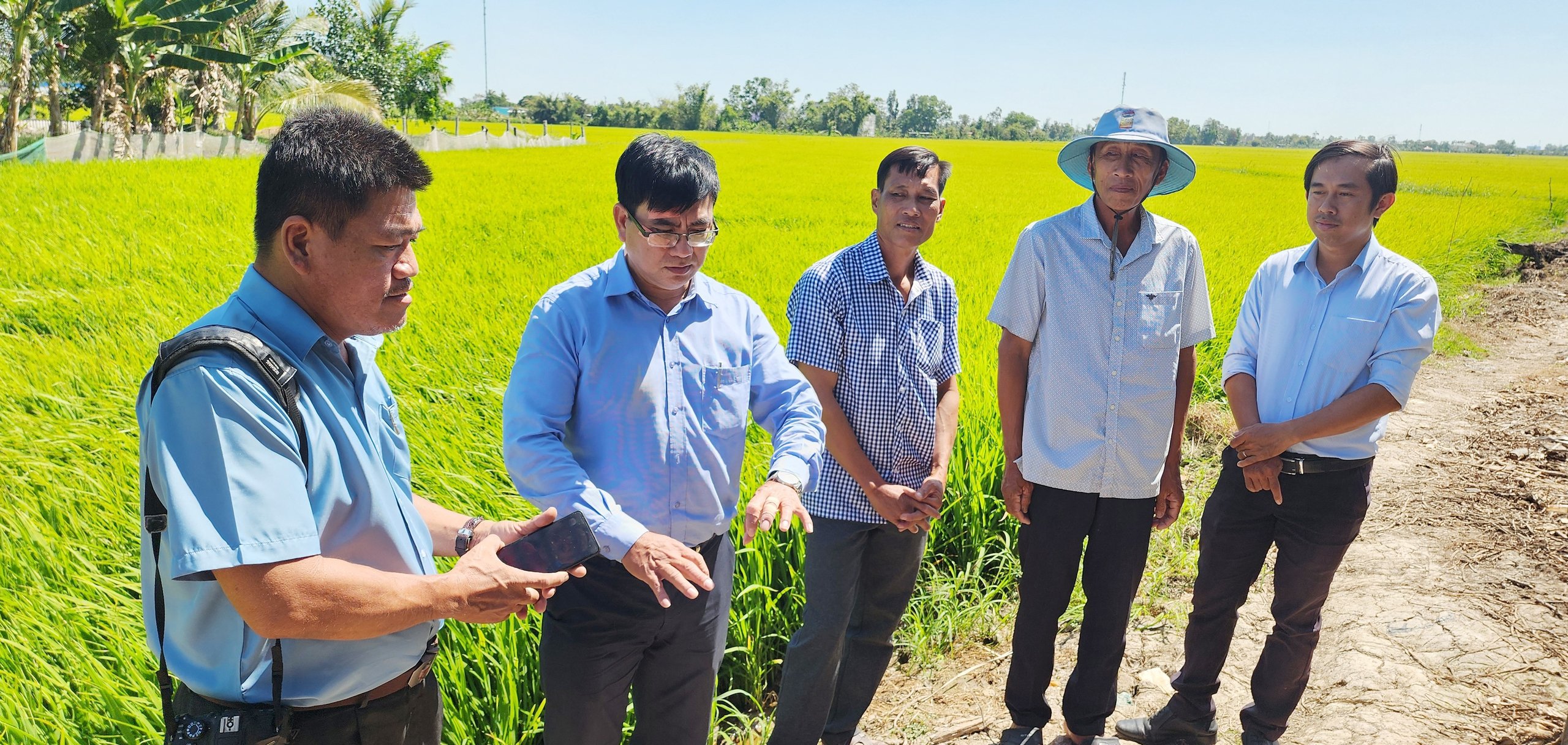
Mr. To Thanh Hai, Head of the Agriculture and Rural Development Department of Vinh Loi District (second from the left), visits the rice raw material area of Dong Tam Cooperative.
According to Mr. Khau Vu Linh, Director of Nam Hung Cooperative, the cooperative supplies input materials to many cooperatives in the province. Rice seeds, pesticides, and fertilizers are all of high quality, certified, and traceable, with prices lower than the market, earning the trust and confidence of its members. The cooperative also contracts with farmers to purchase their rice at prices equal to or higher than the market price. Previously, the cooperative sold on a small scale, generating high profits but resulting in significant debt. Now, by partnering with its members and sharing a portion of the profits with them, the cooperative enjoys a stable supply of input materials with no outstanding debt.
Develop a raw material area of 1,000 - 2,000 hectares.
Mr. To Thanh Hai, Head of the Agriculture and Rural Development Department of Vinh Loi District, said that Vinh Loi is a purely agricultural district, solely focused on rice cultivation. To help people prosper on their land, the only way is through production linkages and the establishment of cooperatives. Specifically, it is necessary to establish a Union of Cooperatives, build large-scale model fields, and create raw material areas of 1,000-2,000 hectares, essentially expanding them into super-large model fields. Only then can we contribute to reducing production costs and increasing profits.
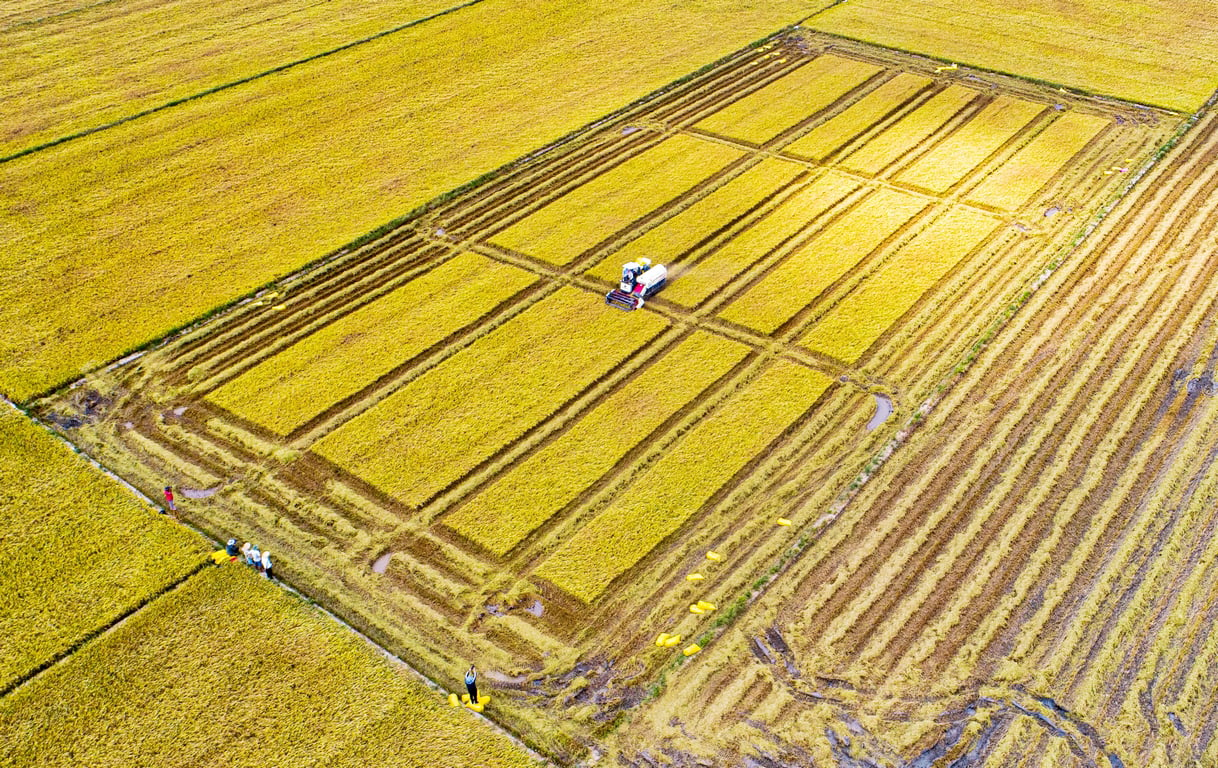
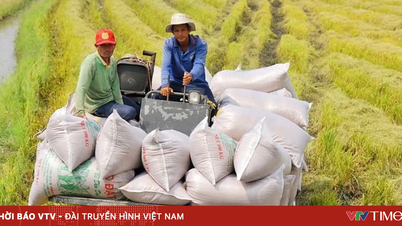
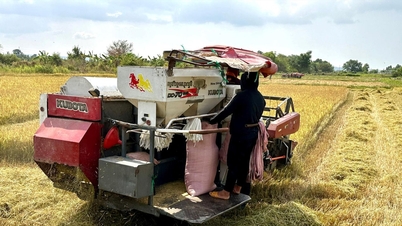
Harvesting rice with a combine harvester on a large-scale model field in Vinh Loi District, Bac Lieu Province.
In Vinh Loi district, there are 30 cooperatives, 10 of which have established production chains. If each cooperative produces about 100 hectares, the rice is only sold through intermediaries and small-scale traders. If they produce from 1,000 to 2,000 hectares, the rice can be sold directly to factories, processing companies, and rice exporters. The rice sells at a higher price, the output is stable, and the profits of rice farmers increase significantly. As for input materials (rice seeds, fertilizers, pesticides), farmers buy them at lower prices from first- and second-tier distributors. But when they establish a supply chain and build a raw material area, farmers can buy directly from the companies, resulting in lower costs, clear origins, and guaranteed quality. "To plan and develop large-scale model rice fields, we need to build trust from the local government, the leaders of the cooperatives, and the cooperative members," Mr. Hai shared.
Source link

![[Photo] General Secretary and President To Lam receives Amazon's Senior Vice President David Zapolsky](https://vphoto.vietnam.vn/thumb/1200x675/vietnam/resource/IMAGE/2026/05/22/1779466547770_a1-bnd-3513-6601-jpg.webp)























































Comment (0)