

Preventing "ghost businesses" through biometric authentication.
From May 15th, the Tax Department has implemented biometric authentication for electronic invoices nationwide. The goal is to prevent identity fraud and curb the illegal buying and selling of invoices by "phantom businesses." This is also one of the measures to implement the regulations on electronic invoices according to Government Decree 70. So, how will the application of biometrics help prevent "phantom businesses" and invoice fraud?
Recently, many individuals have been collecting and buying/selling citizen identification cards to register as directors and establish numerous "ghost businesses," without the knowledge of the individuals whose personal information is being transacted. The purpose is to issue and trade fraudulent invoices for illicit gain.
For example, in March 2026, in Khanh Hoa province , the police prosecuted six individuals involved in establishing 14 "shell companies" between 2022 and 2024. This group was accused of issuing 1,153 fraudulent invoices with a total after-tax value exceeding 131 billion VND.
Also in March of this year, in Dong Nai province , authorities dismantled a large-scale invoice trading ring involving more than 60 "phantom businesses". The suspects issued over 10,000 fraudulent invoices, with a total transaction value exceeding 6 trillion VND.
In response to this situation, the tax authorities are requiring the application of biometric authentication to electronic invoices to prevent identity fraud used to establish "phantom businesses".

Biometric authentication helps tax authorities verify and cross-check the true identity of individuals registering to use electronic invoices.
Biometrics will be used only once when a business registers to use electronic invoices for the first time, or when there is a change in the legal representative. Although it is a small step, according to the tax authorities, it will help accurately verify the person conducting the electronic invoice transaction, preventing identity fraud.
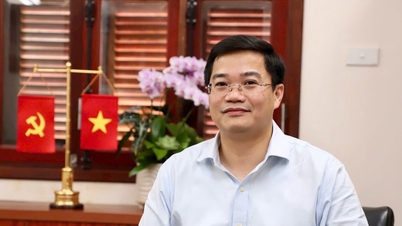
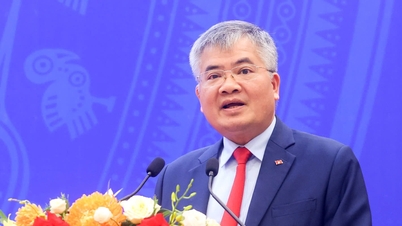
Mr. Vu Hong Long, Deputy Head of Hanoi City Tax Department, stated: "The aim is to prevent fraudulent activities, the sale of fictitious invoices, and the use of illegal invoices. At the same time, we are strengthening inspections of units with high risks in tax management."
According to a representative from the Tax Department, previously, verifying eligibility for using electronic invoices relied primarily on paper documents and digital signatures. Now, with the addition of biometric authentication, there will be an extra layer of protection to prevent forgery and fraud.
"When using electronic invoices, the tax authorities will verify the biometric data of the legal representative against the national population database. If it matches, the registration will be accepted; otherwise, it will be rejected, and the taxpayer must re-verify," said Mr. Pham Quang Toan, Head of the Technology, Digital Transformation and Automation Department of the Tax Department.
In the context of increasingly sophisticated identity fraud and the establishment of "ghost businesses" for the purpose of buying and selling invoices, the addition of biometric authentication is seen as an extra layer of control from the outset for users of electronic invoices.
Biometrics - A shield protecting businesses
"Ghost businesses" that buy and sell invoices and then abscond not only cause losses to the state budget but also distort the business environment, creating unfair competition for businesses and enterprises that strictly comply with the law.
However, besides the goal of preventing fraud, many also wonder whether the application of biometrics in electronic invoices will create additional procedures, time, or costs for business households and enterprises? And what benefits will businesses gain from this solution?

Comparing biometric data with the population database helps verify the correct legal representative when registering for electronic invoices.
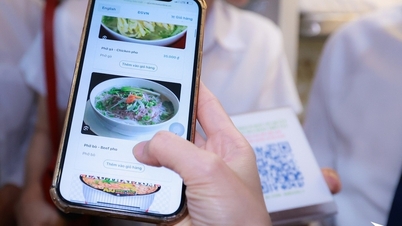
To be able to sell goods to multiple businesses and households, Ms. Lam needed to use electronic invoices. She accessed the eTax Mobile application and performed biometric authentication in the electronic invoice registration section. With just a few taps on her phone, the biometric declaration was sent to the tax authority without incurring any additional costs.
"I underwent biometrics testing and found it very simple because the system provided instructions; I just had to follow them. It only took about a minute to complete the process, and I didn't need any guidance or assistance from tax officials," shared Ms. Nguyen Thi Thuy Lam, a business owner in Hanoi.
Mr. Nguyen Van Ngoc has also just completed biometric verification to register for the use of electronic invoices. According to him, not only the tax sector but also many other fields such as banking and public services are now applying biometric verification to ensure that all electronic transactions are linked to real identities. This not only helps to increase market transparency but also creates more peace of mind for legitimate businesses during transactions and collaborations.
Mr. Nguyen Van Ngoc, Director of Sanmaru Company, said: "Since the introduction of biometrics, my business partners have felt much more secure, and invoices and documents are more transparent. We can avoid many risks related to taxes and invoices from 'phantom companies'. I think this is very good for businesses today."
"Gradually, we will eliminate 'ghost businesses,' businesses without real capital, those established but not engaged in production or business activities. We must clean up business data. Removing businesses without real capacity or capital from society will curb the buying and selling of invoices," said Lieutenant Colonel Pham Hai Binh from the Economic Police Department, People's Police Academy.
To ensure the effectiveness of biometric electronic invoicing solutions, experts believe it is necessary to guarantee security and transparency in the management and protection of personal data, and to have a post-audit mechanism for unusual transactions. Because in the digital economy, trust is not only verified by facial recognition, but also by the responsibility of each market participant.
The application of biometrics in electronic invoices not only prevents "phantom businesses" but also aims to build a more transparent, fair, and secure business environment for legitimate businesses.
Source: https://vtv.vn/sinh-trac-hoc-hoa-don-dien-tu-siet-gian-lan-tu-goc-100260529053849759.htm


![[Image] Nearly 125,000 Hanoi students completed the Literature exam for the 10th grade entrance exam.](https://vphoto.vietnam.vn/thumb/1200x675/vietnam/resource/IMAGE/2026/05/30/1780117233041_ndo_br_thiet-ke-chua-co-ten-2-png.webp)



















































































Comment (0)