

The number of international students in Germany has increased by more than 50% in the last 10 years, thanks to tuition-free policies and abundant job opportunities.
According to the German Academic Exchange Service's September report on international students, over 458,000 international students are studying in Germany in the 2022-2023 academic year, a 4% increase compared to the previous year. Compared to 2014, when the German government approved free education , this number has increased by 52%.
Of these, nearly 146,000 students pursued engineering, accounting for 31.8% and increasing by 7% compared to two years prior. Other popular fields of study among international students included Law, Economics , and Social Sciences, totaling over 87,000.
By nationality, Indian students are the most numerous, with over 42,000, a threefold increase compared to seven years ago. China ranks second with over 39,000 students.
At each level of study, there were over 130,000 undergraduate students. A significant increase was recorded at the master's level, with nearly 149,000 students, up 12,000 from the previous academic year.
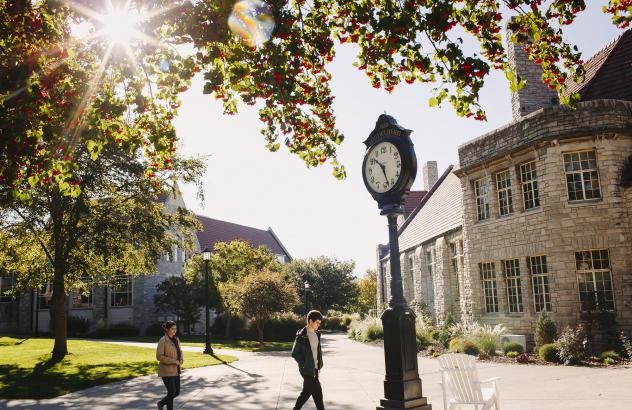
Heidelberg University campus. Photo: Heidelberg University
According to a survey by Study in Germany , a portal for studying in Germany, there are three main reasons why more and more international students are choosing Germany as their study destination.
Firstly, most public universities in Germany are tuition-free, with students only paying an administrative fee of 150-250 euros (4-6.6 million VND) per year. Meanwhile, the quality of German higher education is highly regarded, with over 500 bachelor's and master's programs taught in English. In total, 49 of the country's universities are among the world's top-ranked, according to the Times Higher Education rankings.
Secondly, the average cost of living for international students in Germany is only around 930 euros/month (1,000 USD), significantly lower than that of international students in the UK (1,500 USD) or the US (1,250 USD).
Finally, after graduation, students have the opportunity to stay and work for up to 18 months with an extended residence permit. Survey results also show that nearly 70% of international students want to stay in Germany to find work after graduation. The percentage of students who stay ten years after arriving in Germany is 45%, higher than in Canada (44%) – one of the countries attracting the most international students in the world.
Currently, about 29% of the workforce at German research institutes and 14% at German universities are foreign nationals, totaling 70,000 people, according to Professor Monika Jungbauer-Gans of the German Centre for Scientific Research and Higher Education.
According to StepStone , an online recruitment platform, the average salary for bachelor's degree graduates in Germany is $64,000 per year, 46% higher than the average salary in Germany. Doctors are the highest-paying profession, at $102,000 per year. Other high-paying professions include management consultants ($59,000), banking ($62,800), engineers ($57,400), and IT professionals ($56,700).
Education Minister Bettina Stark-Watzinger said the growth in the number of international students is a welcome sign, given Germany's shortage of highly skilled professionals, particularly in the engineering field.
Huy Quan (Based on Study in Germany, DAAD, Erudera)
Source link

![[Photo] Standing Committee member of the Party Central Committee Tran Cam Tu working with the Central Inspection Committee](https://vphoto.vietnam.vn/thumb/1200x675/vietnam/resource/IMAGE/2026/05/28/1779969579668_ndo_br_bnd-2495-jpg.webp)





































































































Comment (0)