


According to a new market report published by Counterpoint Research (CR), Vietnamese consumers are shifting from budget smartphones to mid-range models. Specifically, the market share of models priced under 5 million VND (200 USD) has fallen to 50%, the lowest ever recorded. Meanwhile, smartphones in the 5 to 10 million VND (200-400 USD) price range achieved a 19% growth in Q1 2025 compared to the same period last year.
In contrast to budget smartphones, the price increase for mid-range phones is the highest ever. Besides changes in criteria and usage needs, one of the reasons Vietnamese users are seeking out new smartphone models is the commercialization of 5G in Vietnam from the beginning of Q4 2024. Phones priced under 5 million VND currently don't commonly offer 5G connectivity, while those under 10 million VND have many options from various brands. On official retail shelves, all of these devices use the Android operating system, while the cheapest iOS phone with 5G, the iPhone 13, has recently had a price reduction but still hovers around 11 million VND.

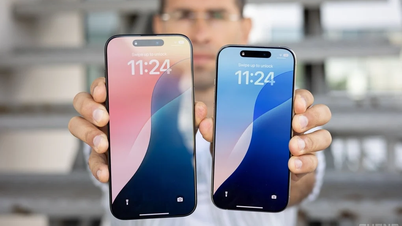
5G is contributing to the shift from budget smartphones to mid-range devices in Vietnam.
Photo: Anh Quân
According to a report by CR, the 5G market share in Vietnam's smartphone shipments reached 46% by the end of Q1 2025, the highest ever.
CR analysts believe that the decline in the market share of budget smartphones reflects an increase in people's ability to pay for smartphones, along with a preference for higher-end products offering more features, convenience, and better design. In the future, 5G smartphones are predicted to continue growing, expanding their reach on store shelves as new network technologies are increasingly deployed.
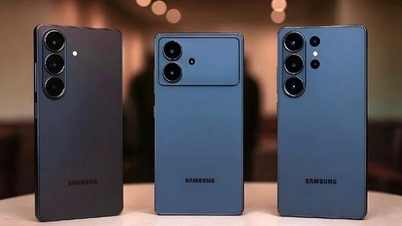
Regarding the number of devices shipped by smartphone manufacturers, Apple recorded the strongest growth in the first three months of 2025, with a 37% increase compared to the same period last year. Xiaomi and Oppo also saw increases of 9% and 8% respectively. The other two brands in the top 5, Samsung and vivo, experienced decreases of 13% and 25%, respectively. It's important to note that this represents the number of devices delivered to distribution channels, not the number of devices reaching end consumers (actual sales volume). While not providing specific figures, Counterpoint stated that shipments decreased by 5% compared to last year.
Samsung still leads the market share in Vietnam with 28%, followed by Xiaomi (23%), Apple (17%), Oppo (17%), and vivo (5%).
Source: https://thanhnien.vn/smartphone-binh-dan-giam-hap-dan-nguoi-viet-185250519003707547.htm



















































































![[Photo] Coc Ly market bustling on the eve of Tet](https://vphoto.vietnam.vn/thumb/402x226/vietnam/resource/IMAGE/2026/02/14/1771062261424_baolaocai-br_img-6457-jpg.webp)






Comment (0)