Cultural relics
From the 1940s, the French Institute of Far Eastern Studies (École Française d'Extrême-Orient) made rubbings of dozens of inscriptions from village temples in Quang Nam province. Later, many of these field inscriptions disappeared due to subjective and objective reasons. Some other field inscriptions still exist but are increasingly faded and difficult to read.
Several inscriptions were printed during that period, such as the Bat Nhi village temple inscription (dated 1832), the Binh Long village temple inscription (1916), the Cau Nhi village temple inscription (1882), the Duong Mong village temple inscription (1826), the Le Trach village temple inscription (1897), the Lo Gian reformed temple inscription (1931), and the inscription on the restoration of the communal temple in La Thap (1754)...
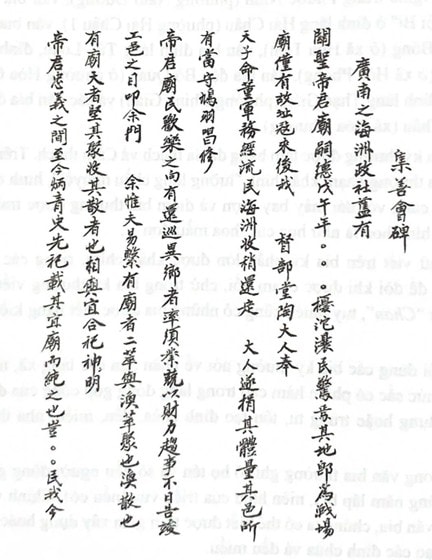
The surviving field inscriptions in the old Da Nang area include the inscription at Bo Ban communal house during the 5th year of Tu Duc (1852), three inscriptions at Hai Chau communal house (one from the 14th year of Tu Duc - 1861, two from the 1st year of Bao Dai - 1926), the inscription at Huong Phuoc communal house during the 5th year of Duy Tan (1911), three inscriptions at My Khe communal house, the inscription at Thach Nham communal house in 1885, the inscription at Thai Lai communal house (1849), the inscription at Tuy Loan communal house during the 1st year of Thanh Thai (1898), and two inscriptions at Xuan Loc communal house during the 3rd year of Bao Dai (1928)...
The dating of a stele serves as evidence for determining the time of construction or renovation of a village communal house. The earliest known date for a village communal house stele is 1754. The La Thap communal house (in Duy Xuyen) is one of the earliest communal houses in Quang Nam province, dating back to 1670.



The authors of the stele inscriptions are also cultural relics. Based on the authors of the stele inscriptions, we can learn about the famous officials, mandarins, and literati who left their mark on the ancient Quang region. The Hai Chau communal house stele, Tap Thien Hoi Bi, was composed by Nguyen Cong Bang, a high-ranking official in the Ministry of War; the Tuy Loan communal house stele was composed by Nguyen Khue, a doctoral graduate of the third class in the Ky Suu year, from Thanh Tri - Hanoi …
Memories at the village temple
The inscription on the Lu Gian stele (now called Lu Giang) states: "Our esteemed ancestors, the five clans of Duong, Ho, Le, Nguyen, and Pham, originally came from the North with the king to the South to establish the village."
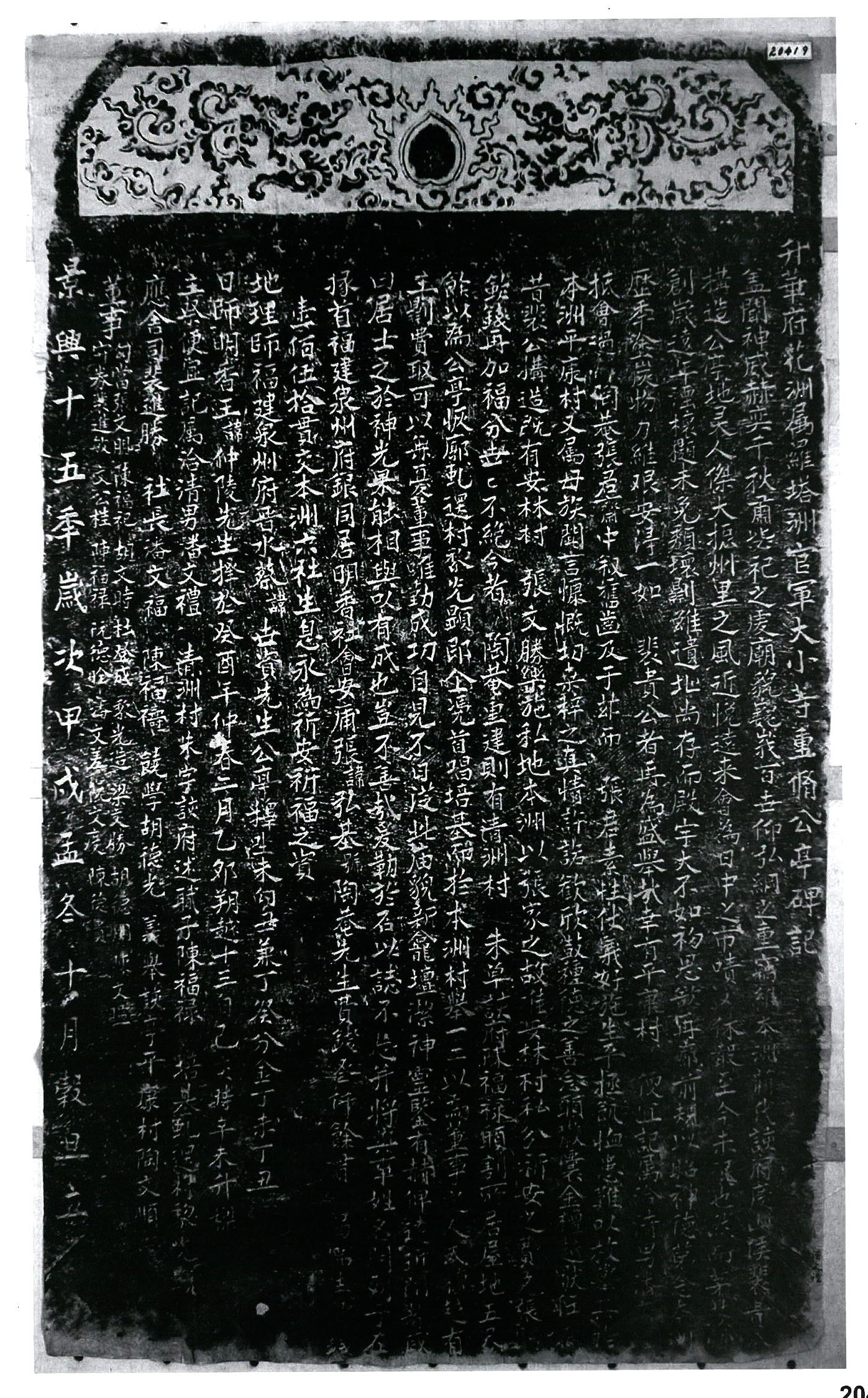
The stele at La Thap communal house bears witness to the coexistence of the Vietnamese and Minh Huong people. The stele at Bat Nhi communal house clearly recounts the process of village establishment: "In the past, our commune originally had 9 clans who built the territory together to form Bat Nhi commune. The land expanded, the population increased, creating 3 villages: Thai La, Dan Dien, and Binh Tri within Bat Nhi commune."
The stele at La Thap communal house states that the people of this land are proud to consider it "a sacred land, with talented people, whose reputation spreads throughout the villages." That is why "people nearby are pleased, and those far away flock here," and "the market is bustling."
The stele at Hai Chau communal house also recounts the beginning of the French invasion of Vietnam: "In the year of Tu Duc Mau Ngo, the invaders stormed and harassed Da Nang, causing the people to flee in terror, turning this place into a battlefield." This is authentic and vivid evidence, helping to clearly visualize the brutal nature and immediate consequences of the Western invasion of Vietnam.
The village stele also provides other valuable information about village customs or individual characteristics, such as the information from the La Thap stele: When Mr. Truong Van Thang of An Lam village donated land to build the village temple, An Lam village was exempted from contributing to the Ky Yen festival, and the Truong family was exempted from paying all fees for generations.


"Men find joy in festivals and village gatherings / Women find joy in chanting scriptures, chanting, and visiting temples." However, the number of women who make offerings to the temple is also relatively large. The stele at Bo Ban Temple lists 116 names of benefactors, of which 18 are women (accounting for 15.5%). The stele at Thach Nham Temple even mentions the case of Mrs. Pham Thi Chuc donating an entire rice field measuring 7 thước and 5 tấc...
The stone steles in the communal house are not merely religious artifacts like other types of religious objects. They are a special kind of evidence of the village communal house's historical significance, used to determine the origin of the monument and to pass down the village's historical stories for generations to come.
Source: https://baodanang.vn/su-da-trong-dinh-3330590.html