

In the case of milk products, counterfeit goods mainly take two forms: counterfeiters produce fake packaging with milk inside that is of unknown origin and quality; or they use packaging from well-known brands but swap it with low-quality milk.
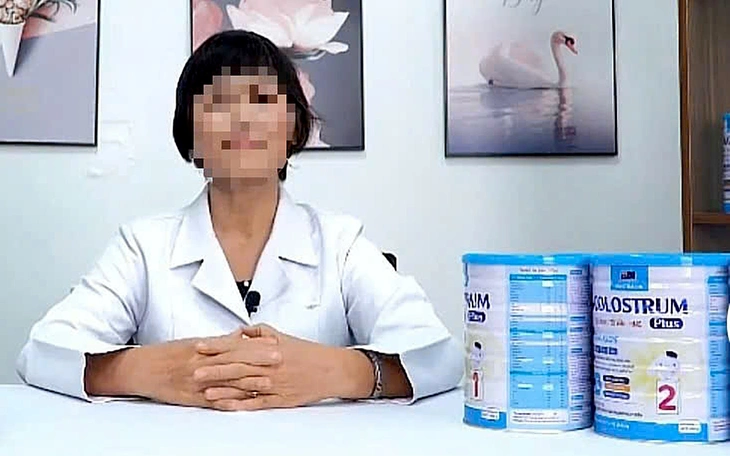
Regarding the recently discovered case, the perpetrators established a company to produce various types of milk under different brand names, employing a massive advertising strategy to release large quantities onto the market. However, the ingredients advertised on the company's milk products, such as bird's nest extract, cordyceps, macadamia powder, walnut powder, etc., were absent and replaced with other raw materials and added additives.
This incident once again reminds consumers not to overuse and treat milk as a miracle cure. Previously, in Dong Ha City, advertisements for a type of colostrum milk that could cure all ailments (stomach problems, colon problems, weight gain for underweight people and vice versa) were ubiquitous. Many people spent considerable sums of money buying it for themselves or their relatives. Taking advantage of this customer psychology, the distribution company launched various promotional policies such as discounts for larger purchases or reward points, further encouraging buyers. While there's no basis to confirm whether it was genuine or counterfeit, advertising milk with so many purported benefits is unacceptable.
Milk is an easily marketable product because everyone needs it, from children to the elderly. As living standards improve, this demand also increases. Furthermore, through multi-level marketing and aggressive social media marketing strategies, this product reaches consumers even more easily. To gain customer trust, most brands use images of doctors, nutritionists, famous artists, etc., in their advertisements. Many customers report that they choose this product primarily because they trust the brand's representatives.
Take Hiup milk as an example; it's advertised as helping children grow taller. Many parents with children aged 3-15 are interested in this milk, but its popularity is largely due to the famous TV presenter chosen as the brand's ambassador. However, when customers try to buy the product on Facebook pages advertising it, they find themselves lost in a maze of misleading information.
Online businesses create multiple Facebook accounts and run ads with identical images and content. The product photos are relatively professional, but they lack addresses or phone numbers, or provide only vague addresses. When customers inquire, they only respond via private messages (inbox).
This leaves customers unsure which website is the official one, while the products are not sold directly in the area. Furthermore, each website quotes different prices and offers different promotions. Many people only discover this discrepancy after making a purchase and stop buying in time.
Undeniably, image promotion technology and market access skills help counterfeit goods reach further. For example, with Rance Pharma International Pharmaceutical Joint Stock Company, part of the International Pharmaceutical Group (the company that counterfeited nearly 600 types of milk mentioned above), a promotional video stated that the company had been operating for over 15 years in the pharmaceutical, health food, and mother, baby, and family products sectors...
According to advertisements, these companies' products meet US FDA standards and are widely available in many locations nationwide. Many other brands also use similar customer outreach methods, so it's not surprising that many people are swayed by the advertisements before making a purchase. After this incident, many people will likely change their perspective. Milk is good for health, that's obvious. But it's only good when you buy the right product from the right retailer.
Counterfeit and substandard products have disrupted the powdered milk market. Meanwhile, if these products are not of high quality, they can have numerous health consequences, especially for children – a vulnerable group with underdeveloped immune and digestive systems.
Many parents still tend to listen to advertisements when buying milk instead of carefully checking the labels and origin. This creates loopholes for counterfeit powdered milk to infiltrate the market and reach consumers.
In recent years, many milk products for children, adults, and even pregnant women have appeared on e-commerce platforms and social media sites, but their origin and quality are almost completely unchecked.
This situation makes it difficult for authorities to inspect and monitor. Distinguishing between real and fake milk with the naked eye is not easy, especially with sophisticated counterfeit products. Therefore, market management agencies need to create display spaces for identifying genuine and fake products of this type so that people can easily access the information and receive guidance on how to differentiate them.
Some branded, high-selling milk products, such as Glucerna, Abbott Grow, PediaSure, and Ensure Gold, are often counterfeited. Therefore, detailed guidance is needed to help customers identify genuine products. Consumers also need to equip themselves with the necessary skills to identify products through barcodes, expiration dates, packaging, and the color, smell, and taste of the milk.
It's important to choose milk based on the user's age, health condition, and nutritional needs, rather than buying it solely because of advertisements.
For parents with young children, raising awareness, developing the habit of seeking nutritional advice, reading labels, and carefully checking product information are practical ways to protect children from unnecessary risks.
Anh Thu
Source: https://baoquangtri.vn/sua-gia-va-nhung-moi-nguy-hai-that-193043.htm
![[Photo] General Secretary and President To Lam presides over a meeting with the Central Organizing Committee.](https://vphoto.vietnam.vn/thumb/1200x675/vietnam/resource/IMAGE/2026/06/03/1780482764658_a1-bnd-4741-3342-jpg.webp)

![[Photo] Secretary of the National Assembly Party Committee, Chairman of the National Assembly presides over the meeting of the Standing Committee and Executive Committee of the National Assembly Party Committee.](https://vphoto.vietnam.vn/thumb/1200x675/vietnam/resource/IMAGE/2026/06/03/1780480353201_ndo_br_bnd-2585-jpg.webp)
![[Photo] First session of the 14th Congress of the Vietnam Trade Union](https://vphoto.vietnam.vn/thumb/1200x675/vietnam/resource/IMAGE/2026/06/03/1780465947883_ndo_br_img-3852-jpg.webp)




![[Infographic] Over 1.2 million candidates registered for the 2026 High School Graduation Exam](https://vphoto.vietnam.vn/thumb/402x226/vietnam/resource/IMAGE/2026/06/03/1780496872518_w_20260603205412.jpeg)



![[Podcast] Capital City Law 2026: Increased penalties for violations in the fields of culture and advertising](https://vphoto.vietnam.vn/thumb/402x226/vietnam/resource/IMAGE/2026/06/03/1780487283783_4522222.png)







































![[Video] Sunset at Lap An Lagoon – Where the sun sets over the fishing nets](https://vphoto.vietnam.vn/thumb/1200x675/vietnam/resource/IMAGE/2026/05/31/1780192137701_beach-landscape-sea-water-nature-grass-745871-pxhere-com.jpeg)



































Comment (0)