


Notably, this force not only helps people stabilize their lives but also contributes to strengthening the grassroots political system.
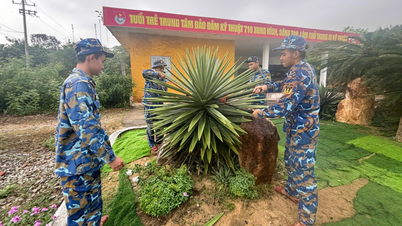
Amidst the unique challenges of the mountainous border region, the need to supplement the workforce with qualified personnel at the grassroots level has become urgent. In the second phase (2021-2030) of Project 174, 25 young intellectuals were selected and deployed to the border communes of Dao San and Si Lo Lau, under the management of the 356th Economic-Defense Brigade. These two communes face numerous difficulties, with complex terrain, poor transportation, a predominantly ethnic minority population, and limited production skills.
Upon recruitment, the young volunteer intellectuals were quickly assigned to local areas, directly participating in economic development activities. Over two years, the team members organized hundreds of awareness campaigns, guiding hundreds of households on farming techniques, livestock breeding, and disease prevention and control; they also coordinated efforts to persuade 315 households to relocate their livestock facilities away from residential areas.
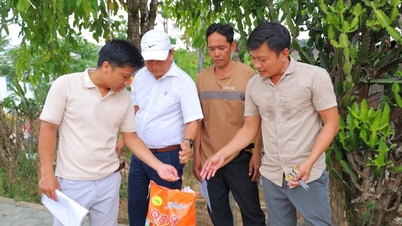
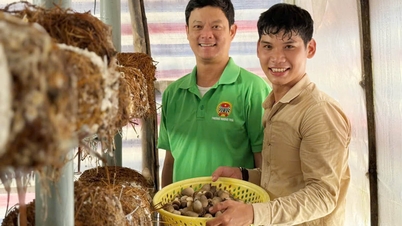
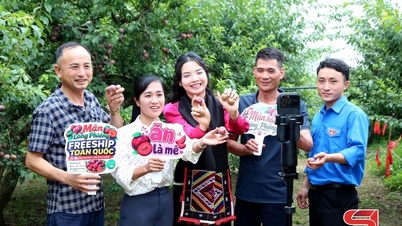
Beyond simply disseminating information, they also directly worked with the people to implement production models suitable to local conditions. These ranged from cultivating cardamom and amomum xanthioides to raising livestock, poultry, and cold-water fish. Alongside this, many small-scale models were also established, such as quail farming, temperate fruit tree cultivation, and four-season lemon cultivation. These models, initially developed and transferred to the local people, have yielded practical results.
In the areas of infrastructure and social welfare, this force has also contributed hundreds of man-days to assisting people with harvesting crops, repairing canals, building sanitation facilities; constructing new rural areas; and participating in disaster prevention and control activities, and relocating people from dangerous areas.
Lo Thi Thuy, a Youth Union member, shared: “After two years participating in the program, we have built several livestock farming models and accumulated a lot of practical experience. This is important preparation for me to continue developing the economy in my hometown and supporting the people in the future.” The efforts of young people have been contributing to building and strengthening the socio-economic development of the locality. Notably, in border areas still facing many difficulties, through support in production and daily life, they have gradually changed the awareness and practices of the people.
Based on initial results, the third phase of deploying young intellectual volunteers is expected to bring about more significant changes in the project area. Building on the experience from the previous phase, the new force is also oriented towards improving the quality of selection, training, and activity organization.
From the outset, the 356th Economic-Defense Brigade has focused on instilling political awareness and practical skills in its members. Young intellectuals are required to thoroughly understand local tasks and proactively develop activity plans that are closely aligned with the realities of each village and household, instead of implementing them in a scattered manner as before.
Lieutenant Colonel Le Manh Hung, Head of the Logistics and Technical Department of the 356th Economic-Defense Brigade, said: “In the third phase of the project, we selected 25 young intellectual volunteers. These are all highly qualified, enthusiastic individuals, especially knowledgeable about the local area, customs, and language of the ethnic minorities. They will be the core force in disseminating information and mobilizing the people to develop the economy, build new rural areas, and ensure social security in the locality.”
Le Viet Hoang, a member of the Youth Union selected as a young intellectual volunteer in the third phase of the project, said: “I am very honored to participate in the Young Intellectual Volunteer Project at the 356 Economic-Defense Brigade. I will try to apply the knowledge I have learned to help people develop their economy and lives. Besides that, I will always proactively learn from the experience of the officers and team members to improve myself, foster unity and solidarity, and contribute to the unit's development.”
In the third phase, the delegation's focus is on linking the activities of young intellectuals with specific local programs and projects such as household economic development, rural development, legal education, and maintaining security and order. This is expected to overcome the fragmented nature of activities, thereby improving efficiency and quality.
When young people bring their knowledge, skills, and enthusiasm to border regions, change begins to take shape from small things in life. By helping people do business more effectively, young intellectuals have contributed to building trust and encouraging a spirit of self-reliance and striving for success among the local population.
On January 29, 2010, the Prime Minister issued Decision No. 174/QD-TTg approving the Project “Strengthening the participation of young intellectuals in volunteer work at national defense economic zones during the period 2010-2020” (hereinafter referred to as Project 174). Following the success of Phase 1, on September 15, 2021, the Prime Minister issued Decision No. 1529/QD-TTg approving the implementation of the Project until the end of 2030.
Source: https://nhandan.vn/suc-tre-tinh-nguyen-noi-vung-cao-post965752.html


![[Photo] Admire the coral "masterpiece" amidst the million-year-old heritage of Dak Lak province.](https://vphoto.vietnam.vn/thumb/1200x675/vietnam/resource/IMAGE/2026/05/30/1780107638639_y25-jpg.webp)











![[Image] Nearly 125,000 Hanoi students completed the Literature exam for the 10th grade entrance exam.](https://vphoto.vietnam.vn/thumb/402x226/vietnam/resource/IMAGE/2026/05/30/1780117233041_ndo_br_thiet-ke-chua-co-ten-2-png.webp)



































































Comment (0)