

Located at the confluence of the Tapti River and the Arabian Sea, Surat has long been considered one of India's fastest-growing commercial and industrial centers. However, the very location that has contributed to its prosperity for centuries is now posing a significant threat to its future.
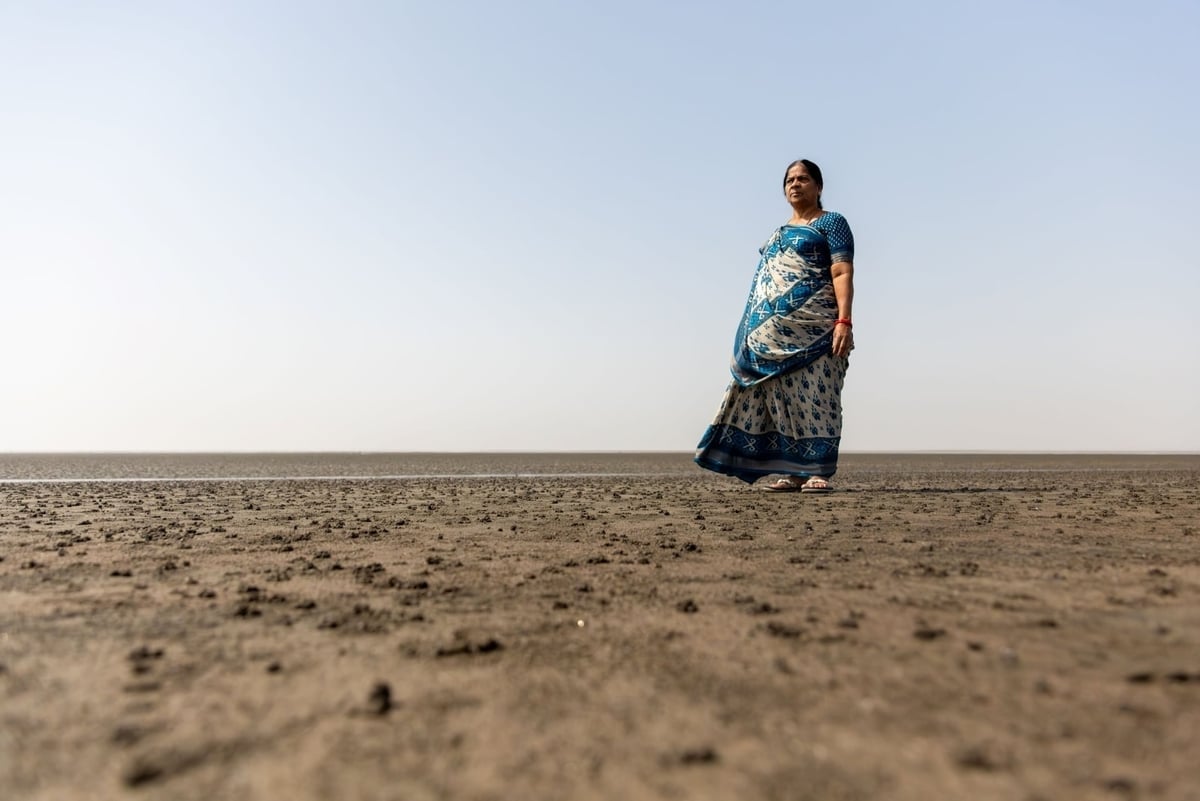
People stand on the shores of Surat, an area frequently affected by rising sea levels and flooding. Photo: UNEP/Florian Fussstetter.
Extreme rainfall, high tides, and rising sea levels due to climate change are putting Surat at increasing risk of flooding and erosion. In this context, the city of over 7 million people is implementing a series of infrastructure projects aimed at increasing climate resilience and protecting coastal communities.
According to Oxford Economics, Surat is projected to be the world's fastest-growing city between 2019 and 2035. However, this rapid pace of urbanization also brings about more pronounced environmental risks.
Coastal cities face climate pressure.
Surat has faced flooding for centuries, but climate change is making extreme and unpredictable weather events even more severe. Last year, heavy rains submerged many of the city's markets, damaged hundreds of shops, and forced schools to close. Images of people wading through chest-deep floodwaters were ubiquitous in local media.
In addition to facing pressure from increasingly erratic rainfall, Surat is also grappling with rising sea levels and coastal erosion. At Dumas Beach, a popular tourist spot in the city, the coastline is shrinking rapidly.
Mahesh Chawada, the Surat city government leader, said the area is particularly vulnerable to erosion due to strong tidal fluctuations. He added that this not only leads to the loss of coastal land but also affects the local ecosystem and marine life.
Experts say that tides naturally cause land and sand to shift along coastlines. However, climate change is making this process faster and more intense. When the tide recedes, newly exposed land is vulnerable to erosion by wind and currents, especially in areas with little vegetation or a lack of natural protection.
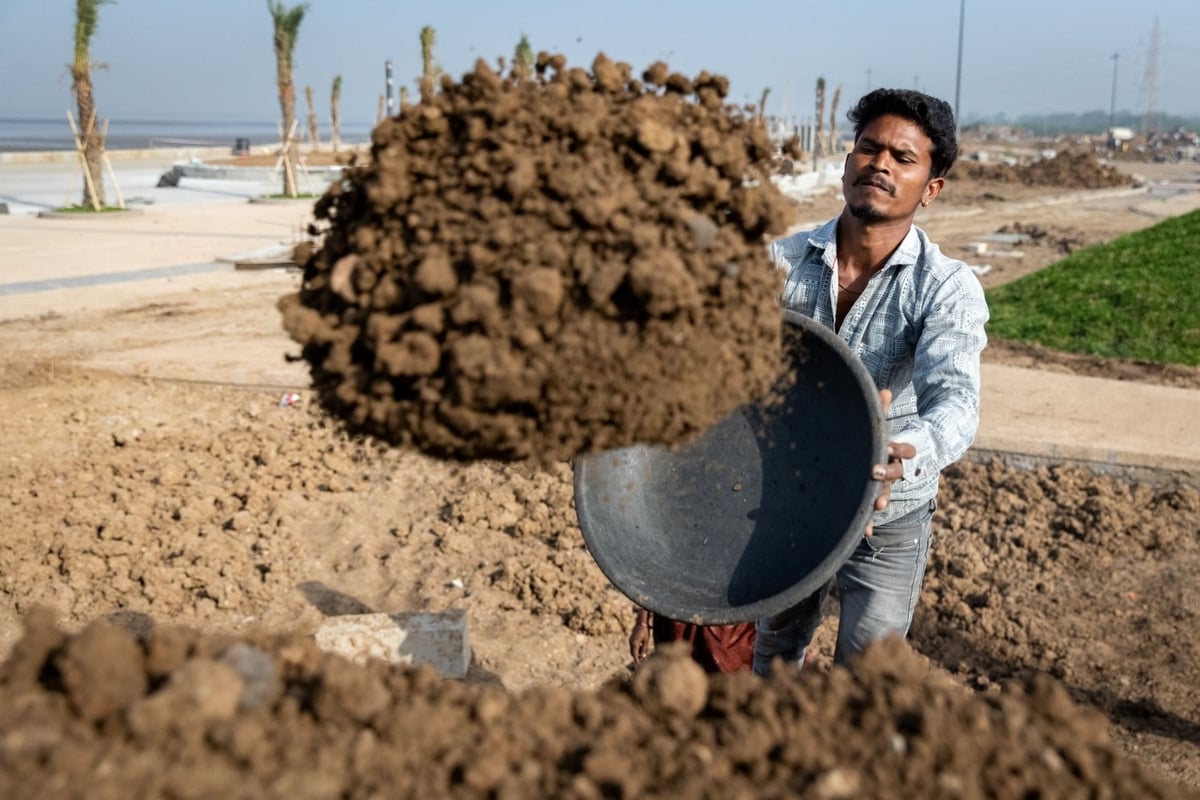
Workers construct a coastal walking path as part of Surat's climate resilience enhancement project. Photo: UNEP/Chehek Bilgi.
Against this backdrop, Surat is shifting from a short-term response to a long-term planning strategy to adapt to the climate. The city government considers investing in resilient infrastructure essential for sustaining future economic growth.
Combining infrastructure and natural solutions
One of the key projects currently underway is the Dumas Seawall Project, implemented as part of the Integrated Sustainable Cities Programme, a collaboration between the United Nations Environment Programme (UNEP) and the Asian Development Bank.
The project aims not only to protect the coastline from large waves and erosion, but also to develop public spaces and improve the quality of life for the people.
In addition to the breakwater system, the project also includes the construction of coastal walkways, bicycle paths, and green spaces. In areas where rivers flow into the sea, existing dikes and embankments are also reinforced to reduce the risk of flooding and saltwater intrusion – two increasingly common challenges in low-lying coastal cities around the world.
Construction began in 2022 and is expected to be completed by the end of 2026.
According to Dr. Debolina Kundu, Director of the National Institute of Urban Studies (NIUA) of India, Surat's project is a prime example of how to combine infrastructure with nature-based solutions to enhance climate resilience. She believes this model could serve as a reference for many other coastal cities around the world.
Mangrove forests in the area are also considered an important part of the adaptation strategy. These forests help reduce the impact of storms and large waves, while maintaining coastal biodiversity.
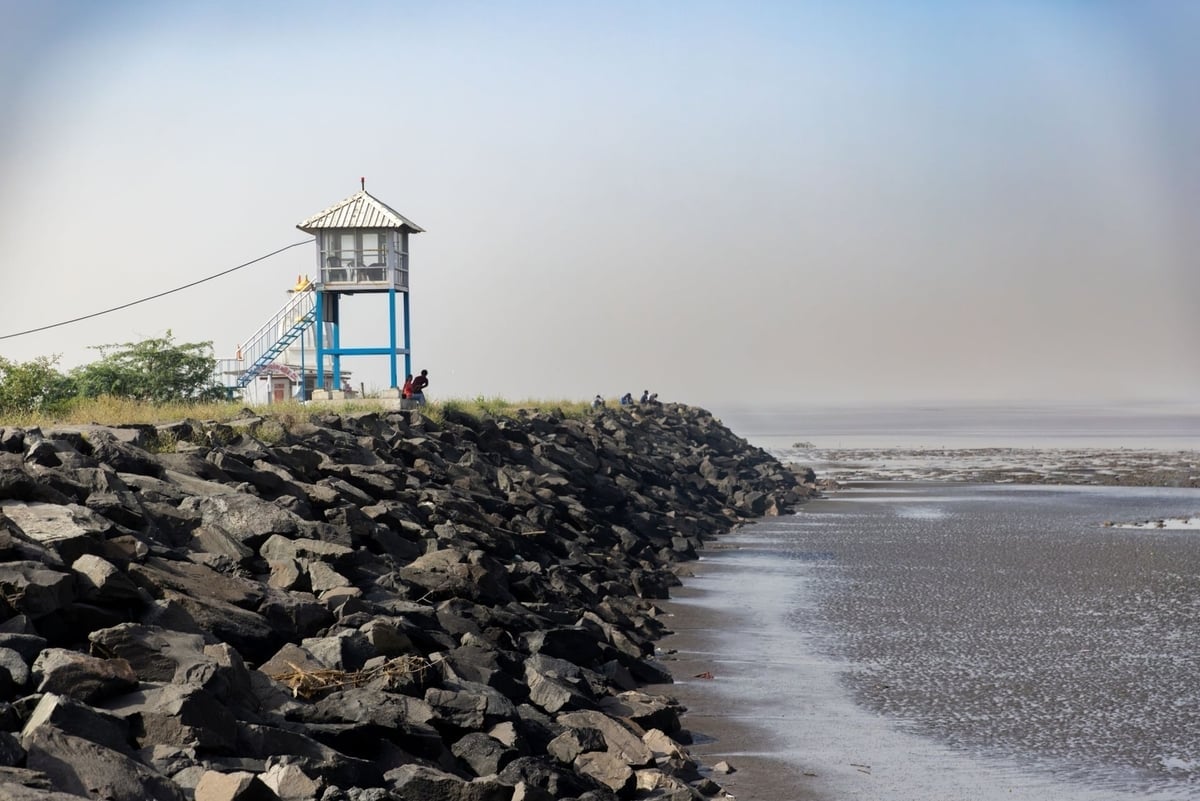
A coastal observation tower in Surat, which combines infrastructure and natural solutions to mitigate climate risks. Photo: UNEP/Florian Fussstetter.
According to UNEP, the Integrated Sustainable Cities Programme is currently being implemented in 50 cities across 17 countries. Its goal is to help vulnerable cities improve their resilience to climate change while promoting sustainable socio-economic development.
The program is expected to improve living conditions for approximately 12.2 million urban residents, including 5.8 million women. Simultaneously, projects under the program are also expected to reduce nearly 36 million tons of carbon dioxide equivalent emissions and restore nearly 2,000 hectares of land.
Experts warn that coastal flooding is increasing rapidly globally due to rising sea levels. Approximately 14 million more people in coastal communities now face the risk of flooding annually compared to 20 years ago. It is predicted that by 2050, hundreds of densely populated coastal cities could face even more severe flooding risks.
Asher Lessels, Head of the Emission Reduction and Transparency Unit at the Global Environment Fund (GEF), noted that Surat's approach demonstrates that coastal cities can balance growth and sustainable development. He argued that combining climate-resilient infrastructure with nature-based solutions not only protects people and ecosystems but also contributes to economic growth and improved urban quality of life.
Source: https://nongnghiepmoitruong.vn/surat-tang-toc-chong-ngap-ven-bien-d813039.html



![[Photo] The courage of new recruits of Brigade 144 on the training ground.](https://vphoto.vietnam.vn/thumb/1200x675/vietnam/resource/IMAGE/2026/05/27/1779881651341_anh-man-hinh-2026-05-27-luc-18-32-52.png)
![[Photo] The heat at the fireworks display site on the opening night of the Da Nang International Fireworks Festival 2026](https://vphoto.vietnam.vn/thumb/1200x675/vietnam/resource/IMAGE/2026/05/27/1779889741485_ndo_br_z7872039145157-fecaba5112f39e8352544099d7ef4738-5140-jpg.webp)





















































![[Photo] The courage of new recruits of Brigade 144 on the training ground.](https://vphoto.vietnam.vn/thumb/402x226/vietnam/resource/IMAGE/2026/05/27/1779881651341_anh-man-hinh-2026-05-27-luc-18-32-52.png)

























Comment (0)