

The origin of the Buddha bathing ritual
Buddha's Birthday is one of the major spiritual and cultural festivals for millions of Buddhists worldwide . It commemorates the birth of Siddhartha Gautama, the Buddha, in the 7th century BC, in the form of a historical figure.
The ritual of bathing the Buddha is one of the common ceremonies of the annual Buddha's Birthday celebration in many different Buddhist traditions. The origin of the ritual of bathing the Buddha stems from the event of Prince Siddhartha's birth in Lumbini Garden.
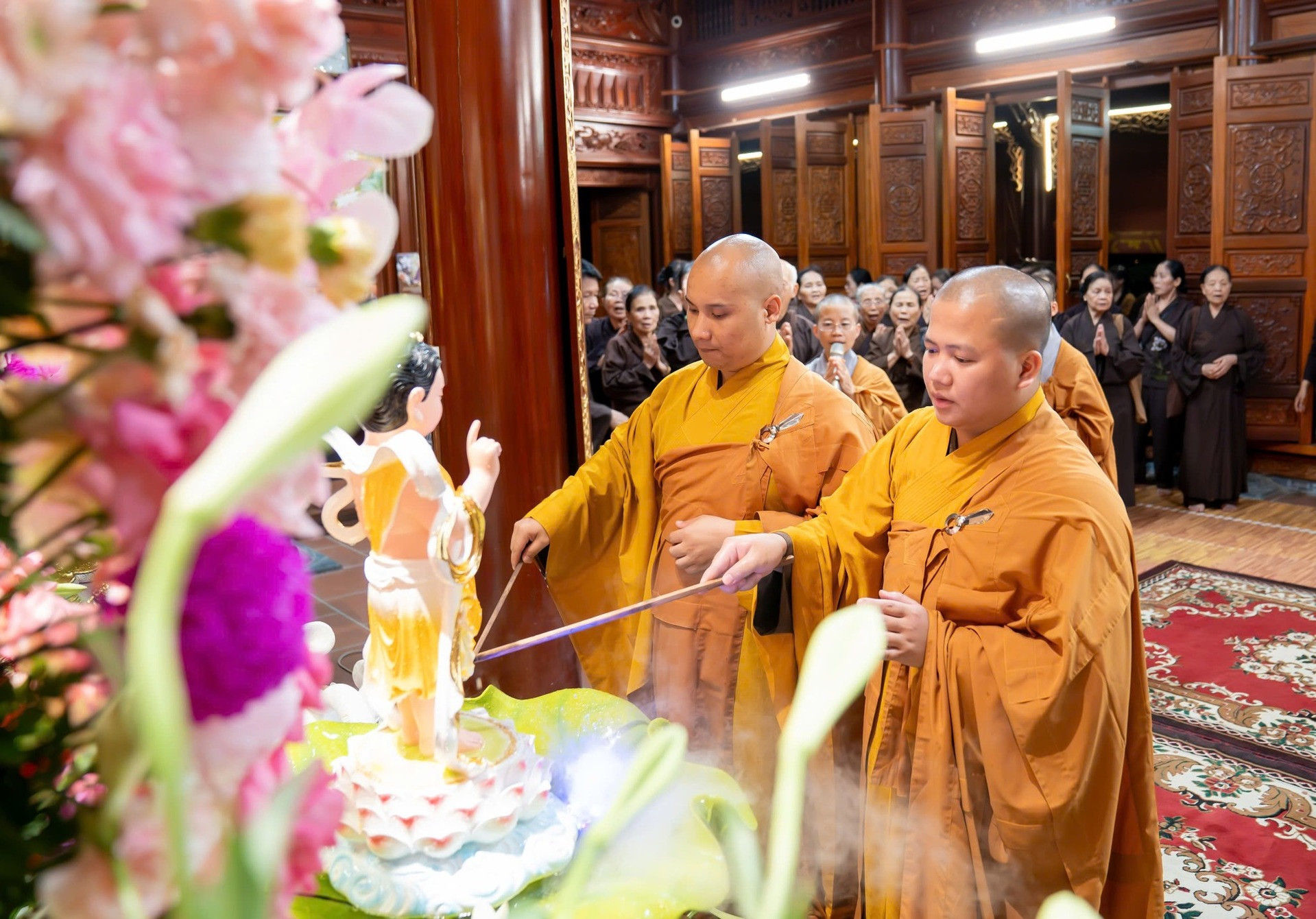
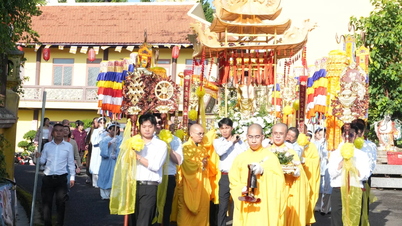
The ritual of bathing the Buddha statue is one of the popular ceremonies of the annual Buddha's Birthday celebration.
Scriptures from both the Southern and Northern traditions record that when Queen Maya gave birth to the prince, two streams of water from the heavens, one warm and one cool, descended to bathe the queen and the prince.
This event is recorded in the Mahābhāṣāra Sūtra (Dīgha Nikāya II), the Sūtra of the Unprecedented Phenomena (Majjhima Nikāya III), and the preface to the commentary on the Jataka stories (Nidanakatha).
Today, this ritual is maintained in most Buddhist communities everywhere to express the reverence and joy of Buddhist followers towards the appearance of the Enlightened One in this world.
The two streams of cold and hot water symbolize the two opposing realms of life, the joys and sorrows, the pleasures and pains of daily life, which all people born into this world must endure. Prince Siddhartha endured these two streams of cold and hot water, and later became the Buddha Shakyamuni.
Throughout the nation's history, the Buddha's birthday celebration and the ritual of bathing the Buddha have become a beautiful spiritual tradition of the Vietnamese people. The Buddha bathing ceremony was first held in our country in the year of Nhâm Tý (1072), during the reign of King Lý Nhân Tông.
According to Dai Viet Su Ky Toan Thu and Dai Viet Su Luoc, on the 8th day of the 4th month of the year Nham Ty (1072), King Ly Nhan Tong attended the Buddha bathing ceremony.
According to the Complete Annals of Dai Viet, every month on the 15th, 1st, and especially the 8th of April, the king would often go to Dien Huu Pagoda to pray for blessings and perform the ritual of bathing the Buddha.
How to properly perform the ritual of bathing the Buddha statue?
Buddhists often boil water with jasmine, chrysanthemum, cinnamon, etc., and after the water cools, pour it into a basin, adding fresh jasmine flowers to the water used for bathing the Buddha. In some places, for simplicity, they use rainwater or purified filtered water, boiled and then consumed after the ceremony.
For a Buddhist to perform the Buddha bathing ceremony in its true sense, three elements are essential: faith, reverence, and equanimity. For Buddhists, respect and devotion to the Buddha, based on right view, truly bring us pure faith and genuine, lasting peace.
When it was time for the ceremony, the congregation chanted repentance prayers according to the ritual of bathing the Buddha. During the bathing of the Buddha, everyone chanted verses and mantras, then sequentially approached the altar where the statue of the newborn Buddha was placed, clasped their hands in respectful reverence, and gently poured water over Him with their right hand.
In this ritual, the congregation will scoop up fragrant water and pour it over the infant Buddha's body in the following order: pouring water on the left shoulder with the intention of abandoning evil deeds; next, pouring water on the right shoulder with the intention of doing good deeds; and finally, pouring water from the knees to the feet with the intention of saving all sentient beings.
While bathing the Buddha, each person should calmly contemplate the pure, nectar-like water washing over their mind. Through this merit, their greedy, angry, and deluded thoughts are cleansed. Evil thoughts, words, and deeds are also eradicated. After bathing the Buddha and paying respects, they withdraw, feeling joyful, their body and mind becoming pure, cool, and light.
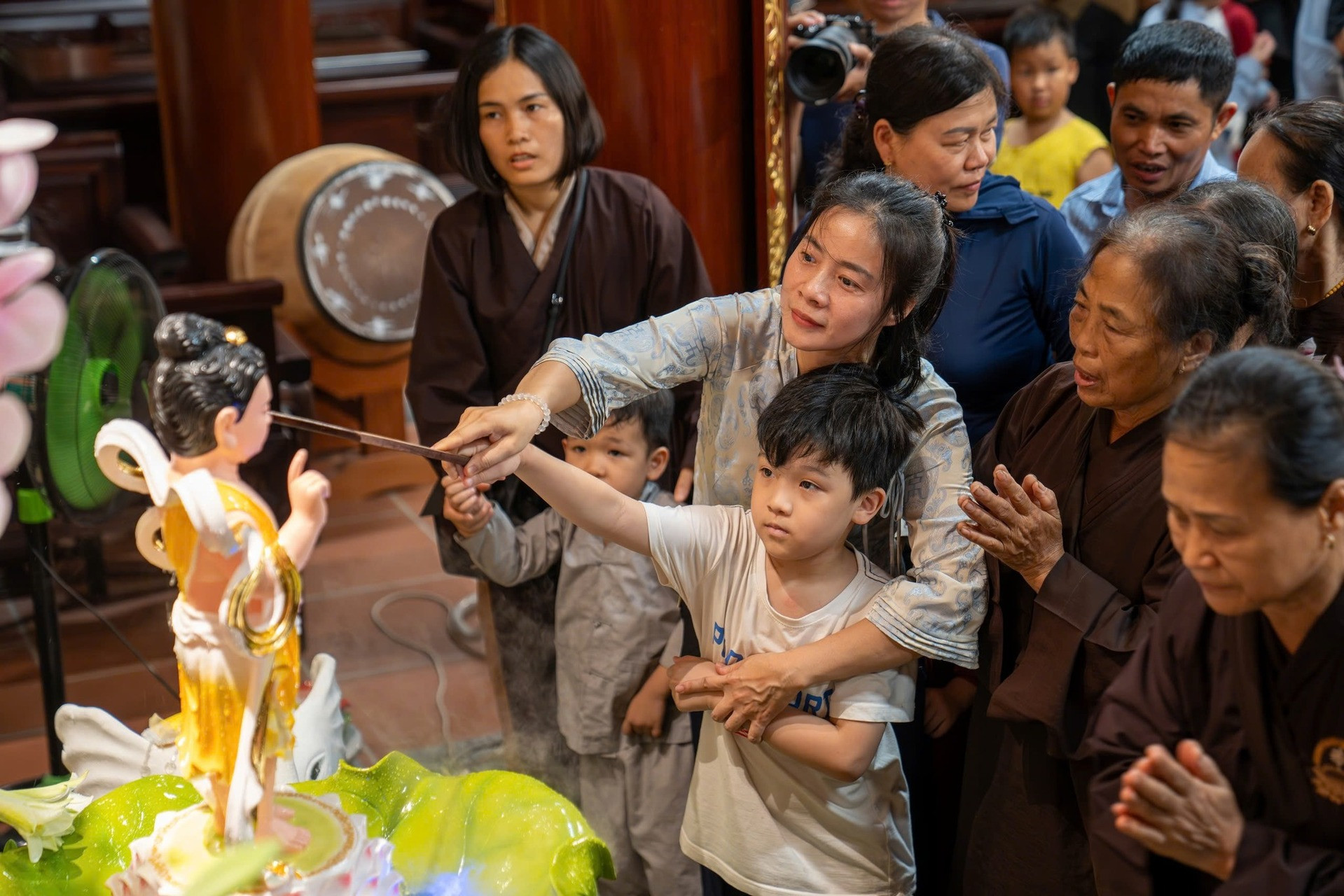
The ritual of bathing the Buddha is therefore not only a spiritual ceremony performed before the statue of the infant Buddha, but also an opportunity for each person to look inward.
The water poured over the Buddha's shoulders also serves as a reminder for people to cleanse their hearts of the impurities: anger, selfishness, competitiveness, stubbornness, and the accumulated wounds of daily life.
Bathing the Buddha statue is to show that the Buddha is not only present in solemn temples, but also exists in the goodness, wisdom, and compassion within each person.
When bending down to scoop up a ladle of water, Buddhists are also reminding themselves to slow down, speak kind words, think good thoughts, and face both favorable and unfavorable circumstances with a peaceful mind. Therefore, the Buddha's birthday is not only a celebration of the Buddha's birth, but also an opportunity to awaken the "Buddha" within each person.
Source: https://vietnamnet.vn/tai-sao-co-nghi-thuc-tam-phat-trong-le-phat-dan-2519016.html

![[Photo] General Secretary and President To Lam presides over the meeting to approve the draft report on the results of the second inspection by the Politburo of the Standing Committee of the Hanoi City Party Committee.](https://vphoto.vietnam.vn/thumb/1200x675/vietnam/resource/IMAGE/2026/05/26/1779789811432_a2-bnd-4430-9620-jpg.webp)





















































Comment (0)