

Reporter:
General Pham Van Tra: Accurately assessing the situation to make correct decisions is a crucial issue for the success or failure of a war. Even before the Geneva Accords were signed, at the Sixth (expanded) Conference of the Central Committee of the Party, Second Term (July 15-17, 1954), the Central Committee and President Ho Chi Minh stated: "The United States is not only an enemy of the people of the world , but is becoming the main and direct enemy of the people of Vietnam, Cambodia, and Laos."
When the US imperialists established a puppet regime and implemented a new type of aggressive policy in South Vietnam, our Party affirmed that the US and its puppets had a large army but lacked a deep and solid political base. Although the US and its puppets' military was still strong, their political foundation was very weak, especially in rural areas. Based on this assessment, the Party determined that the fundamental path of development for the Vietnamese revolution in the South was an uprising to seize power for the people. With this correct policy, the general uprising starting in Ben Tre spread throughout the South and achieved many victories, enabling the revolution in the South to overcome challenges, shifting from a defensive stance to an offensive one, and defeating the US "Special War" strategy.
In 1965, the US imperialists shifted to a "limited war" strategy, massively deploying expeditionary forces to fight in South Vietnam; using air and naval forces to attack North Vietnam. The mentality of "fear of America" caused many to lack confidence in victory. The question at this time was: "Do we dare to fight America? Can we defeat America, and how?"...
After carefully studying the situation, our Party assessed that the US was a powerful army, but its entry into South Vietnam was not in a position of strength, but rather in a weak and passive position. The most fundamental weakness of the US remained its political position. In December 1965, the Central Committee of the Party resolved to fight and defeat the US. From the initial victories against the US, such as at Nui Thanh, Van Tuong, Bau Bang, Dat Cuoc, Plei Me..., the army and people of South Vietnam advanced to defeat the enemy's two strategic counteroffensives during the 1965-1966 and 1966-1967 dry seasons; followed by the victory of the Tet Offensive and Uprising of 1968, defeating Operation Lam Son 719 and crushing the last efforts of the US imperialists in the skies over Hanoi and Hai Phong at the end of 1972… These are vivid proofs of the brilliant leadership of the Party and President Ho Chi Minh.
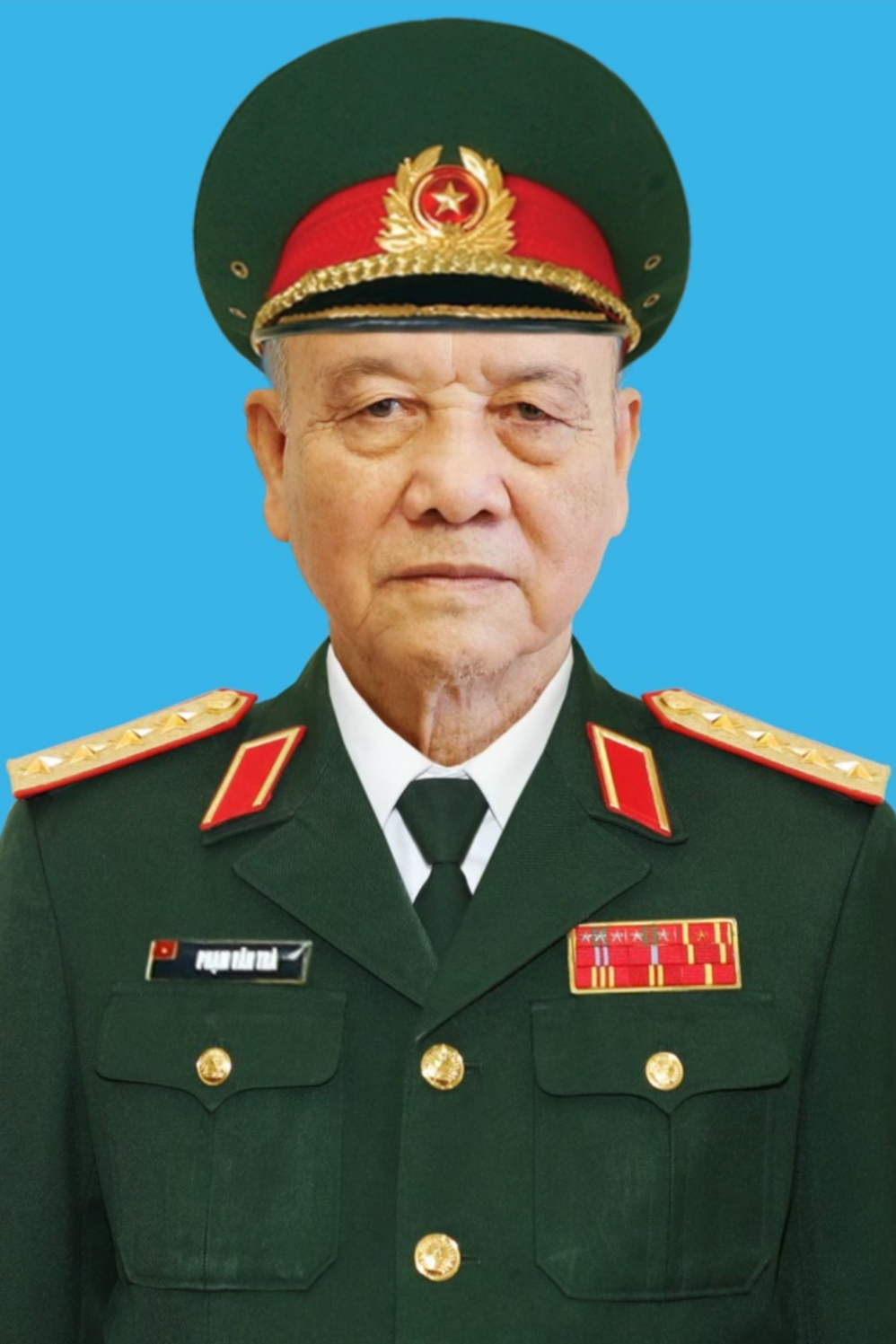 |
General Pham Van Tra. |
PV:
General Pham Van Tra: After the Paris Agreement, the US and its allies had to withdraw from South Vietnam, and the balance of power between us and the enemy changed significantly. The question then was whether the puppet army could replace the US army and whether the US would intervene again? With the victory at Thuong Duc (August 1974), our Party affirmed that our main forces were far superior to those of the puppet army. By the victory at Phuoc Long (January 1975), our Party concluded that the US army would not return. In particular, with its astute assessment of the situation and its tight, scientific organizational leadership, the Party led our army and people to successfully carry out the Central Highlands Campaign, shaking both the plains and cities, and demoralizing the Saigon puppet regime and army. Seizing this great opportunity, the Party quickly ordered the capture of Hue and Da Nang, thereby creating a completely favorable opportunity and position to deliver the decisive blow.
In the final strategic battle, to create an overwhelming advantage over the enemy from a position of strength and accelerate the liberation of South Vietnam, in addition to directing the concentration of forces, the Party advocated combining a general military offensive with a mass uprising. In this, the military offensive took the lead and played a decisive role. With the right methods and the flexible and creative application of military art, the Spring 1975 General Offensive and Uprising quickly achieved complete victory in less than two months, with the Central Highlands Campaign as the opening blow (March 4, 1975) and concluding with the historic Ho Chi Minh Campaign (April 30, 1975).
PV:
General Pham Van Tra: One of the most significant and overarching characteristics of our people's resistance war against the US was the division of the country into two regions: the North carrying out the socialist revolution, and the South carrying out the national democratic revolution. Although each region carried out a strategic task, the revolutions in the two regions had an organic and closely intertwined relationship, mutually reinforcing each other to achieve a common goal. The slogan of the army and people nationwide at this time was "All for defeating the invading American enemy." The common task of the revolution nationwide was to fight against the US imperialists and their puppets, protect the North, liberate the South, unify the country, and complete the national democratic revolution throughout the country. The people of both regions shared a common enemy and a common goal; the revolutionary cause was still led by one party.
In the context of a country divided into two regions, if this relationship was not properly resolved, it would be difficult to create the immense strength needed to defeat a powerful invading enemy. At the Seventh (Expanded) Conference of the Central Committee of the Party, Second Term (March 3-12, 1955), the tasks of the two regions were specifically defined: The North played the most decisive role in the entire cause of liberating the South and unifying the country; the South played a direct and decisive role in overthrowing the domination of the US imperialists and their henchmen to liberate the South, unify the country, and complete the national democratic revolution. The Resolution of the Third Party Congress (September 1960) affirmed: Carrying out the socialist revolution in the North was the most decisive task for the cause of national unification…
Experience has proven that the close ties between the revolutions in both North and South Vietnam created invincible strength throughout the country. Along with intensifying the war of aggression in the South, the US increased its attacks on the North in an attempt to destroy, stifle, and isolate the South. However, they suffered heavy blows and were unable to prevent the North's support for the South. Meanwhile, the people of the South, under the direct leadership of the Central Committee, played a decisive role in overthrowing the US imperialists and their henchmen. This is also one of the successes in the strategic leadership of our Party.
PV:
General Pham Van Tra: We waged the resistance war against the US to save the nation in a complex international context, with many advantages but also many difficulties, especially discord, and even a tendency towards compromise. Our enemy was a leading imperialist power in the world, plotting to invade South Vietnam, while simultaneously dividing North and South, and dividing the socialist bloc. The struggle between the Vietnamese people and the invading American imperialists became a typical and extremely fierce confrontation between revolution and counter-revolution. Our Party was independent and self-reliant in formulating its resistance strategy. But to defeat an invading force with such great potential and strength, both economically and militarily, as the US, while our own strength was limited, we had to combine both national strength and the strength of the times.
The Party leadership must maximize the nation's internal strength, while simultaneously implementing a shrewd foreign policy to gain the sympathy and support of countries around the world, especially the Soviet Union and China. In 1965, when the US imperialists implemented the "Limited War" strategy in the South and the war of destruction in the North, our Party and President Ho Chi Minh clearly stated: We need to firmly grasp the principle of relying primarily on our own strength, but at the same time, we must strive to gain the sympathy and support of socialist countries, of the peoples of Asia, Africa, Latin America, and of the people of the world, including the American people. Our Party and President Ho Chi Minh always prioritized strengthening national unity and building a strong people's armed forces capable of fulfilling all tasks and standing firm against all challenges of war and political turmoil.
To strengthen international solidarity, our Party advocates leveraging all available forces, utilizing all positive factors, welcoming all initiatives for peace, and resolutely and principledly, while skillfully, flexibly, and persistently persuading to limit negative factors in international relations. Independence and self-reliance, coupled with creativity in defining and successfully implementing our Party's policies, are also the source of strength for the Vietnamese revolution.
Not only during the resistance war, but also after the reunification of the country, we faced countless difficulties. Our Party skillfully combined national strength with the strength of the times, leading our country step by step out of economic and social crises, firmly protecting the national borders and fulfilling international obligations; implementing the reform policy, bringing the country to comprehensive and sustainable development. As our Party has affirmed, never before has our country had such a foundation, potential, position, and international prestige as it does today...
PV:
SON BINH (compiled)
Source: https://www.qdnd.vn/50-nam-dai-thang-mua-xuan-1975/tam-cao-tri-tue-va-trach-nhiem-cua-dang-doi-voi-dat-nuoc-dan-toc-826090
![[Image] Hanoi Police officially crowned champions of V-League 2025/2026](https://vphoto.vietnam.vn/thumb/1200x675/vietnam/resource/IMAGE/2026/05/31/1780244769054_ndo_br_039d561b692be875b13a-jpg.webp)
![[Photo] Solemn bathing ceremony and Buddha procession in Hue](https://vphoto.vietnam.vn/thumb/1200x675/vietnam/resource/IMAGE/2026/05/31/1780228263543_1-jpg.webp)
![[Photo] Admire the coral "masterpiece" amidst the million-year-old heritage of Dak Lak province.](https://vphoto.vietnam.vn/thumb/1200x675/vietnam/resource/IMAGE/2026/05/31/1780221235105_anh-man-hinh-2026-05-31-luc-16-53-27.png)
![[Photo] The General Secretary, President and his wife begin their state visit to the Philippines.](https://vphoto.vietnam.vn/thumb/1200x675/vietnam/resource/IMAGE/2026/05/31/1780230559452_anh-man-hinh-2026-05-31-luc-19-28-11.png)






![[Video] Sunset at Lap An Lagoon – Where the sun sets over the fishing nets](https://vphoto.vietnam.vn/thumb/340x192/vietnam/resource/IMAGE/2026/05/31/1780192137701_beach-landscape-sea-water-nature-grass-745871-pxhere-com.jpeg)


































![[Photo] Admire the coral "masterpiece" amidst the million-year-old heritage of Dak Lak province.](https://vphoto.vietnam.vn/thumb/402x226/vietnam/resource/IMAGE/2026/05/31/1780221235105_anh-man-hinh-2026-05-31-luc-16-53-27.png)

























Comment (0)