

Identifying heritage is not about separating nature from human life, but about finding ways for heritage to "live" and nurture the very communities that preserve it.
In its journey towards UNESCO recognition, Ninh Binh is steadfast in its commitment to sustainable development based on respect for nature. The interconnectedness of Van Long, Kim Bang, and Tam Chuc is a practical solution to the goal of preserving the "treasures" of our ancestors while simultaneously developing the economy , opening up a future for a land of rich heritage and unique identity.
Live within the heritage, benefit from the heritage.
In modern nature conservation efforts, harmonizing conservation goals with the livelihoods of local communities is considered a key factor in ensuring long-term sustainability.
The practical experience at the Van Long-Kim Bang-Tam Chuc complex demonstrates the effectiveness of a model that links conservation with livelihood development, thereby gradually transforming the role of local people from resource exploitation to participation in preserving and protecting the heritage.
More than two decades ago, the livelihoods of many households in Ninh Binh depended on exploiting forest resources such as logging or trapping wild animals. However, along with the intensified conservation efforts, people's awareness of sustainable development has gradually improved.
The region has shifted from relying on natural resource exploitation to developing ecotourism , contributing to stable livelihoods and transforming the landscape.
Dr. Mai Thanh Son, from the Vietnam Association of Ethnology and Anthropology, noted that over the past 30 years, the local communities have undergone a profound transformation in their livelihoods, shifting from traditional agriculture to service industries and ecotourism.
This change not only improves the quality of life and creates tens of thousands of direct and indirect jobs, but also contributes to the formation of a voluntary awareness of heritage protection among the people.
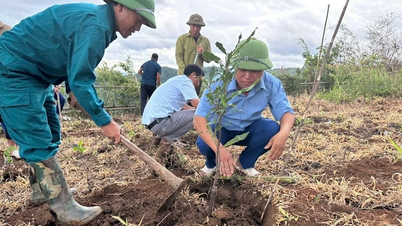
In fact, tourism has become an economic lever, helping people realize that protecting nature is protecting their own future. The motto "live in heritage, protect heritage, and benefit from heritage" has truly become a part of daily life. In villages, self-managed forest protection patrol teams have been established and operate with a high sense of responsibility.
Mr. Vu Xuan Hoan, head of the forest protection team in Hoang Tien village, Dong Thai commune, shared that the team maintains regular patrol activities and assigns personnel to inspect key areas in the forest in shifts.
Upon detecting any unusual signs or traces of wildlife trapping, the team will promptly report to the local authorities for handling. People's awareness of forest protection has significantly improved. They understand that forests are not only a natural resource but also a long-term source of livelihood; therefore, preserving the forest is also protecting their own lives.
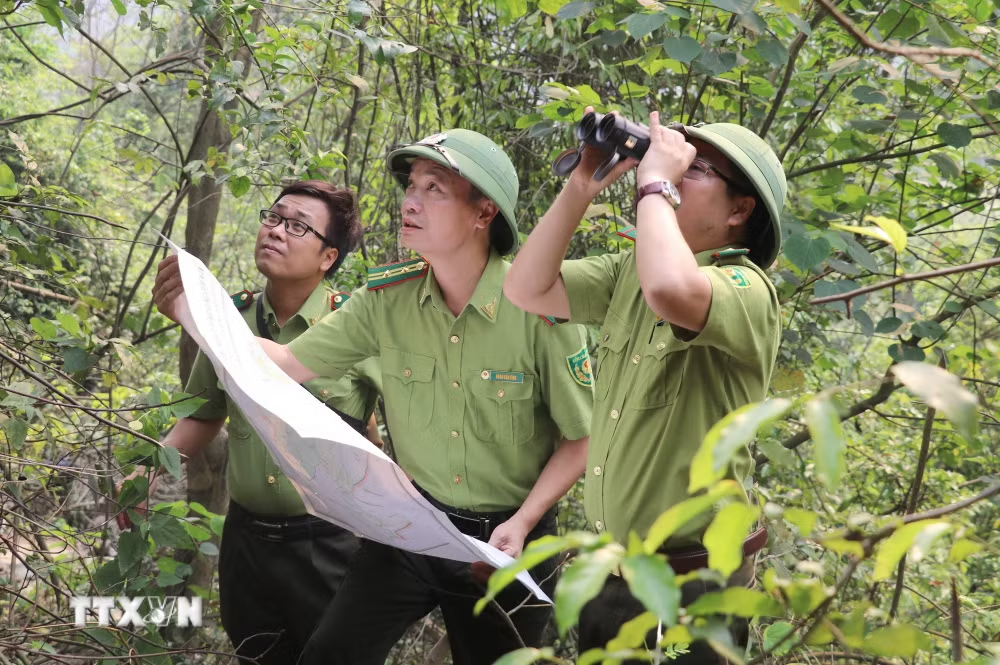
The concerted efforts between the government and the people have yielded impressive results. By 2025, the province's forest cover rate is projected to reach 8.9%. Ninh Binh aims to increase the forest cover rate to 9% by 2030.
Mr. Nguyen Van Thai, Director of Save's Vietnam Wildlife, assessed that the latest survey results show a very positive change in the status of the white-buttocked langur population. Community participation is key to maintaining the habitat and ensuring sustainable development.
Prestigious international accolades such as the World Ramsar Site designation and the International Union for Conservation of Nature (IUCN) Green List awarded to Van Long are testament to the success of its community-based conservation model.
This is a crucial prerequisite for Ninh Binh to continue expanding its integrated governance space, connecting with Tam Chuc, creating a sustainable green heritage area where people and nature coexist harmoniously.
Creating sustainable heritage corridors
To create a highly compelling World Heritage site dossier for UNESCO, experts assert that conservation areas cannot simply consist of isolated "ecological islands."
Currently, although the Van Long Wetland Nature Reserve and Kim Bang Forest are home to the two largest populations of white-buttocked langurs in the world, the geographical distance of more than 7km between these two areas is being divided by transportation systems and human activities.
If isolation continues, these endemic primate populations will face a serious risk of genetic degradation.
Faced with this challenge, the vision of a "Green Corridor" connecting different regions has emerged as an urgent requirement. Tilo Nadler of the Endangered Primate Rescue Centre (EPRC) argues that, to ensure long-term survival, we must restore ecological corridors.
During the period 2026-2027, research should be conducted on building "green bridges" across transportation routes, creating safe migration paths for wildlife. Simultaneously, protective forests should be upgraded to special-use forests to optimize management resources.
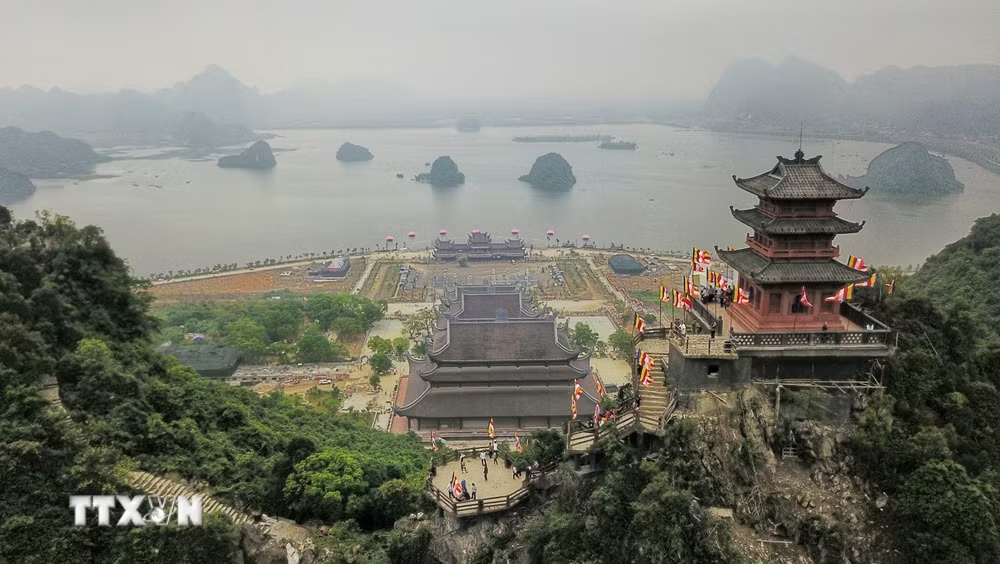
Besides the biological connection, the cultural and tourism spatial linkage between Tam Chuc and Van Long is also considered a groundbreaking step. The Tam Chuc complex, with its lake landscape and massive Buddhist structures, when connected to the pristine ecological space of Van Long, will create a continuous heritage strip that perfectly complements each other.
Mr. Bui Van Manh, Director of the Ninh Binh Department of Tourism, said that the Department is focusing intensely on researching and clarifying the outstanding global values of biodiversity and ecosystems, especially the white-buttocked langur.
In addition, the unit focuses on researching archaeological values, thereby demonstrating the outstanding global values of the nominated heritage site, with the White-faced Langur as an endemic species being studied and proposed to UNESCO for consideration and recognition as a World Heritage Site.
At the macro-level of governance, designating this complex as a heritage site is part of the local government's long-term strategy.
Mr. Tran Song Tung, Permanent Vice Chairman of the Ninh Binh Provincial People's Committee, affirmed that the province's consistent viewpoint is to ensure harmony between preserving and promoting heritage values, protecting the environment, and achieving sustainable socio-economic development.
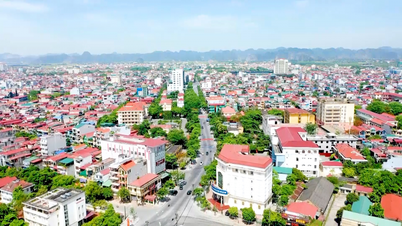
The research and nomination of the Van Long-Kim Bang-Tam Chuc Complex as a World Heritage Site is not only a professional task but also a strategic undertaking, reflecting Ninh Binh province's long-term development vision in building a heritage city, heritage economy, and cultural industry, aiming to make Ninh Binh a centrally-governed city by 2030.
The journey of preserving and building the nomination dossier for the Van Long-Kim Bang-Tam Chuc heritage site reflects Ninh Binh's sustainable development orientation, aiming for a harmonious balance between nature conservation, cultural preservation, and socio-economic development.
Based on natural resources and heritage, the locality is gradually forming a green development space, connecting people with the ecological environment and unique historical and cultural values. This contributes to the long-term preservation of the heritage values of the ancient capital region and enhances Ninh Binh's position on the world heritage map.
Source: https://www.vietnamplus.vn/tam-nhin-trong-chien-luoc-phat-trien-xanh-post1109931.vnp




![[Image] Close-up view of the interchange connecting the two expressways and Long Thanh Airport.](https://vphoto.vietnam.vn/thumb/1200x675/vietnam/resource/IMAGE/2026/05/25/1779703378210_ndo_br_z7863716673926-224453a31600126cce10622af6290afd-4549-jpg.webp)
![[Image] Hanoi's urban life under the challenge of a "scorching hot" environment](https://vphoto.vietnam.vn/thumb/1200x675/vietnam/resource/IMAGE/2026/05/25/1779706979265_nang-nong-t5-2026-minh-duy-7-4636-jpg.webp)





































































Comment (0)