

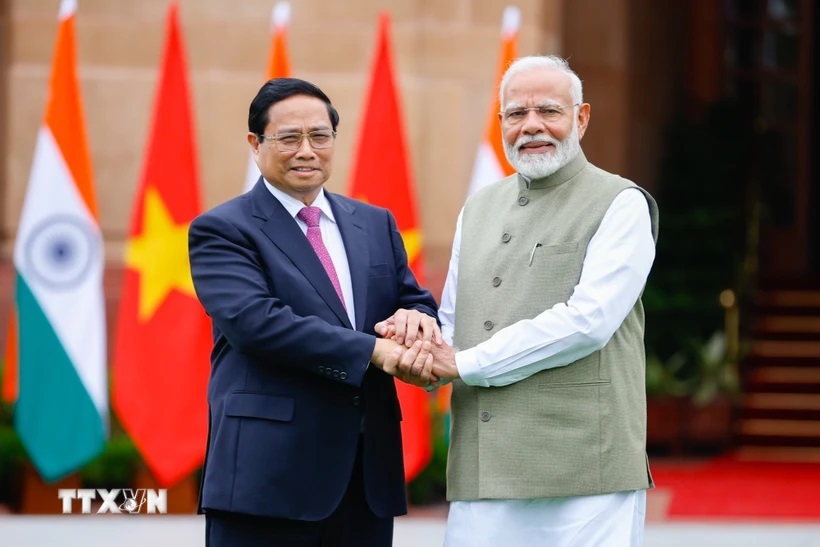
At the invitation of Prime Minister Narendra Modi of the Republic of India, Prime Minister Pham Minh Chinh paid a State visit to India from July 30 to August 1, 2024. Accompanying Prime Minister Pham Minh Chinh was a high-level delegation including many ministers and leaders of various ministries, departments, and agencies of Vietnam.
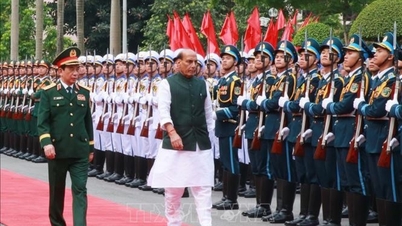
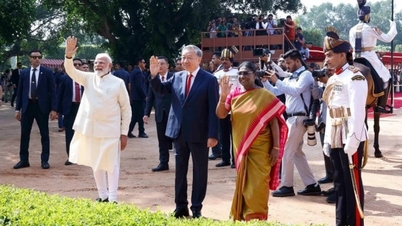
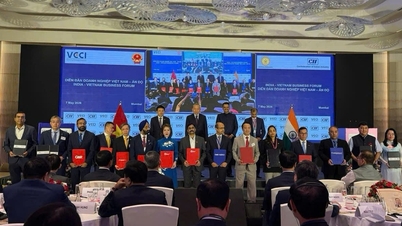
On August 1, 2024, Prime Minister Pham Minh Chinh attended the official welcoming ceremony at the Presidential Palace; laid a wreath at the Mahatma Gandhi Memorial; attended talks and a reception hosted by Prime Minister Narendra Modi; witnessed the signing of bilateral cooperation documents with Prime Minister Narendra Modi; and held a joint press conference. Prime Minister Pham Minh Chinh also met with President Droupadi Murmu, Vice President and Chairman of the Upper House Jagdeep Dhankhar, and received Foreign Minister S. Jaishakar. Prime Minister Pham Minh Chinh also laid flowers at the statue of President Ho Chi Minh in G20 Park, delivered a policy speech at the Indian Council on World Affairs, attended and spoke at the Vietnam-India Business Forum, and met with Indian businesses.
Regarding political relations
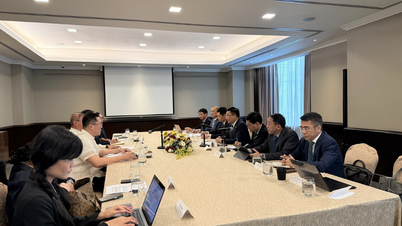
The talks between Vietnam and India took place in a warm and friendly atmosphere. Prime Minister Pham Minh Chinh congratulated Prime Minister Narendra Modi on his historic victory for a third consecutive term and expressed confidence that under Prime Minister Narendra Modi's wise leadership, India will continue to develop strongly and play an increasingly important role and position on the international stage.
The two leaders highly appreciated the long-standing friendship and traditional relationship between India and Vietnam and expressed satisfaction with the strong development of bilateral relations since the two countries upgraded to a Comprehensive Strategic Partnership in 2016. Both sides agreed to continue effectively implementing the outcomes of recent high-level visits and contacts, including the Vietnam-India Joint Vision Statement on Peace, Prosperity and People 2020, as well as the results of this important visit.
The two leaders agreed that the current geopolitical situation demands closer cooperation between Vietnam and India. They noted many similarities in their worldview and expressed support for a greater voice and role for countries in the South in international relations. The two leaders agreed to further strengthen the Vietnam-India Comprehensive Strategic Partnership in all areas.
Building on the positive development of bilateral relations, both sides agreed to maintain regular visits and exchanges at high levels and at all levels.
The two leaders highly appreciated the diverse cooperation mechanisms between the two countries in the fields of diplomacy, security and maritime cooperation, defense cooperation, exchanges between legislative bodies, trade and investment, agriculture, health, civil aviation, information and communication technology, science and technology, including atomic and space energy, tourism and culture… and agreed to strengthen bilateral dialogue in these areas, including the Vietnam-India Joint Committee on Economic, Trade, Science and Technology Cooperation for mutual benefit. The two leaders welcomed the signing of the Action Program to implement the Comprehensive Strategic Partnership for the period 2024 – 2028.
Economic, trade and investment cooperation
As two rapidly developing economies, the two leaders agreed to promote cooperation between governments and businesses to enhance bilateral trade, investment, and technology partnerships. They agreed on the need for closer cooperation in removing trade barriers to facilitate and boost bilateral trade beyond the current level of US$15 billion. They also agreed that reviewing the India-ASEAN Goods Trade Agreement would contribute to making the agreement more user-friendly, simpler, and more conducive to trade between the two countries.
Both sides agreed to continue efforts to promote bilateral investment flows. Vietnam welcomes investment from India in the fields of infrastructure, high technology, core technology, clean technology, information technology, supporting industries and manufacturing, garment, automotive and materials industry, green agriculture, smart agriculture, innovation and entrepreneurship, semiconductors, energy conservation and renewable energy projects, electricity, biogas and polyester fiber… in Vietnam. India welcomes investment from Vietnam in the fields of agriculture, agricultural processing, fisheries, wood processing, information technology, battery manufacturing, infrastructure and urban development, bamboo and forestry products, travel and tourism, digital technology, electric vehicles, healthcare and services in India. These commitments aim to further strengthen economic cooperation between the two countries.
India welcomes Vietnam's decision to join the Disaster Resilience Infrastructure Alliance and hopes it will soon complete its internal procedures to officially join the International Solar Alliance. Vietnam highly appreciates India's Global Biofuel Alliance initiative.
As two coastal countries in the region, the two leaders agreed to promote cooperation in the fields of oceanography, marine science, and the blue economy, as well as enhance capacity in these areas. The two leaders reaffirmed mutually beneficial cooperation in the oil and gas sector, including exploration and exploitation activities in Vietnam's continental shelf.
Both sides agreed to enhance the sharing of experiences in developing regulations and policies to support and promote e-commerce and the digital economy; and to support businesses from both sides in participating in digital platforms and e-commerce to leverage the advantages of e-commerce in enhancing export capacity and sustainably participating in regional and global value chains. The two leaders also encouraged relevant government agencies and businesses from both countries to explore cooperation opportunities in the green economy, circular economy, digital economy, and key industries such as rare earth elements, semiconductors, and nanomaterials.
Defense and security cooperation
The two leaders welcomed the effective implementation of the Vietnam-India Joint Vision on Defence Cooperation to 2030 and the enhanced defence cooperation between the two countries in recent years in training and capacity building, sharing best practices, drills, defence policy dialogue, and defence industry cooperation. The two leaders agreed to further strengthen defence cooperation based on shared priorities and interests, contributing to greater stability in the Indo-Pacific region.
Both sides agreed to further strengthen cooperation in a number of areas such as human resource development, maintaining coordination in peacekeeping operations, hydrography, cybersecurity, information sharing, strategic research, maritime security and safety, search and rescue operations, humanitarian assistance, disaster management, and emergency relief.
The two leaders agreed to expedite the implementation of the Agreement on Hydrology and to establish a joint committee on the matter.
The two leaders welcomed the signing of two projects utilizing the $300 million concessional credit package granted by the Indian Government to the Vietnamese Government.
Creative collaboration, science and technology
The two leaders reaffirmed the importance of digital technology and encouraged the establishment of a framework to promote bilateral cooperation in the field of financial innovation and digital payments between Vietnam and India.
Acknowledging the national priorities of both countries regarding digital transformation and energy transition, the two leaders agreed to encourage enhanced exchanges and cooperation in areas such as digital infrastructure, space technology applications, renewable energy, biotechnology, and disaster resilience technologies.
The two leaders expressed satisfaction with cooperation in the field of using nuclear energy for peaceful purposes and agreed to further enhance opportunities for deeper cooperation as discussed at the 3rd Session of the Vietnam-India Joint Committee on Civil Nuclear Cooperation.
Both sides welcomed the progress in the project to establish the India-ASEAN Satellite Search, Data Collection and Data Processing Center in
Vietnam.
Cultural cooperation, tourism, and people-to-people exchanges.
The two leaders highly appreciated the development cooperation within the framework of the Ganges-Mekong Cooperation through rapid-impact projects and training cooperation, as well as educational scholarships under the Indian Technical Cooperation Programme (ITEC). They also highly valued the establishment of a high-performance center for development and training at the Ho Chi Minh City Post and Telecommunications Institute and the military software park at the Nha Trang University of Information and Communication Technology with the support of the Indian Government.
The two leaders encouraged greater exchanges of research, training, and students between universities, academics, and research institutions of the two countries within the framework of India's "Viksit Bharat @ 2047" vision and Vietnam's vision of being a developed, high-income country by 2045. The two leaders also supported cooperation between research institutions on issues of interest to the Southern countries.
The two leaders appreciated the increased frequency of direct flights between the two countries, contributing to an increase in passenger numbers and two-way tourism; and encouraged further strengthening of connectivity and tourism between Vietnam and India.
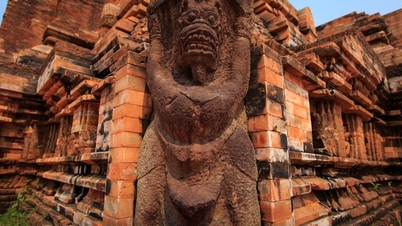
Based on the historical and heritage ties between the two countries, the two leaders supported further exchanges of Buddhist students and dignitaries, pilgrims, and the development of Buddhist institutes and facilities. Vietnam appreciated India's commitment to the restoration and preservation of the My Son World Heritage Site and the activities of the Archaeological Survey of India at tower groups A, H, and K, as well as at the upcoming tower group F.
India highly appreciates Vietnam's support in organizing the annual International Yoga Day in many provinces and localities across Vietnam.
The two leaders supported further cooperation between yoga institutions in the two countries and bilateral exchanges in the field of traditional medicine, including medicinal plants. They also agreed to strengthen cultural exchanges and media cooperation between the two countries.
Regional and international cooperation
Both sides agreed on the central role of ASEAN in the evolving regional architecture for the peace, stability, and prosperity of the region. They supported further strengthening the ASEAN-India Comprehensive Strategic Partnership, thereby complementing bilateral relations with each member state. The two leaders appreciated the ASEAN-India Joint Statement on cooperation in implementing the ASEAN Vision on the Indo-Pacific (AOIP) for peace, stability, and prosperity in the region, a document that contributes to promoting cooperation opportunities between the AOIP and India's Indo-Pacific Initiative. The two leaders agreed to continue strengthening cooperation and mutual support in all multilateral forums. India appreciated Vietnam's consistent support for India's bid to become a permanent member of the United Nations Security Council when the body undergoes reform.
Emphasizing the link between security and prosperity, the two leaders reaffirmed the importance of maintaining peace, stability, security, and freedom of navigation and overflight in the South China Sea, peacefully resolving disputes in accordance with international law, particularly the 1982 United Nations Convention on the Law of the Sea (UNCLOS), without threatening or using force. The two leaders stressed the importance of demilitarization and self-restraint, urging sovereign states and other countries to refrain from actions that could further complicate the situation and affect peace and stability. They stressed that UNCLOS is the legal framework governing all activities in the seas and oceans, and serves as the basis for determining the extent of maritime zones, sovereign rights, jurisdiction, and legitimate interests in those zones. The two leaders reiterated their call for the full and effective implementation of the Declaration on the Conduct of Parties in the South China Sea (DOC) and the early completion of a substantive and effective Code of Conduct in the South China Sea (COC) that is consistent with international law, particularly UNCLOS, and does not affect the legitimate rights and interests of states, including those not participating in the negotiations.
Both sides strongly condemned terrorism in all its forms and manifestations, including cross-border terrorism; emphasized the importance of international cooperation in combating this threat, in accordance with international law, particularly the United Nations Charter; and reaffirmed their commitment to participating in the common efforts of the international community.
The two leaders welcomed the signing of the bilateral cooperation agreements, as outlined in the attached annex.
Prime Minister Pham Minh Chinh thanked the Indian side for the warm welcome extended to him and his delegation. The Prime Minister respectfully invited the Indian Prime Minister to visit Vietnam.
In the presence of Prime Minister Pham Minh Chinh and Indian Prime Minister Narendra Modi, ministries, agencies, and organizations of the two countries exchanged nine cooperation documents in the fields of health, law and justice, diplomacy, human resource training, agricultural science, broadcasting, tourism, culture, the Action Program for implementing the Comprehensive Strategic Partnership 2024-2028, and the Note on Vietnam's accession to the Disaster Resilience Infrastructure Alliance (CDRI). The two sides adopted a Joint Statement on strengthening the Comprehensive Strategic Partnership, and the two Prime Ministers pressed the button to inaugurate the Military Software Park in Nha Trang.
Source: https://kinhtedothi.vn/tang-cuong-quan-he-doi-tac-chien-luoc-toan-dien.html


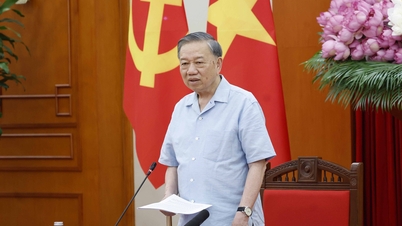
![[Photo] General Secretary and President To Lam presides over a meeting on preparations for the review of one year of operation of the three-tiered government system.](https://vphoto.vietnam.vn/thumb/1200x675/vietnam/resource/IMAGE/2026/06/02/1780391821195_a1-bnd-4595-9717-jpg.webp)








































Comment (0)