

With fierce competition in the global market, the Vietnamese wood industry needs to continue innovating and improving to overcome challenges and expand export markets.
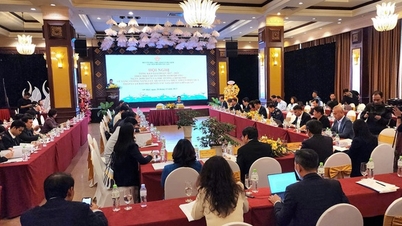
A reporter from the Industry and Trade Newspaper had an interview with Mr. Ngo Sy Hoai - Vice President and General Secretary of the Vietnam Wood and Forest Products Association (VIFORES) on the sidelines of the trade promotion meeting with the system of Vietnamese trade offices abroad in February to clarify the difficulties facing the Vietnamese wood industry in the new context.
Diversify export markets.
PV : In the context of a volatile global economy , Vietnamese wood export businesses are facing many challenges, especially from new tax policies of importing countries, notably the United States. What are your thoughts on this issue?
 |
| Mr. Ngo Sy Hoai - Vice President and General Secretary of the Vietnam Wood and Forest Products Association (VIFORES). Photo: D.N. |
- Mr. Ngo Sy Hoai : In the first two months of this year, Vietnam's wood exports faced difficulties due to the impact of trade protectionist policies from the United States - the main consumer market, accounting for more than 50% of Vietnam's total wood export value. Notably, recently, President Donald Trump has taken steps to investigate and potentially impose tariffs on wood products, including the risk of a 25% tariff on sawn timber and imported forestry products.
Vietnamese businesses are currently facing difficulties in negotiating and signing contracts with US partners due to the uncertainty surrounding these tax policies.
In this context, maintaining and expanding export markets is crucial for Vietnam's wood industry. However, finding alternative markets is not easy. Despite efforts to expand into markets such as New Zealand and the Middle East, these markets are still relatively small and cannot fully compensate for the decline in the US market. Vietnam must assert its position through product quality and supply capabilities to continue maintaining its position in the US market.
More importantly, the Vietnamese timber industry needs to implement long-term measures such as strengthening the value chain, building sustainable brands, and improving processing techniques to compete globally. At the same time, the government and timber industry associations need to actively participate in international trade negotiations to minimize the risks from unfavorable tariff policies of trading partners.
In terms of trade relations, Vietnam is not simply an exporter but also imports a large amount of timber from the United States. This demonstrates the interdependence and the necessity of maintaining a mutually beneficial bilateral trade relationship. This will not only help stabilize the supply of raw materials for Vietnam's timber industry but also promote the sustainable development of the entire sector.
With increasingly fierce competition in the global market, the Vietnamese wood industry needs to continue innovating and improving to overcome current challenges and move towards sustainable development in the future.
Practical action is needed to support the industry.
PV: In the context of the new US tariffs, as a representative of Vietnamese timber businesses, what recommendations do you have for the Government to support the industry, sir?
- Mr. Ngo Sy Hoai : In the context of the new US tax policy potentially causing difficulties for the Vietnamese wood industry, wood exporting businesses propose that the Government, including the Ministry of Industry and Trade, the Ministry of Finance, the Ministry of Agriculture and Environment , and other relevant ministries and agencies, should consider and take practical actions to support the industry.
In 2024, Vietnam imported $323 million worth of wood from the United States, of which $300 million was round timber with a zero tariff rate, but the remaining $23 million consisted of processed products from the United States subject to tariffs of 20-25%.
 |
| In 2024, Vietnam imported $323 million worth of timber from the United States. Photo: Hawa |
Currently, the majority of Vietnam's exports to the United States are not subject to tariffs, but products such as plywood are still subject to an 8% tariff. Although the two countries have granted each other maximum concessions, Vietnam still needs to be cautious if the United States decides to apply retaliatory tariffs to protect its domestic market.
To maintain their current export position, businesses emphasize the importance of specific support measures from the Government, which not only help the wood industry continue to develop but also facilitate the maintenance and expansion of export markets, contributing to national economic stability.
PV: Currently , Vietnamese timber businesses are facing many difficulties related to timber traceability. So, in your opinion, what solutions should be implemented to support businesses in expanding their export markets ?
- Mr. Ngo Sy Hoai : In the timber industry, the most prominent issue today is the traceability of timber, especially at the household level. This creates significant difficulties for businesses expanding their markets.
When farmers sell timber, they themselves don't face tax difficulties, but when the timber passes through the hands of traders to reach factories, this becomes a complex issue. Most traders are not registered businesses and lack valid invoices and documents, making it difficult for businesses to purchase raw materials. They are required to gather all the necessary paperwork to complete value-added tax (VAT) records and to explain the situation to relevant authorities. This creates a cumbersome and time-consuming process that wastes resources for businesses.
In fact, businesses have repeatedly petitioned authorities to find solutions to alleviate this burden of legal procedures. Therefore, I believe that inter-agency cooperation is needed to find feasible solutions, thereby creating more favorable conditions for businesses in their operations.
Effective collaboration among all stakeholders, from farmers and traders to intermediate processing businesses, will optimize the supply chain and benefit all participants. In the current context, simplifying legal procedures and facilitating business operations will not only enhance the competitiveness of Vietnam's timber industry in the international market but also ensure its sustainable economic development.
Thank you very much, sir!
| To overcome difficulties for Vietnamese goods in general, and wood products in particular, and to create opportunities for export to the US market, Mr. Hoai recommended that businesses urgently develop a specific roadmap for Vietnam to protect its trade interests against potential tariff measures from the administration of President Donald Trump, while strengthening strategic cooperation with the US to ensure sustainable development in bilateral relations between the two countries. |
Source: https://congthuong.vn/tang-nang-luc-canh-tranh-mo-rong-thi-truong-xuat-khau-go-377314.html














































































Comment (0)