
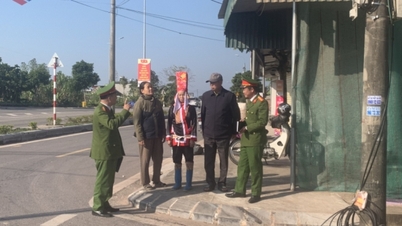
The road in Cai Gian village (Ba Che commune) has been expanded and improved, making travel more convenient for the local people. Photo: Le Nam
Significant change
With its strategically important location, Quang Ninh is not only one of the dynamic economic growth poles in the North, but also plays a crucial role in national defense and security, foreign relations, and environmental protection. Within this overall development, the ethnic minority and mountainous regions are of particular significance, serving as both the long-standing dwelling places of ethnic communities and strategic areas requiring comprehensive, long-term, and sustainable investment.
Entering the 2021-2025 period, ethnic minority and mountainous regions remain the area with the majority of poor households in the province; production is still small-scale and fragmented; attracting investment faces many difficulties; the quality of human resources, education , and healthcare is still limited; and development disparities between regions are still evident. Based on this reality, Resolution No. 06-NQ/TU and national target programs have become important foundations for the province to focus resources, reorganize development space, and gradually remove the "bottlenecks" in ethnic minority and mountainous regions.
After 5 years of implementation, Quang Ninh has achieved many important results, with most targets completed and exceeded. During the 2021-2025 period, the total resources for implementing programs to develop ethnic minority and mountainous regions reached over 120,000 billion VND, of which non-budgetary capital accounted for more than 80%, demonstrating the effectiveness in mobilizing and utilizing social resources.
The province prioritizes investment in socio-economic infrastructure in ethnic minority and mountainous areas, focusing on synchronization, interconnectedness, and practicality to meet the needs of the people and promote production development. During the 2021-2025 period, Quang Ninh completed 15 out of 15 key transportation projects connecting ethnic minority, mountainous, border, and island areas; simultaneously implementing the Rural Transportation Improvement and Upgrading Project for the 2024-2025 period, with a vision to 2030, encompassing 73 project categories, primarily concentrated in ethnic minority, mountainous, border, and island areas. Alongside this, infrastructure for information, electricity, water, education, health, and culture continues to receive investment; 100% of villages and hamlets have mobile phone coverage, 100% of households use safe electricity, and 100% of ethnic minority households use clean water...
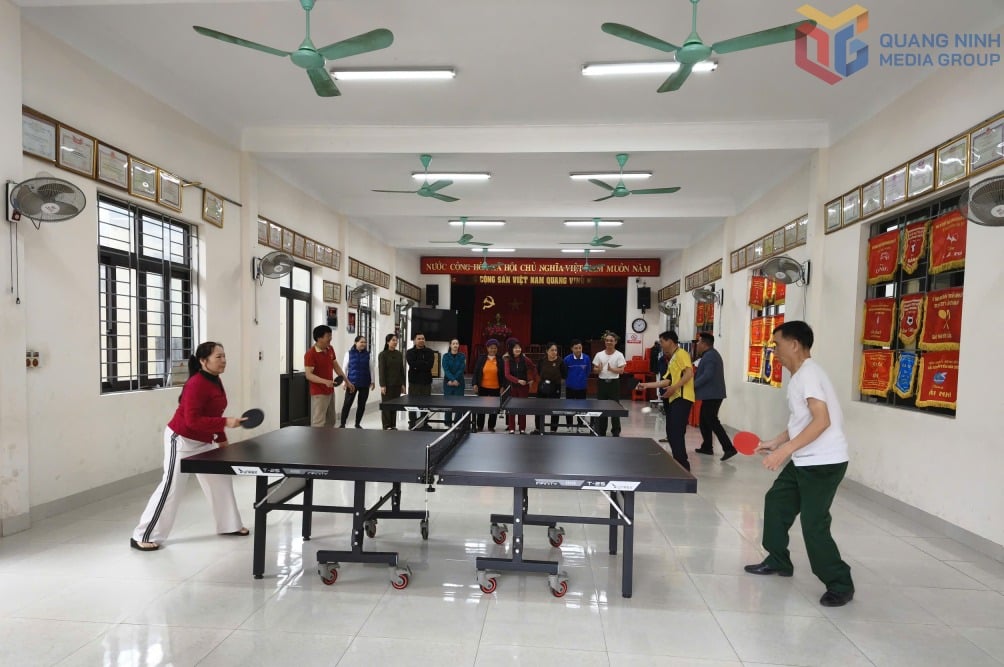
The people of Binh Cong 2 village, Binh Lieu commune, enjoy recreation and sports activities at the village's cultural center.
Specifically for 2025, localities will continue to proactively review, prioritize, and implement infrastructure investment according to the province's overall plan. Implementing Plan No. 272/KH-UBND, localities will concretize it into specific transportation, drainage, and residential area infrastructure projects suitable to the conditions of each locality.
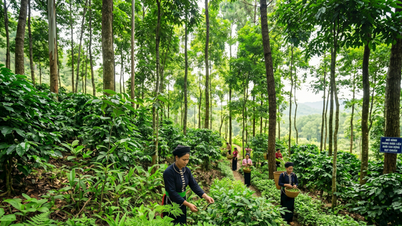
With gradually improving infrastructure, the economic structure of ethnic minority and mountainous areas is shifting in a positive direction, gradually reducing the proportion of agriculture, forestry, and fisheries in the GRDP, while increasing production value through production reorganization and the development of a commodity economy. Forestry continues to be identified as a pillar in many areas; in the 2021-2025 period, the area of concentrated forest planting reached over 85,900 hectares, land and forest allocation was accelerated, gradually improving management efficiency and the economic value from forests. Alongside this, the One Commune One Product (OCOP) program continues to be widely implemented, contributing to the formation of distinctive products, promoting production linkages with consumption, and creating a foundation for sustainable rural economic development.
The province has achieved its sustainable poverty reduction target three years ahead of schedule. By the end of 2025, Quang Ninh will no longer have any poor households according to the multidimensional poverty standard applied in the 2021-2025 period as stipulated by the Government. These results demonstrate the initial effectiveness of shifting from mere support to creating livelihoods, reorganizing production towards a commodity-based approach, gradually enhancing people's initiative, and improving development efficiency at the grassroots level.

Cassava vermicelli production at Binh Lieu Trading and Service Joint Stock Company. Photo: Nguyen Hue
New requirements for sustainable development
Quang Ninh province has a natural area of over 6,206 km², of which 93.85% is mainland and 6.15% is island communes; its topography includes midland, mountainous, and coastal areas, with forests and forest land accounting for over 70%. This is an important foundation for developing forestry economy, green economy, and ecotourism.
The province currently has 54 grassroots-level administrative units, including 13 communes, special mountainous zones, and 21 areas belonging to the Ethnic Minority and Mountainous Region I in the 2025-2030 period, along with 49 villages, hamlets, and neighborhoods in ethnic minority and mountainous regions. This area occupies more than 85% of the province's total natural area and is linked to key areas for national defense, security, and border protection.
As of November 30, 2025, the province has 400,894 households with over 1.46 million people; of which ethnic minorities account for 46,763 households, nearly 177,000 people, representing 12.07% of the province's total population.
Despite significant achievements, the ethnic minority and mountainous regions remain core areas of poverty, and poverty reduction efforts are not yet truly sustainable. Entering a new phase, the requirements extend beyond poverty reduction to sustainable development and a substantial narrowing of the development gap.
In reality, the livelihoods of a segment of the population remain unstable; the quality of human resources is limited; the competitiveness of products is not high; and the risk of falling back into poverty is still present. These are issues that require comprehensive and fundamental solutions in the coming period.
In this context, creating momentum for development needs to focus on key areas such as perfecting specific mechanisms and policies; developing a green economy, especially forestry and community tourism; promoting digital transformation; improving the quality of human resources; and simultaneously preserving and promoting the cultural identity of ethnic groups.
Currently, Quang Ninh province is urgently finalizing the Project for implementing the national target program on building new rural areas, sustainable poverty reduction, and socio-economic development in ethnic minority and mountainous areas for the period 2026-2030. This project clearly defines the objectives, roadmap, and resource priorities. This is an important basis for continuing to effectively implement the programs, maintaining the achievements already made, and gradually improving the quality of development in ethnic minority and mountainous areas in the coming period.
Tran Thanh
Source: https://baoquangninh.vn/tao-dong-luc-phat-trien-vung-kho-3402853.html




























![[Photo] Reception to welcome General Secretary and President To Lam and his wife on their State visit to the Philippines](https://vphoto.vietnam.vn/thumb/1200x675/vietnam/resource/IMAGE/2026/06/01/1780295488620_vna-potal-chieu-dai-chao-mung-tong-bi-thu-chu-tich-nuoc-to-lam-va-phu-nhan-tham-cap-nha-nuoc-toi-philippines-8798060-7855-jpg.webp)




































































Comment (0)