


Electrodes made from commercially available plastic (top row) are more difficult to decompose than electrodes made from "living plastic" (bottom row). Photo: ACS
Some microorganisms (bacteria, fungi) are capable of breaking down long polymer chains (plastics, bioplastics) by secreting specific extracellular enzymes. Based on this mechanism, scientists genetically modified Bacillus subtilis spores to produce plastic-degrading enzymes, then directly inoculated them into the original plastic material. These microorganisms will remain dormant until activated by a hot "nutrient solution," after which they will completely consume the plastic within a few days, leaving no microplastic particles behind.
This isn't the first time scientists have used microorganisms to break down plastic. In 2024, polycaprolactone (PCL) was used to test the ability of an enzyme secreted by microorganisms to decompose it. Meanwhile, in the US, a research team at the University of California also created a highly elastic TPU plastic containing microbial spores that can decompose when disposed of in landfills.
However, the innovation of the Hong Kong scientists lies in two aspects. Firstly, instead of relying on a single enzyme to break down the polymer, they modified Bacillus subtilis strains to produce two enzymes that work in synergy and complement each other. Specifically, one enzyme breaks down the long polymer chains, disrupting their original structure, while the other enzyme breaks them down. Compared to the single-enzyme method, the dual-enzyme approach is significantly more effective, almost completely breaking down PCL in just 6 days.
The second innovation lies in the direct embedding of microbial spores into the base plastic material, resulting in a "living plastic" product. This new material possesses durable and flexible mechanical properties similar to conventional PCL membranes. When a nutrient solution is added as a catalyst at 50°C, it activates the bacterial spores, initiating the decomposition process.
In the experiment, researchers used the aforementioned "living plastic" to create flexible electrodes. The results showed that the product functioned normally and self-decomposed upon contact with a catalyst. This process took two weeks without leaving any trace, including microplastic particles.
While emphasizing the significant practical applications of this research, the scientists acknowledge the limitation of the new type of plastic: its degradation process still depends on environmental conditions or catalysts. Therefore, they are seeking to develop water-based spore activators, as most plastic waste ultimately ends up in rivers, lakes, and the sea. They also hope the new method can be applied not only to PCL but also to other types of plastics, especially those commonly used to create disposable plastic products.
MAI QUEN (According to newatlas, American Chemical Society)
Source: https://baocantho.com.vn/tao-ra-nhua-song-tu-phan-huy-sinh-hoc-a204604.html

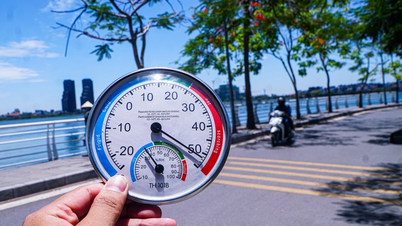
![[Image] Hanoi's urban life under the challenge of a "scorching hot" environment](https://vphoto.vietnam.vn/thumb/1200x675/vietnam/resource/IMAGE/2026/05/25/1779706979265_nang-nong-t5-2026-minh-duy-7-4636-jpg.webp)










































































Comment (0)