

- The unique significance of the lion dance tradition during Tet (Vietnamese New Year).
- Spreading the law, sharing kindness and compassion during Tet.
As Tet approaches, the atmosphere is unhurried. Houses are cleaned thoroughly to welcome ancestors for family reunions. Ancestral altars are meticulously wiped clean, incense fills the air, and fresh flowers are arranged in the traditional style: yellow chrysanthemums, gladioli, and delicate, humble apricot blossoms. In the kitchen, mothers and sisters gather to make jam and wrap banh chung and banh tet (traditional Vietnamese rice cakes). In front of the gate, yellow apricot blossoms bloom profusely, their gentle fragrance carried on the cool spring breeze. All of this creates a gentle, unpretentious spring in Hue .
 Thai Hoa Palace, located within the Imperial Citadel of Hue, was formerly the place where the Nguyen Dynasty emperors and officials held court. Today, it is a popular tourist destination for both domestic and international visitors.
When talking about spring in Hue, one cannot fail to mention Thanh Tien paper flowers, an exquisite handcrafted product of the traditional craft village. These flowers appear everywhere: on altars, shelves, corners of the house, and even decorating the five-fruit offering tray. These vibrant, handcrafted paper flower branches possess a regal beauty, adding warmth and brilliance to the Tet (Lunar New Year) atmosphere while maintaining an elegant touch.
Hue's Tet cuisine is a unique feature. Sticky rice cakes (bánh tét) with mung bean or pork filling, spicy ginger jam, coconut jam, lotus seed jam, dragon and phoenix-shaped rice cakes... The elaborate feast includes Hue-style pork sausage (chả Huế), pork head cheese (giò thủ), pickled vegetables (dưa món), pickled shallots (củ kiệu), and meat marinated in fish sauce (thịt ngâm mắm). The five-fruit platter, harmoniously arranged according to the five elements, resembles a work of art.
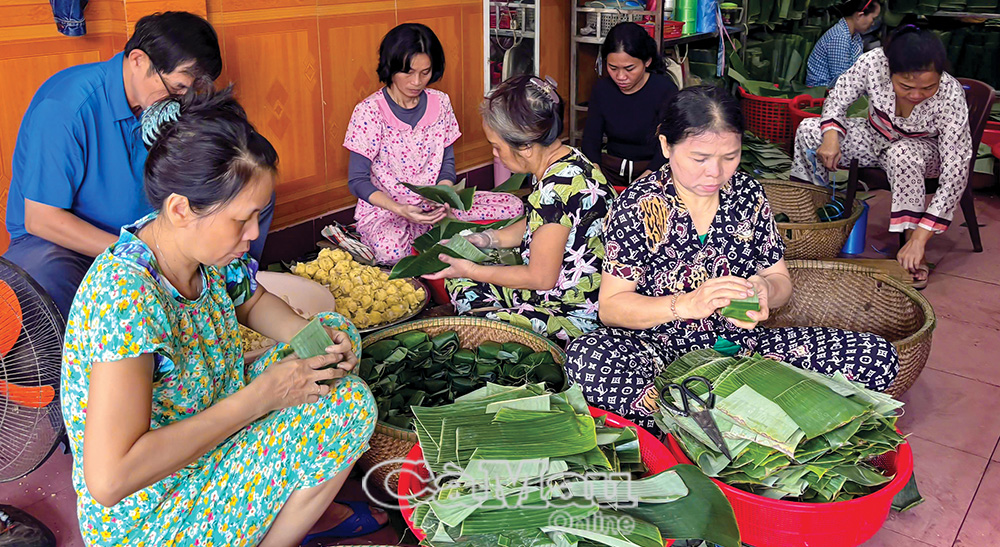 The twelfth lunar month is a time when families gather to make banh chung and banh tet (traditional Vietnamese rice cakes) to welcome spring and celebrate Tet.
Hue's Tet (Lunar New Year) is a time for quiet family reunions and a time to visit temples at the beginning of the year to pray for peace and blessings. Early on the first day of the new year, people in Hue flock to Thien Mu Pagoda, Dieu De Pagoda, and other ancient temples to light incense, listen to the ringing of bells, and pray for a peaceful new year. The atmosphere is serene and sacred, with swirling incense smoke and graceful crowds in traditional ao dai dresses, creating a spiritual scene characteristic of the ancient capital.
Playgrounds, streets, and parks are meticulously decorated with flowers characteristic of Hue: potted yellow apricot blossoms line the walkways, vibrant bougainvillea adorns temple gates and miniature landscapes, and fresh flowers harmoniously combined to create a poetic and refined spring atmosphere. Elderly people enjoy Hue lotus tea brewed in purple clay teapots, engaging in gentle conversation; children play traditional games like O An Quan and blindfolded tag; and young people leisurely stroll along the Perfume River under the shade of ancient trees.
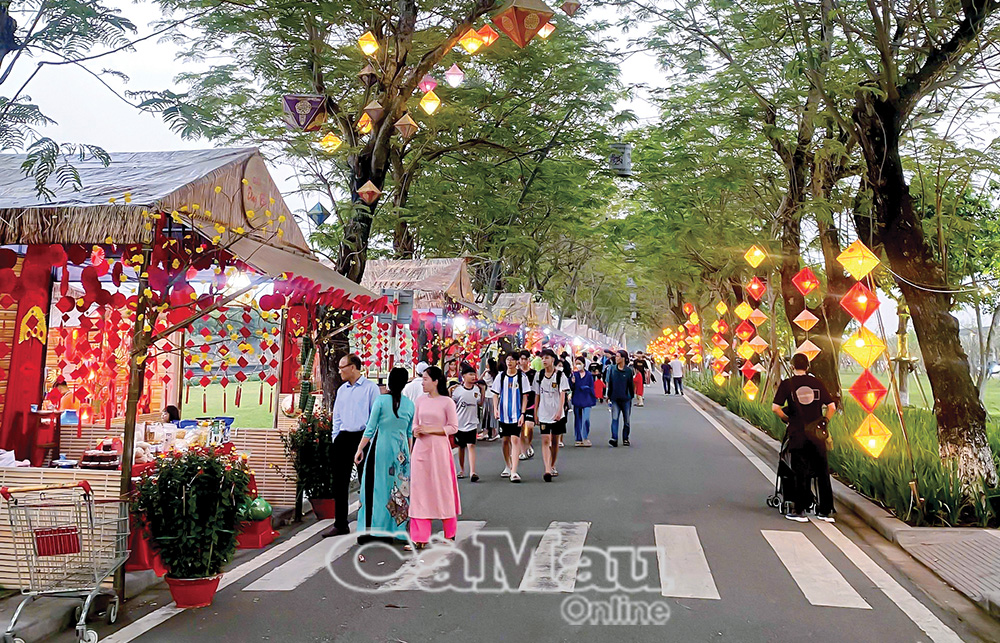 Young men and women enjoy a spring stroll on the pedestrian streets within the Hue Imperial Citadel.
Despite the increasing modernization of society, Tet in Hue still retains its ancient essence: a blend of refined royal customs and warm family affection, between solemn rituals and simple, genuine life. When Tet arrives, Hue is not extravagant or ostentatious, but quietly radiates a profound beauty, an occasion for people to reflect on their roots, show filial piety, and strengthen family bonds.
Performed by Dao Minh Tuan
Source: https://baocamau.vn/tet-hue-net-van-hoa-thanh-tao-a126295.html
































































Comment (0)