

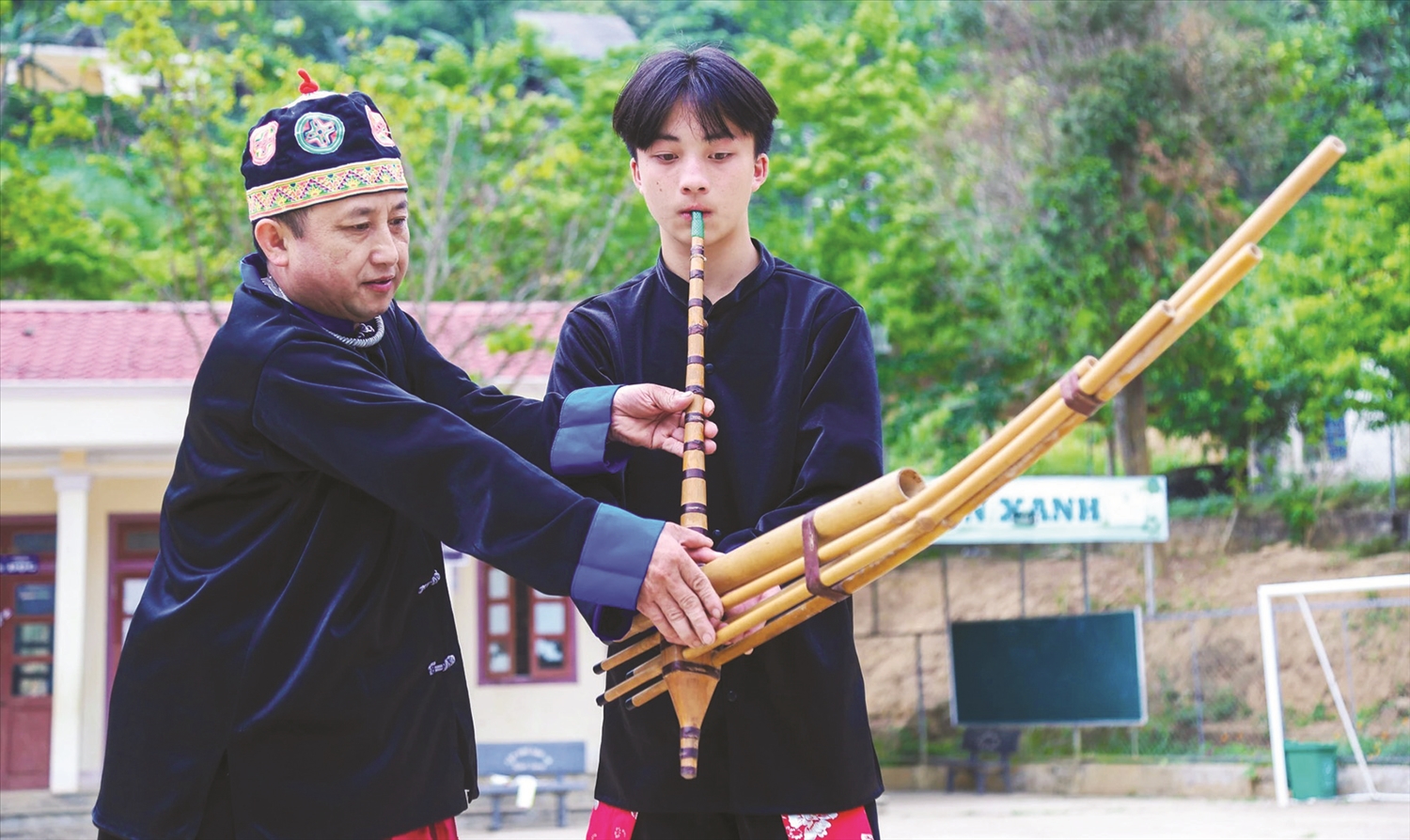
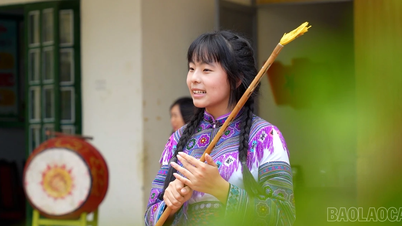
According to folk artist Vu Lau Phong from Huoi Giang 1 village, Tay Son commune, Ky Son district, Nghe An province, the Mong people on the border of Nghe An province consider the Hmong flute (khen) as their most precious spiritual child. Mr. Phong was taught how to play the khen by his grandfather and father, Vu Pa Lia, when he was just over 10 years old. His family has been famous for three generations of Hmong flute players throughout the Ky Son region.
For Mr. Vu Lau Phong, the sound of the khaen (a type of bamboo flute) has permeated his soul since he was a baby, carried on his mother's back, and accompanied his father to the fields. But it wasn't until he was 10 years old that he officially became a "close friend" of the khaen. His passion for this traditional instrument, combined with his innate talent, laid a solid foundation for Mr. Phong's dedication to the khaen for over 40 rice and field seasons.
Among the traditional Hmong musical instruments such as the leaf horn, mouth harp (da), tra lien do (vertical flute), tra blai (transverse flute), plua to (two-stringed fiddle), tra sua di (bird-calling flute)..., Mr. Phong can play 10 instruments, but he is best at playing the khèn and flute. He confided: "Khèn and flute are difficult instruments to play well, because when playing them, you have to regulate your breath to achieve the desired melodious and varied tones."
Leaving Huoi Giang 1, we arrived at Pha Noi, Muong Tip commune, Ky Son district – a village perched precariously beside a small stream, with houses made of dark brown cypress wood. Suddenly, the melodious sound of a bamboo flute drifted from somewhere, sometimes whispering sweet nothings, sometimes soaring and resonant. Following the sound, we found ourselves in the house of a young father playing a flute, with his two small children beside him.
When a visitor arrived, the young father stopped playing the mouth organ and greeted them. That young father was Va Ba Di, just over 30 years old, but he was one of the best mouth organ players in Pha Noi village.
“When did you learn to play the bamboo flute?” We began the conversation. “I’ve loved the bamboo flute since I was a child, about this tall,” he said, pointing to his waist. “Almost 10 years old!”
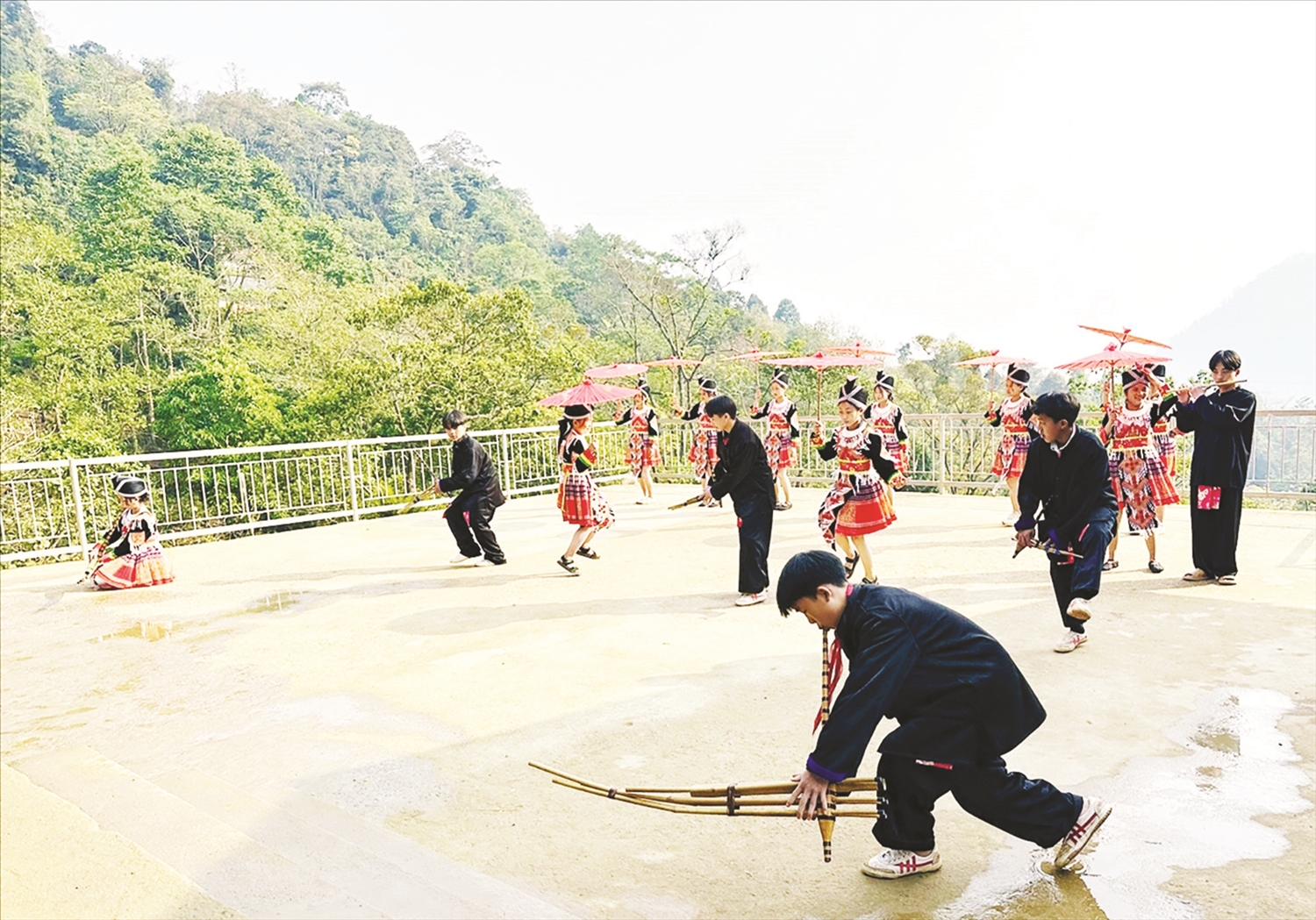
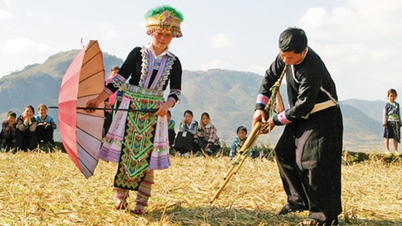
And Auntie said that the Hmong people have quite a few Hmong flute dances. A person considered skilled at playing the Hmong flute must know how to play and dance to at least six flute melodies. The simplest melody is called "tờn đí". Learning this melody is not easy at all, as it is the first exercise. Mastering the flute and the notes is already a difficult journey, and for beginners, being able to play a piece of music is even more challenging.
A skilled flute player isn't necessarily a beautiful dancer. The dance moves, seemingly simple at first glance, require considerable effort and perseverance to master. My aunt recounted, "When I first started learning to dance with the flute, just practicing the movements of playing the flute while kicking my legs forward or backward took a whole lunar cycle."
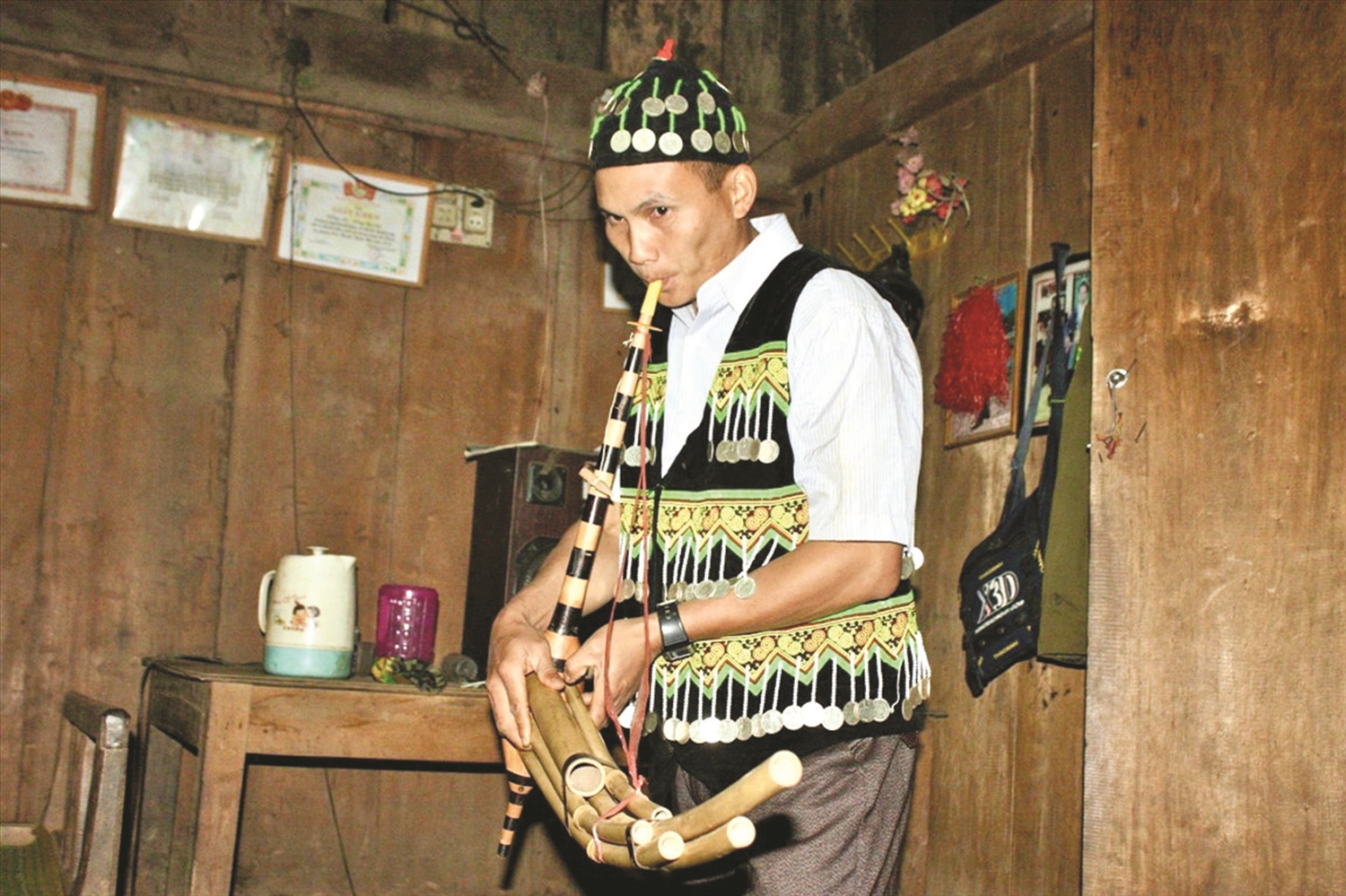
By now, even the most difficult part of the khene dance—the movement of simultaneously playing the khene and somersaulting forward and backward—no longer poses a challenge for Va Ba Di. Dances that simply involve swaying the limbs to the rhythm of the music, or circling while kicking the feet, are all quite simple. "Khene dances require both skill and physical strength, because the khene melody must continue uninterrupted while dancing. If the music stops, the dance becomes meaningless," Di explained.
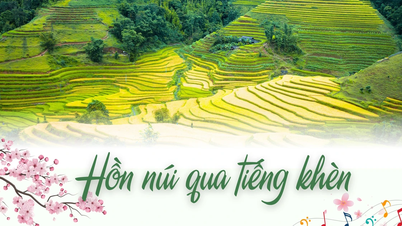
In the Hmong villages throughout the highland districts of western Nghe An province, such as Ky Son, Tuong Duong, and Que Phong, the sound of the Hmong flute and the Hmong flute dance have long been an integral part of the ethnic group's soul. The sound of the flute is lively and joyful during celebrations, festivals, and weddings, and somber during funerals and mourning ceremonies.
In the flow of modern life, the sound of the khene (a traditional Vietnamese wind instrument) and khene dances are also subject to the law of blending and fading... This is also the concern of artisans who love national culture as they journey to find young people to pass on this heritage today.

![[Photo] The General Secretary, President and his wife begin their state visit to the Philippines.](https://vphoto.vietnam.vn/thumb/1200x675/vietnam/resource/IMAGE/2026/05/31/1780230559452_anh-man-hinh-2026-05-31-luc-19-28-11.png)
![[Image] Hanoi Police officially crowned champions of V-League 2025/2026](https://vphoto.vietnam.vn/thumb/1200x675/vietnam/resource/IMAGE/2026/05/31/1780244769054_ndo_br_039d561b692be875b13a-jpg.webp)
![[Photo] Solemn bathing ceremony and Buddha procession in Hue](https://vphoto.vietnam.vn/thumb/1200x675/vietnam/resource/IMAGE/2026/05/31/1780228263543_1-jpg.webp)
![[Photo] Admire the coral "masterpiece" amidst the million-year-old heritage of Dak Lak province.](https://vphoto.vietnam.vn/thumb/1200x675/vietnam/resource/IMAGE/2026/05/31/1780221235105_anh-man-hinh-2026-05-31-luc-16-53-27.png)














![[Video] Sunset at Lap An Lagoon – Where the sun sets over the fishing nets](https://vphoto.vietnam.vn/thumb/340x192/vietnam/resource/IMAGE/2026/05/31/1780192137701_beach-landscape-sea-water-nature-grass-745871-pxhere-com.jpeg)





























![[Photo] Admire the coral "masterpiece" amidst the million-year-old heritage of Dak Lak province.](https://vphoto.vietnam.vn/thumb/402x226/vietnam/resource/IMAGE/2026/05/31/1780221235105_anh-man-hinh-2026-05-31-luc-16-53-27.png)




























Comment (0)