

Recently, theFPT Long Chau Pharmacy and Vaccination System at 366 Provincial Road 10 (Binh Tan District, Ho Chi Minh City) provided rapid emergency care, saving the life of a stroke patient.
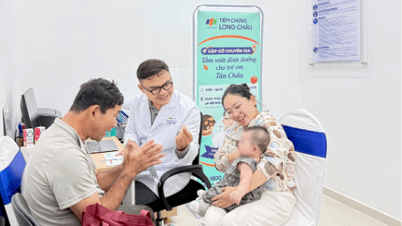
Doctors at the emergency vaccination center provide rapid treatment for stroke patients.
Accordingly, on the morning of October 30th, Mr. PVT, 62 years old, experienced a critical condition and suddenly fell while traveling on the road. His family intended to take him home, but Mr. T. requested to be transferred to the nearby FPT Long Chau Pharmacy and Vaccination System for medical assistance.
 |
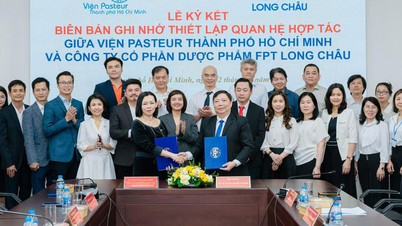
| Leaders of the Ho Chi Minh City Department of Health congratulated the medical staff at FPT Long Chau. |
Upon receiving Mr. T.'s case, Dr. Ngo Tran Nhat Giang at the FPT Long Chau pharmacy and vaccination center, located at 366 Provincial Road 10, assessed the situation as an emergency, suspecting he was experiencing a heart attack.
In that critical moment, Dr. Giang quickly coordinated with the nursing team, administering crushed aspirin and clopidogrel orally to Mr. T. to minimize the risk of complications. The center also urgently called an ambulance to take the patient to Cho Ray Hospital. Mr. T. was subsequently accurately diagnosed with myocardial infarction, underwent stent placement, and has now overcome the critical condition.
On the morning of November 1st, Ms. Nguyen Thi Minh Tam, Regional Business Supervisor of FPT Long Chau, along with Doctor Giang, visited the hospital to inquire about Mr. T.'s health and encourage him during his recovery.
This is not an isolated case. Previously, on October 11, 2024, the FPT Long Chau Pharmacy and Vaccination Center, located at 441 Ngo Quyen Street, Son Tra District, Da Nang , successfully treated a child who had choked on candy while on their way home from school. The child was brought to the center by their parents in a state of difficulty breathing and poor respiration.
Doctor An at the clinic immediately performed the Heimlich maneuver to save the child. This method is used in cases of severe and life-threatening airway obstruction caused by foreign objects or food.
Following emergency treatment, the object was removed, and the baby's breathing returned to normal. Once the baby's health stabilized, the family expressed their sincere gratitude to Dr. An for his timely assistance.
On July 6, 2024, Dr. Tran Thi Nhu Quynh, Nurse Nguyen Thi Ngan Chi, and other staff members of the FPT Long Chau pharmacy and vaccination center located at 203 3/2 Street (District 10) were also honored by the Ho Chi Minh City Department of Health for their quick and timely response in providing emergency care and saving the life of a woman who suffered anaphylactic shock at the scene due to anesthetic drug poisoning after a cosmetic procedure.
Proposed criteria for classifying over-the-counter medications.
In the draft Circular regulating the registration of drugs and drug raw materials, the Ministry of Health proposes criteria for classifying over-the-counter drugs.
According to the regulations currently in effect in Circular 07/2017/TT-BYT promulgating the List of Over-the-Counter Drugs, drugs are considered for inclusion in the List of Over-the-Counter Drugs when they meet the following 8 criteria:
The drug has low toxicity; during storage and when administered to the human body, it does not produce toxic degradation products, and does not cause serious adverse reactions that are known or recommended by the World Health Organization, competent regulatory authorities in Vietnam or abroad, leading to one of the following consequences: death; life-threatening; requiring hospitalization or prolonging the patient's hospital stay;
Leaving severe or permanent sequelae for the patient; causing birth defects in the fetus; any other adverse reaction with clinically serious consequences for the patient as assessed and determined by the medical practitioner.
The drug has a wide dosage range, is safe for all age groups, and has minimal impact on the diagnosis and treatment of diseases requiring clinical monitoring.
The medication is indicated for the treatment of non-serious illnesses and can be self-treated by patients without necessarily requiring a prescription or monitoring by a healthcare professional.
The route of administration and the form of the medication are simple enough for users to self-administer (mainly oral and topical) with appropriate dosages and concentrations for self-treatment.
The drug has few interactions with other medications and common foods and beverages. It is also unlikely to cause dependence.
The drug has a low risk of abuse or misuse that could affect user safety. The drug has been on the market in Vietnam for at least 5 years.
In the draft, the Ministry of Health proposes that drugs classified as over-the-counter (OTC) medications must meet all five of the following criteria:
Drugs must be proven safe and effective in preventing, alleviating, or treating diseases; have a broad safety profile to ensure user safety; have low toxicity, and not produce toxic breakdown products during storage or when ingested.
It does not cause reproductive toxicity, genotoxicity, or carcinogenicity; it has no adverse effects requiring medical supervision; and it does not interact with commonly used medications or foods that could lead to serious adverse reactions.
The medication is indicated for short-term treatment of non-serious illnesses that patients can self-treat, without necessarily requiring a prescription or monitoring by a healthcare professional.
The drug is less likely to cause dependence; less likely to be abused or misused, thus compromising user safety; and does not mask serious illnesses, leading to delays in diagnosis and treatment.
The medication must have a simple dosage form and route of administration that allows the user to self-administer without technical assistance or guidance from a healthcare professional (such as oral or topical forms); there should be no special requirements regarding storage conditions or handling of the medication before and after use; and it should have a clear label providing complete instructions for use, including warnings, precautions, and other information to help the user make informed decisions about its use.
The product does not contain any medicinal herbs listed in the Ministry of Health's list of toxic medicinal herbs for over-the-counter herbal and traditional medicines.
Risk of emerging infectious diseases
At the National Scientific Conference on Infectious Diseases and HIV/AIDS, experts warned of concerns about emerging epidemics.
Emerging diseases are those we cannot predict. They may be unremarkable illnesses, but they can also be pandemic-causing diseases. Therefore, early monitoring is crucial to determine if they pose a major pandemic risk. If such a risk exists, efforts must be made to control them to avoid causing immense damage.
Another risk, according to this expert, is that diseases that previously existed and were well controlled could re-emerge if we become lax in our control. For example, diphtheria, pertussis, and tetanus, which previously had low numbers of cases due to good vaccination rates, have now broken out in various localities when vaccinations are no longer effective.
During the recent outbreak, some localities recorded outbreaks of whooping cough, diphtheria, and neonatal tetanus. Dr. Nguyen Trung Cap, Deputy Director of the Central Hospital for Tropical Diseases, stated that if vaccination control is not done well, it could threaten to lead to outbreaks of more dangerous diseases such as polio.
Furthermore, some diseases that were previously unknown but have since been discovered in Vietnam are also worth paying attention to. For example, diseases caused by fungi and parasites. When we have better resources, we must conduct research to control them.
Changes in living environment and socio-economic conditions also create opportunities for many types of parasites to proliferate. A typical example is the recent increase in canine and feline roundworm infections transmitted from pets to humans.
Accordingly, dogs and cats carry many types of parasites. If they are not dewormed regularly, parasite eggs can be scattered, contaminating the environment. When the eggs adhere to the pet's fur, and we pet them without proper hygiene, infections can easily spread.
In addition, parasites such as lice, fleas, and ticks on pets inherently carry many pathogens that can infect humans.
Another behavior that increases the risk of parasitic infections, as warned by Dr. Cap, is the habit of eating undercooked dishes (salads, raw meat dishes, and salads). If these dishes are prepared from meats and vegetables carrying parasites, the risk of infection is very high.
In addition, poor waste management (maintaining toilets that discharge into water or wasteland) also increases the risk of spreading parasites.
Source: https://baodautu.vn/tin-moi-y-te-ngay-311-than-toc-cuu-song-ca-benh-dot-quy-d229061.html



















































































Comment (0)