

Maintaining growth momentum amidst volatility.
Looking back at the 13th National Congress of the Communist Party of Vietnam (2021-2025), according to the Ministry of Finance , from the very first year, Vietnam faced a complex, uncertain, and unpredictable global context. Many unprecedented developments occurred consecutively, especially the COVID-19 pandemic, strategic competition, military conflicts, escalating instability in some countries and regions, and US trade policies. Along with these external disadvantages, the economy suffered a "double impact" from internal issues, natural disasters, and floods causing severe damage.
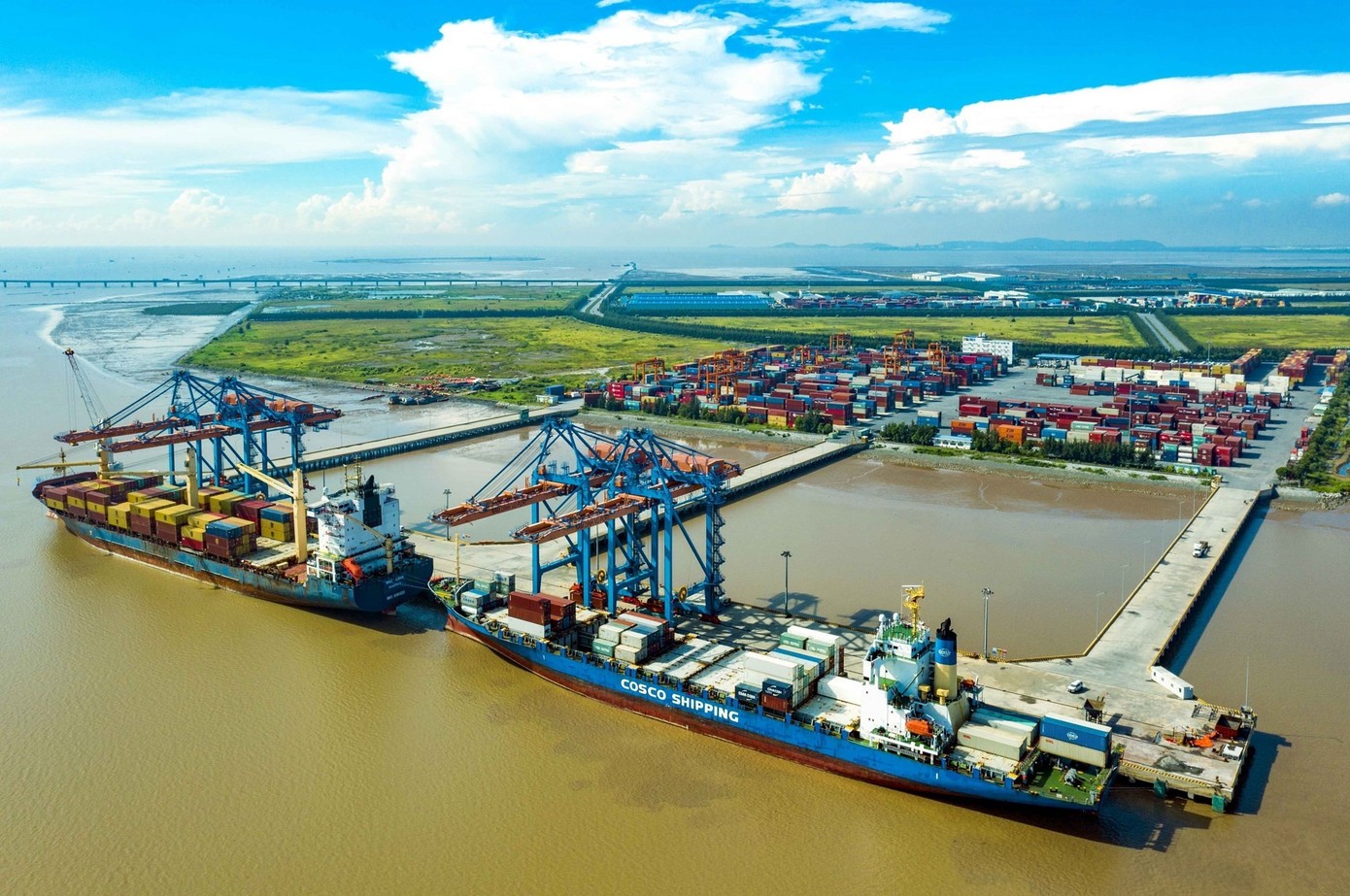
Against this backdrop, growth during the 2022-2025 period (excluding 2021, which was heavily impacted by the pandemic) is projected to average 7.2%, exceeding the set target. GDP growth in 2025 is estimated at approximately 8%. GDP per capita in 2025 is estimated at around US$5,000, a 1.4-fold increase compared to 2020, placing Vietnam in the group of upper-middle-income countries. Inflation is well controlled, remaining below 4% throughout the term, and around 3.5% in 2025.
State budget revenue as of December 24th reached over 2.5 trillion VND, an increase of over 31% compared to the projected figure. The revenue structure is oriented towards sustainability, mainly from production and business activities. Over the past 5 years, budget revenue has reached approximately 18.3% of GDP, exceeding the target, while tax and fee exemptions, reductions, and extensions amount to approximately 1.1 trillion VND. It is projected that 22 out of 26 socio-economic indicators will be met or exceeded, with all social and social security indicators exceeding the plan. Specifically for 2024 and 2025, all 15/15 targets are expected to be met or exceeded.
In the final two years of its term, the Government focused on vigorously implementing a "revolution" in organizational structure, drastically reducing the number of administrative units, streamlining 145,000 personnel, and saving 39,000 billion VND in recurrent expenditures annually to invest in social welfare.
The financial market is developing stably; the stock market is expected to be upgraded to a secondary emerging market in 2025. Import and export turnover is estimated at over 920 billion USD, with a trade surplus of over 21 billion USD. Total social investment in 2025 will reach over 4.15 trillion VND, accounting for more than 32% of GDP.
Three strategic breakthroughs were implemented decisively. During the term, the National Assembly passed more than 180 laws and resolutions; the Government issued 820 decrees, the highest number ever. Long-standing issues were addressed, including the restructuring of 5 weak banks, the completion of the resolution of nearly 1,800 outstanding projects, and the ongoing review and resolution of nearly 3,000 projects with a total capital of trillions of dong.
The infrastructure system has seen a breakthrough in development with over 3,500 km of expressways, the completion of over 1,700 km of coastal roads, and numerous large-scale energy, cultural, and social projects.
The socio-cultural sector continues to make significant progress. The Human Development Index (HDI) has risen 18 places, and the happiness index has increased sharply. Education, health, and social security policies have been implemented synchronously, with the multidimensional poverty rate projected to decrease to 1.3% by 2025.
Vietnam has established comprehensive partnerships, strategic partnerships, and comprehensive strategic partnerships with 38 countries. Vietnam's Global Innovation Index 2025 ranks 44th globally, up 2 places compared to 2020; its e-government development ranks 71st, up 15 places compared to 2020.
The "runway" is preparing for the acceleration phase.
Based on its governance practices and socio-economic development results, Vietnam has increasingly consolidated its position and prestige on the international stage, earning recognition from the international community. In the context of a global economy facing many uncertainties, Vietnam continues to stand out as a bright spot in terms of adaptability and resilience, thanks to its steadfast commitment to reform, maintenance of macroeconomic stability, and proactive policy management. Many reputable international organizations have given positive assessments of the Vietnamese economy.
Jochen Schmittmann, Resident Representative of the International Monetary Fund (IMF) in Vietnam, Laos, and Cambodia, assessed that Vietnam is demonstrating impressive resilience in the face of global fluctuations. With a determined reform effort and consistent strategic direction, Vietnam is fully capable of maintaining strong growth in the medium term.
Mr. Nguyen Ba Hung, Chief Economist of the Asian Development Bank (ADB), noted that Vietnam is one of the few economies to maintain a high GDP growth rate, leading the Southeast Asian region. For 2026, the ADB forecasts Asian economies will grow by 4.6%, higher than the previous forecast of 4.5%. Notably, Vietnam is among the countries with the strongest projected growth forecasts.
The year 2025 marks a series of historically significant, comprehensive, and profound policy decisions that can be considered a revolution in the administrative apparatus and a renewal of the national governance model, placing businesses and citizens at its center. The "four" resolutions of the Central Committee of the Communist Party of Vietnam were issued: Resolutions 57, 59, 66, and 68. Simultaneously, in the same year, the National Assembly passed 89 laws and 91 resolutions, contributing to removing bottlenecks and unlocking all resources to serve socio-economic development.
The volume of resolutions and laws enacted, along with new regulations and amendments to detailed guiding documents, is seen as the most comprehensive preparation of the legal framework, creating the most solid foundation to ensure a strong legal basis for development in the next phase, starting from 2026.
In 2025, localities nationwide will simultaneously implement a "dual objective," promoting socio-economic development while also reorganizing the two-tiered local government structure. Ms. Nguyen Thi Huong, Director of the Statistics Department (Ministry of Finance), stated that achieving a GDP growth rate of 8.02% in 2025 is the result of tremendous efforts nationwide. The achievements in 2025 will lay an important foundation for the next development phase, but the double-digit growth target presents both opportunities and significant challenges. A prerequisite is maintaining macroeconomic stability and strengthening the confidence of the people and investors.
Vietnam's economy is projected to experience a strong breakthrough in 2025, with GDP growth reaching 8.02%. Vietnam's GDP is expected to reach US$514 billion, an increase of US$38 billion compared to 2024. GDP per capita is projected to be US$5,026, an increase of US$326 compared to the previous year.
Source: https://baolaocai.vn/the-dung-moi-cho-viet-nam-tu-nhung-moc-son-kinh-te-post890978.html

![[Image] Pleasant weather helps students enter the 10th grade entrance exam with confidence.](https://vphoto.vietnam.vn/thumb/1200x675/vietnam/resource/IMAGE/2026/05/29/1780034401612_ngay-1-thi-lop-10-minh-duy-8-5009-jpg.webp)
![[Photo] Ba Lang An Lighthouse - the "eye of the sea" amidst the "rock museum" of Quang Ngai province.](https://vphoto.vietnam.vn/thumb/1200x675/vietnam/resource/IMAGE/2026/05/29/1780038698840_anh-man-hinh-2026-05-29-luc-14-10-42.png)


















































































Comment (0)