

A place that "amplifies" 5 risk factors for harm to children.
Based on his practical experience in counseling and psychological therapy for many cases, Dr. Pham Van Tu - Deputy Head of the Social Work Department, Hanoi Pedagogical University, and a psychological therapy expert at the BrainCare Institute of Psychology and Education - stated that children are currently facing five major risks in cyberspace.
These risks include online bullying (insults, threats, isolation, dissemination of images or information intended to harm children); online sexual harassment, including solicitation of sensitive images or requests for in-person meetings; fraud and psychological manipulation (many scammers impersonate friends, celebrities, or people in need of help to deceive or manipulate children, causing stress, fear, and anxiety); exposure to harmful content online (information related to violence, pornography, and even dangerous groups such as those that "denounce parents or teachers," suicide groups, or groups that instruct on drug use); and addiction to the internet, social media, and online games. These risks all originate in the virtual world , but their consequences manifest in real life.
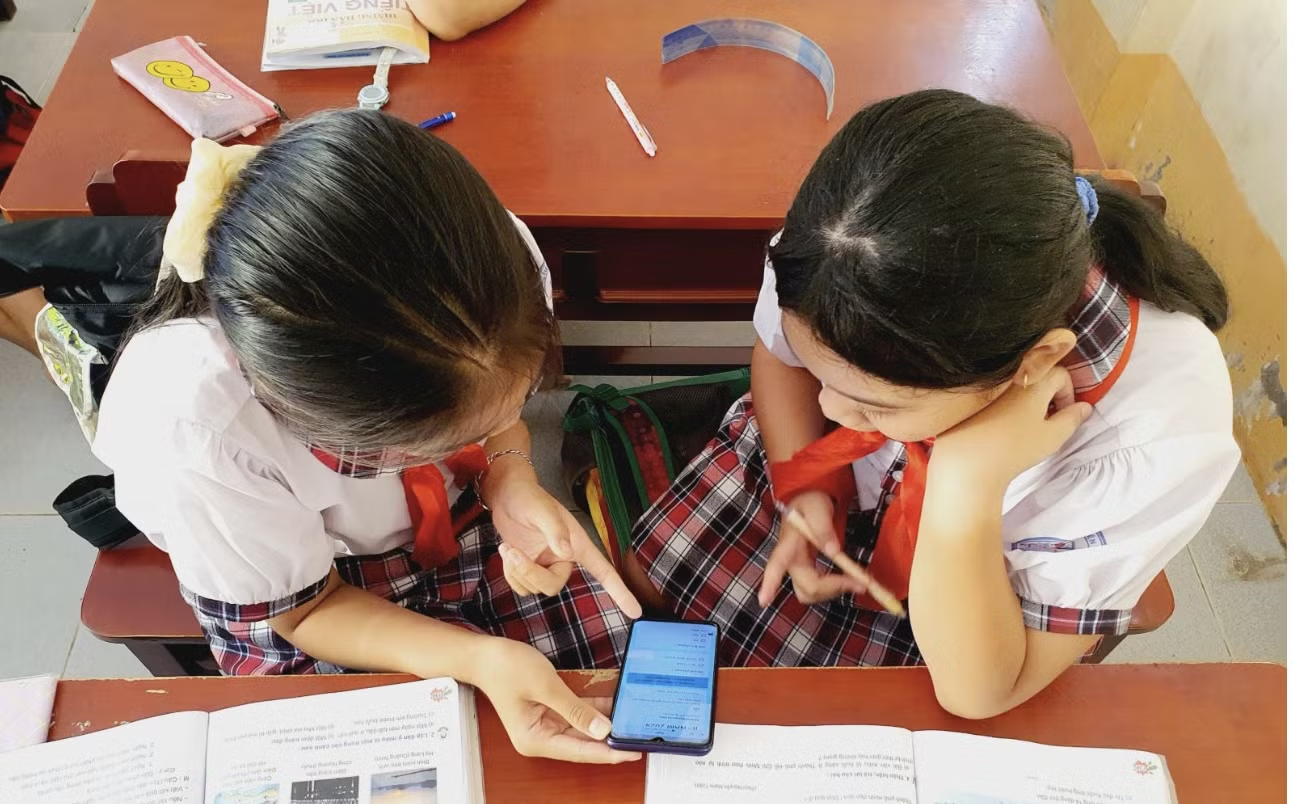
From the perspective and experience of experts gained over many years of counseling, social media is not the sole cause, but it amplifies existing problems in children, such as a lack of attention and empathy from their families. Some families love their children but don't know how to support them; children face academic pressure and relationship trauma but lack the skills to proactively prevent these issues and find appropriate support.
In other words, social media doesn't create all the problems, but it can make them worse, spread faster, and be harder to control.
Through his experience providing psychological support to children in many schools and communities, Dr. Pham Van Tu observed that some children shared that they were more afraid of being asked, "Why did you befriend that kind of person?", "Why weren't you more careful?" than of being listened to and supported. Therefore, children often choose silence instead of seeking help. Many children lack confidence that adults will understand and help them, so they "silently endure," not to mention that many children are threatened online, so they fear the impact on their families and themselves.
Accordingly, children may suddenly withdraw, talk less than before; be reluctant to go to school, experience a decline in academic performance, delete chat history, hide their device usage, and show signs of fear or panic when receiving messages, calls, or while using the internet. They are also very likely to fall into feelings of low self-esteem, self-blame, or say things that express despair. These sudden changes in emotions and behavior are often early warning signs that allow families and schools to intervene and provide support in a timely manner.

In further discussion with a reporter from Tien Phong newspaper, Dr. Do Thi Yen, from the Psychiatry Department of the 19-8 Hospital, stated that in practice, many children are brought to the hospital by their families when they already exhibit symptoms of insomnia, emotional instability, and even suicidal behavior.
Many children are under immense pressure from their parents' academic and exam expectations, but they themselves don't acknowledge that they are experiencing psychological problems. The majority of children come to the hospital passively, only seeking medical attention after their parents or relatives notice something unusual.
Dr. Yen believes that when children spend too much time in the virtual world, it's not easy to bring them back to real life. In some situations, children silently endure suffering for a long time, and one day they may exhibit suicidal or violent behavior. The distance between distorted perceptions and distorted behavior is sometimes very short.
However, Dr. Yen emphasized that there cannot be a one-size-fits-all formula for all families. Intervention needs to be individualized according to each situation, each child, and each type of parent-child relationship. Some families need to adjust their expectations, some need to increase the time spent with their children, and some need to learn to listen instead of just imposing their will on them...
"Double protection system" for children
Given the reality that children experience countless real-world traumas from the virtual world, and this trend is always on the rise, according to Dr. Pham Van Tu - Deputy Head of the Social Work Department, Hanoi Pedagogical University, parents need to spend quality time with their children at home, strengthen guidance to help them develop the habit of "releasing and recharging emotions" correctly; and support them in using the internet safely and intelligently. Schools need to adopt positive educational methods, support students in practicing respect and acceptance of differences from those around them; incorporate the "Peaceful Breath" program into practice between classes, and guide students in practicing emotional management techniques…
Families and schools need to become a "double protection system" for children. To achieve this, a more effective coordination mechanism is needed, along with sanctions for failure to fulfill commitments, especially for families involved in supporting their children and the school. The more timely the coordination between families and schools, the greater the chance of preventing prolonged harm and avoiding the spread of online incidents that negatively impact children's honor, dignity, and mental well-being.
Speaking to a reporter from Tien Phong newspaper, Captain Nguyen Tuan Huy of the Criminal Police Department of Hanoi City Police said that cases of children being psychologically manipulated and scammed through social media often involve perpetrators exploiting children's incomplete understanding. When threatened, children easily fall into a state of fear, lose their composure, and comply with demands. From there, children are easily exploited to manipulate their psychology, isolate them from their families, and then continue to exert pressure to deceive them.
Speaking to a reporter from Tien Phong newspaper, Mr. Dang Thanh Tu, Secretary of the Hoan Kiem Ward Youth Union and Chairman of the Hoan Kiem Ward Children's Council, said that this summer, the Hoan Kiem Ward Children's Council will strongly implement activities to support children in cyberspace. Specifically, among the 6 specialized volunteer teams at the ward level, there is one Digital Technology and Young Innovators team and one "For Our Beloved Children" team that will directly organize classes on digital skills and safe social media use for children.
Digital skills classes will focus on guiding children on how to protect their personal information, behave respectfully on social media, recognize unusual signs in online conversations, avoid befriending strangers indiscriminately, refrain from sharing private images, and know how to seek support from parents, teachers, and youth organizations when facing dangerous situations.
According to a report from the 111 hotline, in April, the hotline received many calls from children aged 15-16 and adults aged 16-18 sharing about problems in romantic relationships, feeling abandoned, being dumped by their partners, pressure from final exams, semester exams, and the choices of majors for the 10th grade and university entrance exams. Some children called the hotline to discuss psychological and health issues such as depression, autism, and self-harming behavior, but their parents didn't believe they were sick and didn't take them for a check-up.
In addition, the volunteer teams will incorporate real-life scenarios, interactive games, and group discussions to help children easily understand, remember, and apply the information in their daily lives. Through the coordination between the Digital Technology and Youth Innovation teams and the "For Our Beloved Children" team, the Hoan Kiem Ward Youth Union hopes to create a close and timely support network, providing children with an additional "shield" to protect themselves from the risks of the digital environment.
Source: https://tienphong.vn/the-gioi-ao-cam-bay-bua-vay-tre-em-post1847868.tpo

![[Photo] Reception to welcome General Secretary and President To Lam and his wife on their State visit to the Philippines](https://vphoto.vietnam.vn/thumb/1200x675/vietnam/resource/IMAGE/2026/06/01/1780295488620_vna-potal-chieu-dai-chao-mung-tong-bi-thu-chu-tich-nuoc-to-lam-va-phu-nhan-tham-cap-nha-nuoc-toi-philippines-8798060-7855-jpg.webp)
![[Photo] General Secretary and President To Lam and the President of the Philippines hold talks.](https://vphoto.vietnam.vn/thumb/1200x675/vietnam/resource/IMAGE/2026/06/01/1780286997787_anh-man-hinh-2026-06-01-luc-11-09-43.png)





































































































Comment (0)