

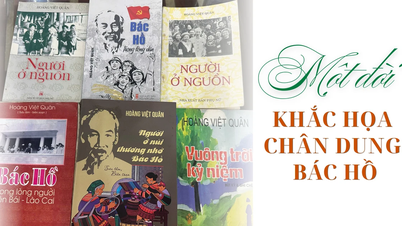
This is not just a collection of articles documenting historical landmarks and events, but also a heartfelt expression of reverence, a journey back to the roots of the revolution, and a continuation of noble values in contemporary life.
This work was born from the author's long-held aspiration. Stemming from the deep affection of the people of various ethnic groups for their beloved leader, author Nguyen The Quynh devoted considerable effort to traveling, experiencing, and recording the most genuine emotions.
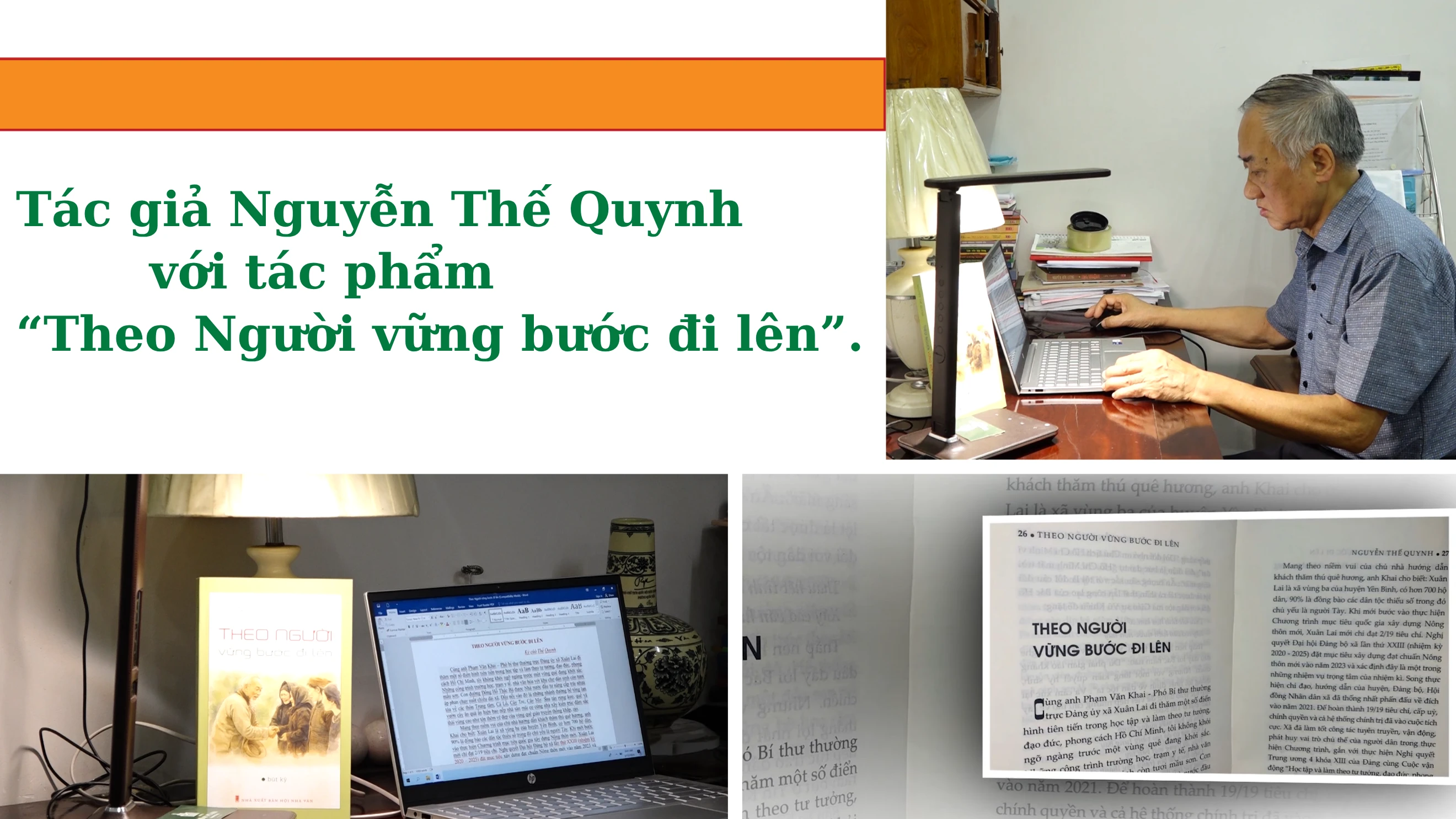
The author's journey spans from North to South, from Pac Bo Cave ( Cao Bang ) – where President Ho Chi Minh first set foot on the "frontier" land of the Fatherland after 30 years of wandering in search of a way to save the country in 1941 – to the lotus-filled land of Dong Thap – the resting place of his father, Nguyen Sinh Sac. These long stretches of land are not merely geographical, but a "spiritual journey" of the writer seeking to better understand a great personality of the nation.
With 22 essays arranged chronologically and logically according to historical context, the collection begins with the essay "The Road to Pac Bo," recreating the difficult but heroic early days when Uncle Ho returned to the country to build the revolutionary base. This is followed by writings about the Dinh Hoa Revolutionary Base Area, where Uncle Ho and the Central Party Committee made crucial decisions in the resistance war against French colonialism.
However, the unique value of this collection of essays lies in the everyday, simple details that nonetheless contain profound humanistic meaning. It tells the story of a low-lying village in Ha Nam (formerly) – the author's hometown. The villagers were honored to receive a set of rattan furniture made by the village artisans as a gift from President Ho Chi Minh. President Ho Chi Minh's response – donating 50 dong (taken from his savings) as capital – was not only a gesture of goodwill from the President, but also a lesson in respecting the labor of the people.
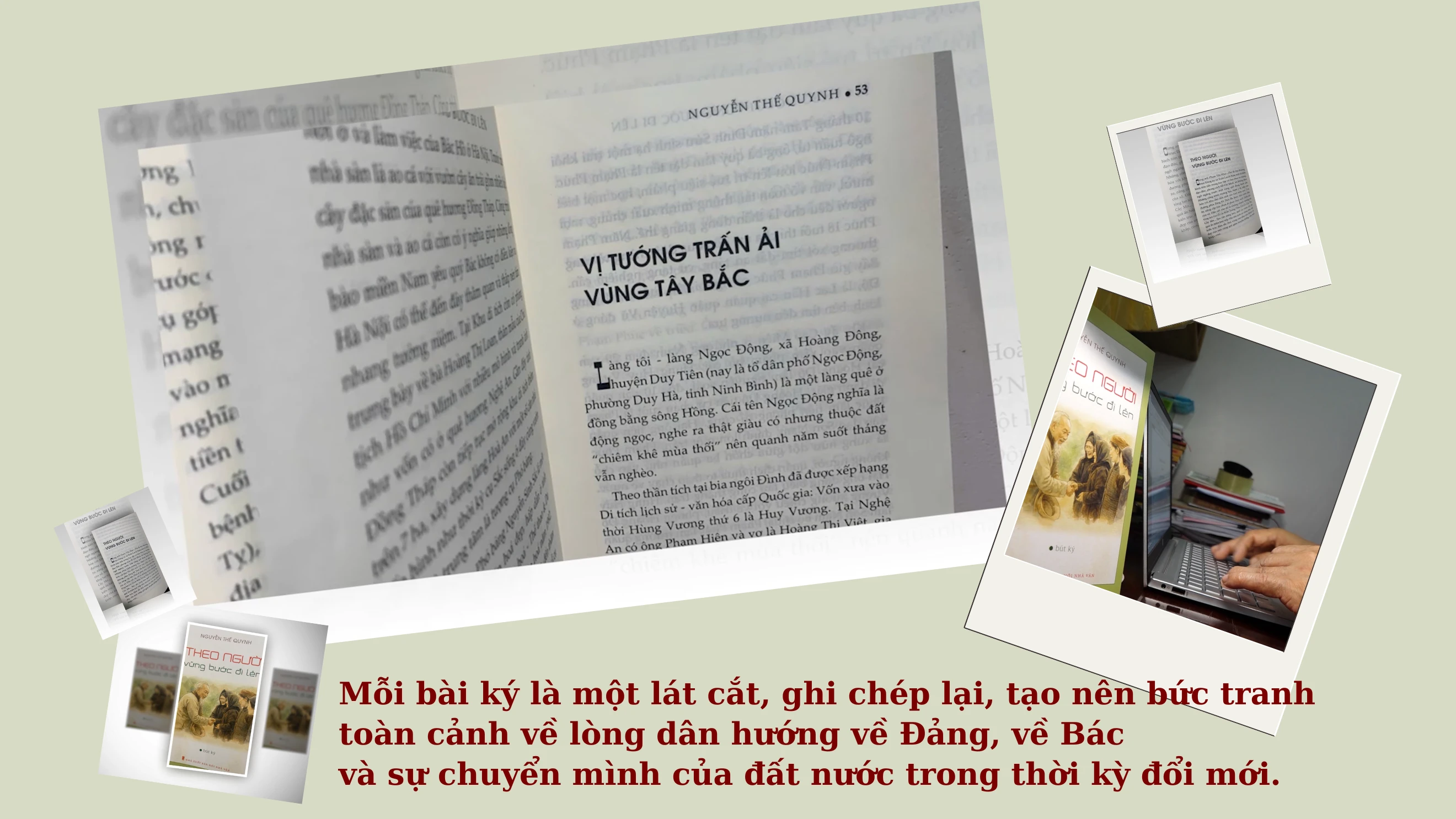
From that "Ho Chi Minh's capital," the villagers united to develop and elevate the rattan and bamboo weaving craft to an international level, becoming a famous craft village as it is today. This is vivid proof of the "vitality" of Ho Chi Minh 's ideology: not abstract or theoretical, but deeply ingrained in every aspect of production and every way of thinking of the farmers.
A key highlight of the collection of essays "Following Him, Steadfastly Advancing" is the connection between the past and the present. The author does not dwell on nostalgia but devotes a large portion of the work to portraying the new individuals and groups who are studying and following the ideology, ethics, and style of Ho Chi Minh.
In particular, the writings about Lao Cai – the land the author is deeply connected to – reveal a new face of this mountainous border region. Here, more and more exemplary individuals and groups are emerging, from exemplary Party members and officials to ordinary people who dare to think and act to escape poverty and build a prosperous and beautiful homeland.
The spread of learning and following Ho Chi Minh's ideology, ethics, and style is demonstrated through articles not through dry slogans, but through concrete actions with clear targets and tangible results.
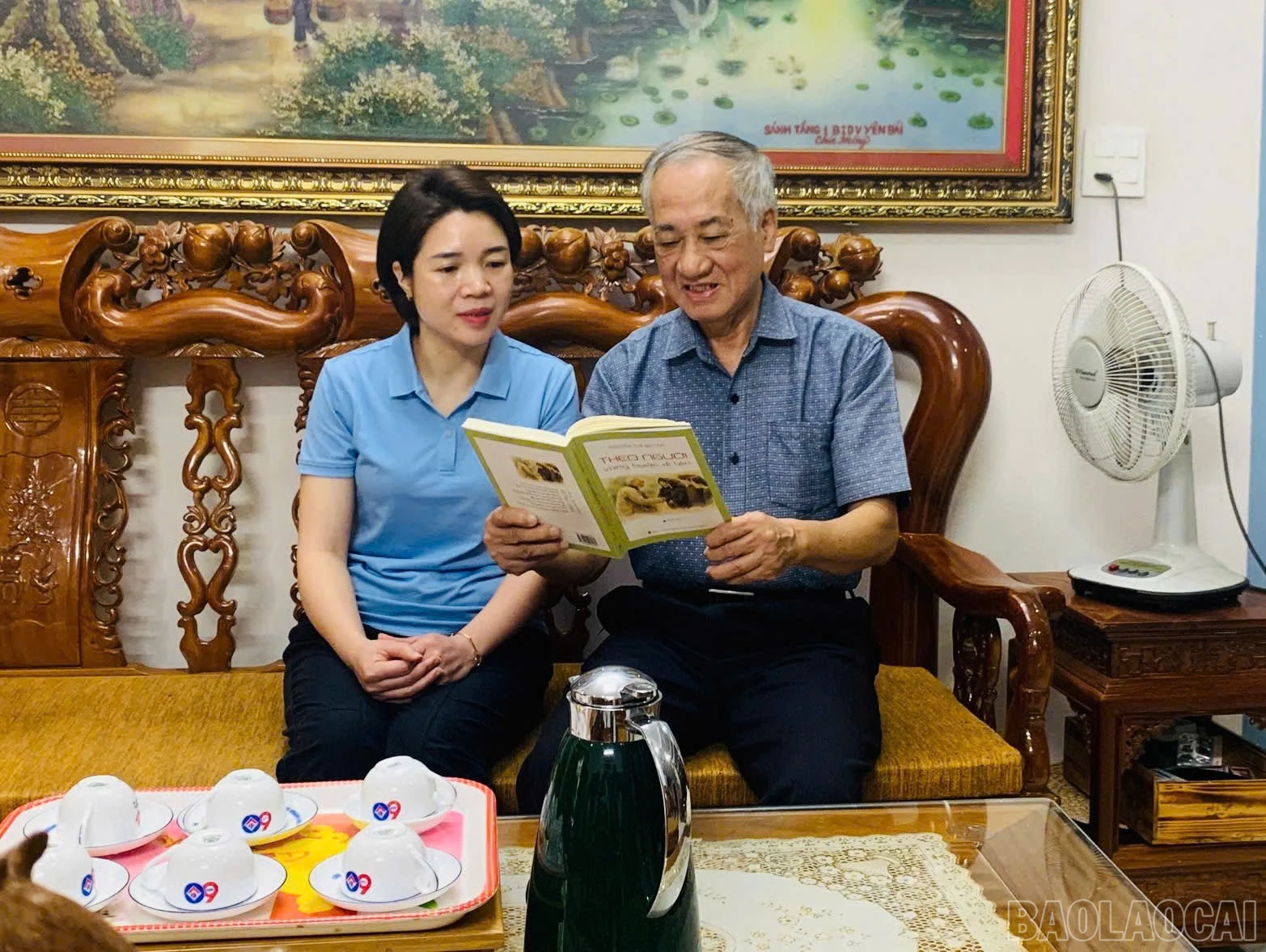
In terms of artistry, the collection of essays employs a sharp journalistic style that is nonetheless gentle and evocative, characteristic of literary art. Having been both a teacher and a journalist, author Nguyen The Quynh chooses an honest storytelling approach, emphasizing detail, allowing events to speak for themselves.
The simplicity of the writing style creates a similarity to President Ho Chi Minh's style, making it relatable and easily accessible to readers. Each essay is a snapshot, a record that forms a comprehensive picture of the people's devotion to the Party and President Ho Chi Minh, and the transformation of the country during the period of reform.
The collection of essays, released during the historic month of May, not only has commemorative significance but also serves as a cultural product that actively responds to the campaign to create and promote journalistic, literary, and artistic works on the theme of studying and following the thoughts, ethics, and style of President Ho Chi Minh.
Through this work, readers can clearly see the overarching message: Ho Chi Minh's ideology is a guiding light, but it is the actions of each of us that keep that spirit shining brightly forever.
The author's portrayal of exemplary figures in Lao Cai or his hometown of Ha Nam (now Ninh Binh) affirms that: Wherever there is love for the people, wherever there is dedication to work, there is the imprint of Ho Chi Minh's ideology.
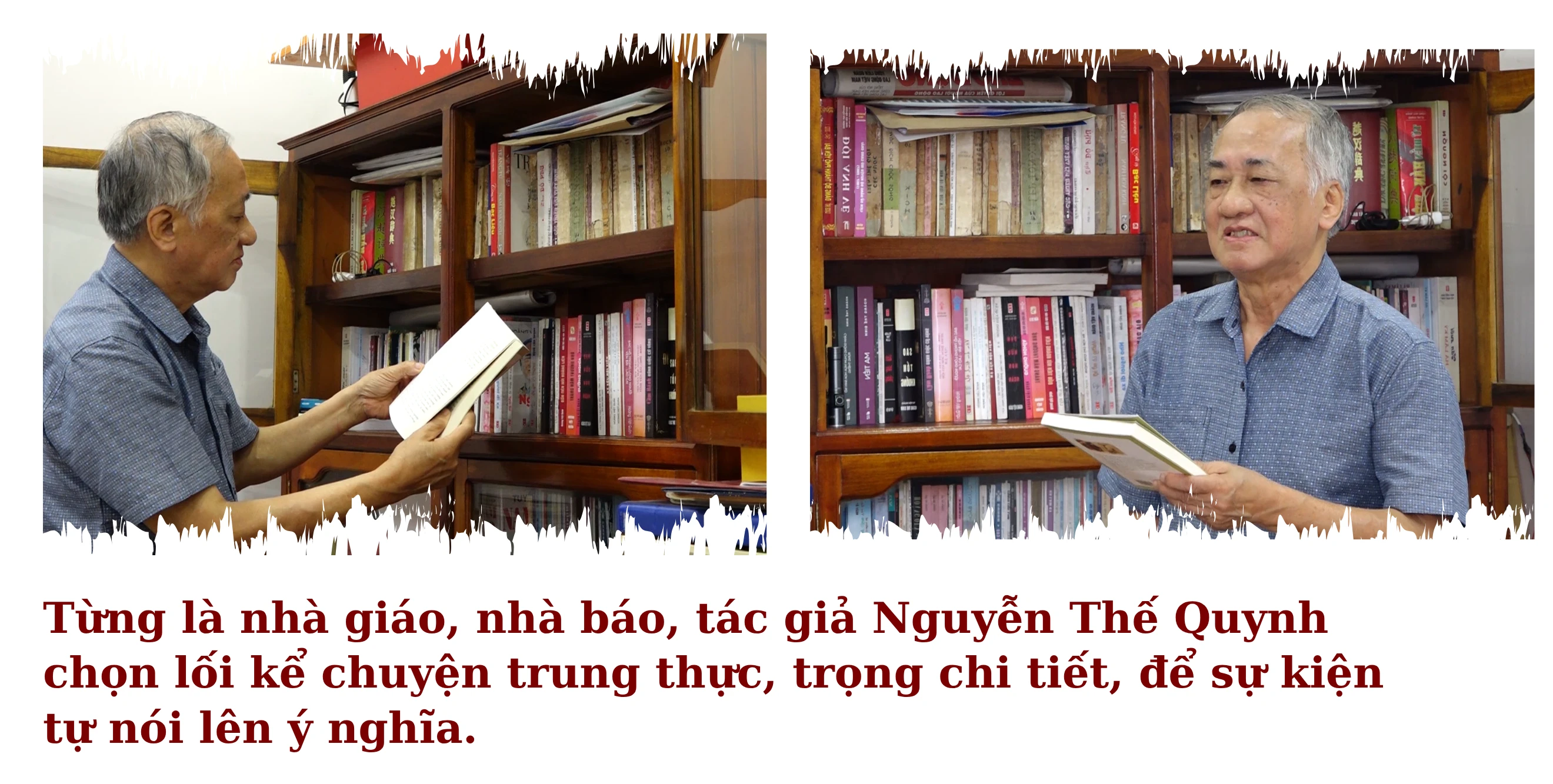
At the end of this collection of essays, readers not only gain historical knowledge and valuable documents about President Ho Chi Minh's life and work, but above all, they gain unwavering faith in the socialist system and in the path that the Party and President Ho Chi Minh have chosen.
It is no coincidence that author Nguyen The Quynh chose the article "Following the Leader, Steadfastly Moving Forward" as the title for his entire collection of essays. It is the author's promise to himself, and also a call to everyone to join hands and contribute their intellect and efforts to building their homeland.
Author Nguyen The Quynh's efforts in publishing this book demonstrate the responsibility of writers towards the great issues of the nation, using their pens to cultivate positive spiritual values and create inner strength to lead the country to new heights.
This is truly a valuable document, a meaningful gift to readers nationwide during these historic days of May when the entire nation commemorates the birthday of the great leader of the Vietnamese people.
Source: https://baolaocai.vn/theo-nguoi-vung-buoc-di-len-post899847.html
































































Comment (0)