

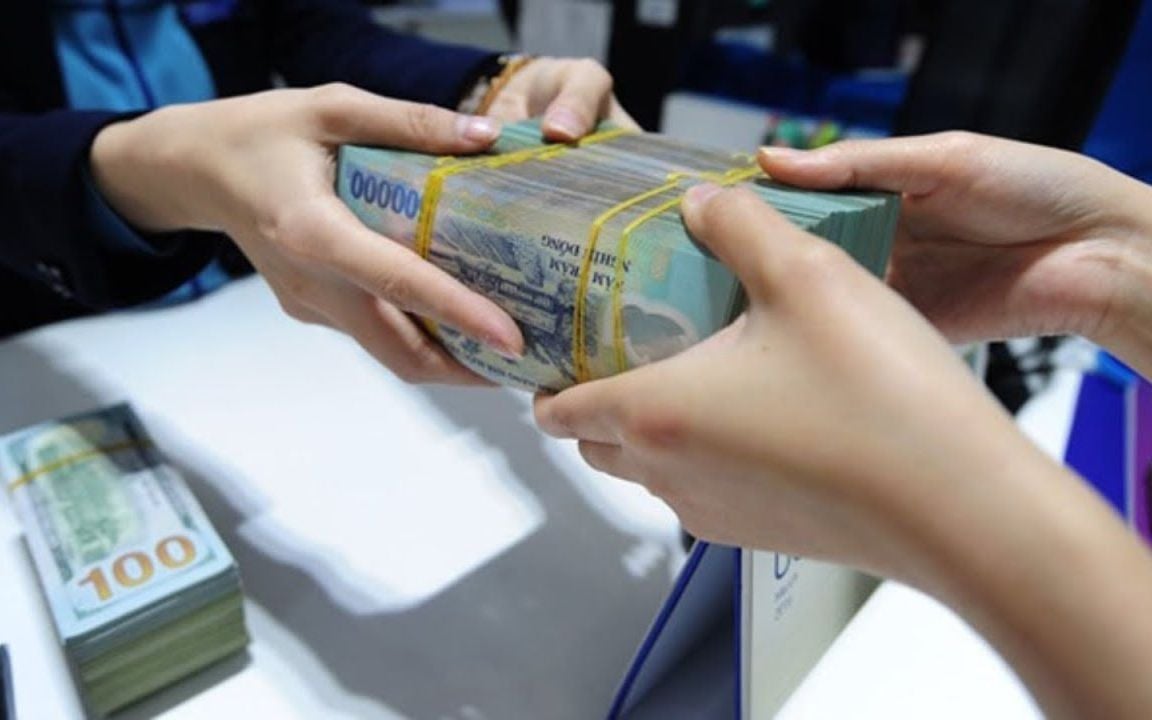
Faced with the pressure of credit debt/GDP reaching 146%, the Vietnamese economy is confronting a structural shift in capital. The move from dependence on banks to a pivot towards the capital market is no longer an option, but a necessity for the private sector to thrive in the era of digital transformation and green energy.
For decades, the banking system has shouldered the entire capital needs of the Vietnamese economy. However, looking at the country's balance sheet in 2026, the limitations of this imbalance are beginning to become apparent. A paradoxical reality exists: the banking system is using nearly 80% of its short-term mobilized capital to finance medium and long-term loans. This maturity mismatch is like building trillion-dollar projects on a foundation of temporary cash flows.
The capital market is transforming into a pillar for providing long-term capital to the economy.
Resolution 68-NQ/TW represents a revolution in management thinking. For the first time, the role of the private economic sector is placed at the center of breakthrough development. According to economic expert Dr. Nguyen Minh Phong, for this engine to operate smoothly, a special type of fuel is needed: medium and long-term capital flows.
According to Mr. Nguyen Duc Thong, General Director of SSI Securities Corporation, we are entering a phase where growth cannot rely solely on injecting more credit. Maintaining a credit-to-GDP ratio of 146% – among the highest in the region – is creating potential systemic risks. As strategic infrastructure projects, energy transitions, and industrial upgrades require capital flows spanning 10-20 years, the banking system has begun to reach its limits.

The period of 2025-2026 is considered a crucial time for the Vietnamese stock market to make a qualitative leap, transforming from a short-term speculative investment channel into a genuine long-term capital mobilization platform for the economy. Ms. Le Thi Viet Nga, Vice Chairwoman of the State Securities Commission, emphasized that redefining the role of the capital market is not only an urgent requirement to reduce pressure on the banking system but also a vital element in building a sustainable national financial structure. In the context of Vietnam's accelerated industrialization and digital transformation, the demand for medium and long-term financial resources is greater than ever, requiring the stock market to fulfill its function as a capital-conducting operating system.
However, the current reality still shows a significant gap when compared to international standards. In developed economies, capital markets typically account for 60% - 70% of the total long-term capital supply, while this figure in Vietnam currently only fluctuates at 15% - 20%. This considerable difference reflects the enormous potential for growth, but also exposes internal barriers related to investor confidence and transparency in corporate governance. For the capital market to truly become a national pillar, overcoming institutional bottlenecks and standardizing information disclosure standards are prerequisites for attracting foreign capital and large financial institutions.
Another noteworthy indicator is the relatively modest level of market access for the Vietnamese business community. With only about 1,600 listed and registered companies out of over 1 million active businesses, the current capital market is still considered a "closed club," untouched by the majority of the private sector. This results in a waste of social resources as potentially promising businesses still have to rely on short-term bank loans for long-term projects.
Besides the stock market, the corporate bond market – the most important channel for long-term capital – is also currently underdeveloped. Corporate bond debt only accounts for about 10% of GDP, and the supply is mainly concentrated in two sectors: banking and real estate. Meanwhile, key sectors that drive the economy, such as manufacturing, high technology, and heavy industry, remain largely untouched due to limited credit rating standards and insufficient ability to demonstrate long-term cash flow. Unlocking the bond market for key manufacturing sectors is crucial for creating a breakthrough in the economy in the coming years.
Shift from injecting capital to guiding capital flows.
In the new capital structure, the role of commercial banks is also being redefined. Instead of being the sole source of capital, banks will shift to the role of "financial architects." Mr. Tran Hoai Nam, Deputy General Director of HDBank, pointed out that banks are aiming to build financial solutions along the value chain. Instead of lending individually based on collateral, banks will closely monitor cash flow and the specifics of each industry to guide other capital sources from the market into businesses. This is an effective approach that helps reduce pressure on the bank's balance sheet while still ensuring businesses have sufficient resources.
Expanding the development space for the private sector is not just about lowering interest rates or increasing credit limits. It's about building a sufficiently long and wide financial runway. When the capital market is freed from the shadow of bank credit, the private sector will have enough wings to fly high, propelling the Vietnamese economy into an era of more sustainable and self-reliant development.
According to economic experts, for the capital market to truly transform into a pillar of the economy, building a synchronized and transparent ecosystem has become an urgent requirement. One of the most important links is improving the quality of corporate governance. Vietnamese private enterprises are currently facing pressure to quickly move away from the traditional family-run governance model to approach international standards such as the ASEAN Corporate Governance Scorecard. "Professionalizing the management system and transparentizing cash flow not only helps businesses develop sustainably but is also a prerequisite for being included in the investment portfolios of major international financial institutions," Mr. Phong emphasized.

Alongside the self-reliance of businesses, the investor structure in the market also needs a fundamental qualitative change. In reality, the Vietnamese capital market still heavily relies on the sentiment of individual investors, who are easily influenced by rumors and short-term fluctuations. For the market to operate stably, Vietnam needs to increase the proportion of institutional investors, especially voluntary pension funds, insurance funds, and long-term investment funds. These entities act as financial anchors, helping to maintain the market's momentum and guide it in the right direction, minimizing unnecessary extreme fluctuations.
Ultimately, technology and transparency are seen as key to restoring and strengthening market confidence after periods of intense consolidation. The application of advanced technologies such as Blockchain in custody and payments, and artificial intelligence (AI) in transaction monitoring and early detection of manipulation is being promoted by regulatory bodies. The combination of modern technological infrastructure and a rigorous legal framework will create a business environment where information is disclosed accurately and promptly. When transparency is valued as highly as gold, the capital market will truly become an effective and sustainable channel for national economic development.
Source: https://vtv.vn/thi-truong-von-va-bai-toan-giam-le-thuoc-tin-dung-100260513191431632.htm





![[Image] Nearly 125,000 Hanoi students completed the Literature exam for the 10th grade entrance exam.](https://vphoto.vietnam.vn/thumb/1200x675/vietnam/resource/IMAGE/2026/05/30/1780117233041_ndo_br_thiet-ke-chua-co-ten-2-png.webp)









































































































Comment (0)